Human errors, poor understanding of electoral procedures and improper handling of result sheets could undermine the credibility of Nigeria’s 2027 general elections, a former National Commissioner of the Independent National Electoral Commission (INEC), Barrister Festus Okoye, has warned.
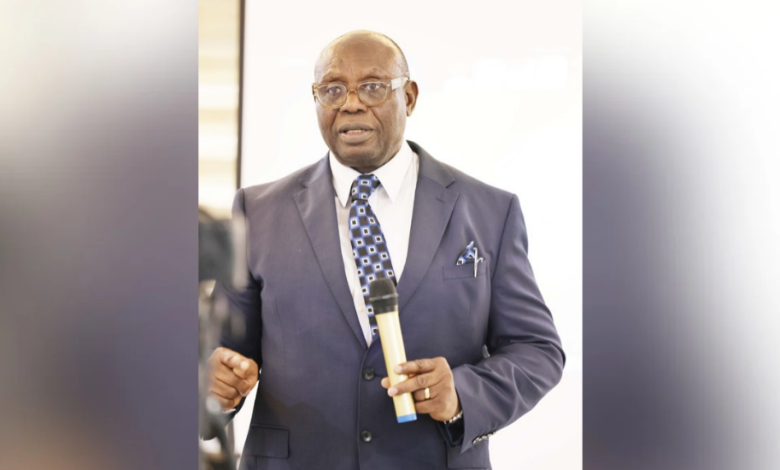
Okoye raised the concerns during a training workshop on election coverage organised by THE WHISTLER for its reporters and editorial team ahead of the 2027 general elections.
He identified mistakes by election officials, particularly in the use of electoral technology and the completion of result sheets, as potential sources of discrepancies that could affect the electoral process.
He also explained the legal provisions governing the transmission and collation of results, the functions of the Bimodal Voter Accreditation System (BVAS) and the INEC Election Results Viewing Portal (IReV), and the distinction between electronic results uploaded to the result viewing portal and the physical documents used to collate and declare election results.
Asked why INEC invested in BVAS and IReV despite the fact that results displayed on the portal are not the primary basis for collation and declaration, Okoye said BVAS performs several functions at different stages of the electoral process.
He explained that the device was first used during voter registration before being deployed for voter identification and accreditation on election day. It is also used to upload polling unit results after voting.
“It’s what I call a multifunctional gadget. It’s a multifunctional gadget. During voter registration, that is what we use,” he said.
He explained that during voter registration, the device is known as the INEC Voter Enrolment Device, while on election day, it is used for voter identification, verification and accreditation.
“On election day, we call it the BVAS. We use it for voter identification and verification. That is what we use in capturing fingerprints and capturing the facials,” he said.
According to him, the technology has helped prevent impersonation, double voting and multiple voting. He added that the same device is used to upload results after voting.
“That gadget has prevented impersonation, prevented double voting and multiple voting. Now, after elections, we use the same machine for what I call result upload. It’s a machine that does three things,” he stated.
Okoye said INEC engineers developed the device’s specifications before engaging manufacturers in China to produce it.
“That’s why we invest heavily in it because that machine was designed in INEC and manufactured in China. INEC engineers designed it and said this is what they want and went to China and said, please, can you fabricate a three-in-one machine for us?” he said.
He reiterated that the device was developed to perform three major functions, including voter enrolment, voter verification and accreditation, and result upload.
“That’s why we invest heavily on it. We use it for voter enrolment, it’s used for voter verification and accreditation, and also it’s used for result upload. That’s why we invest heavily on it,” he added.
INEC’s investment in the technology preceded the 2023 general elections, when the commission budgeted approximately N105.25bn for BVAS procurement and allocated about N117.1bn to electoral technology out of its N305bn budget for the elections. INEC reportedly acquired 200,000 BVAS devices for the exercise.
BVAS was introduced in 2021 and first piloted in the Isoko South I State Constituency bye-election in Delta State on September 11 that year. It was subsequently deployed alongside IReV in the November 2021 Anambra governorship election. IReV had earlier been used in the Edo and Ondo governorship elections in September and October 2020, respectively.
Okoye further drew attention to the legal provisions governing electronic transmission and the collation of results, citing Sections 60(3), 60(5) and 155 of the Electoral Act 2022, as amended.
He explained that Section 60(5) provides for the transmission of election results to the next level of collation after voting, while Section 155 defines transmission as the transfer of information manually or electronically.
He explained, “Section 60, Subsection 5, says that at the close of votes, the results of the election shall be transmitted to the next level of collation. Now, Section 155, which is the application section, says to transmit means to transfer manually or electronically.
“To transmit means to transfer either manually or electronically. So INEC has a discretion either to transfer results going to the collation centre manually or electronically.”
He distinguished these provisions from Section 60(3), which, according to him, provides for the electronic transmission of polling unit results to INEC.
Under the provision, he said, the presiding officer is required to electronically transmit polling unit results to IReV after Form EC8A has been signed and stamped. The form must also be countersigned by candidates or their polling agents present at the polling unit.
Okoye acknowledged that communication network failures could prevent electronic transmission, but maintained that the signed and stamped Form EC8A remains the primary document for the collation and declaration of results.
“Therefore, EC8A shall at all times remain the primary source of collation and declaration of results. At all times,” he said.
The distinction, he stressed, is important for journalists reporting election results and alleged irregularities. While IReV allows the public to view uploaded polling unit result sheets, the physical Form EC8A remains central to the formal collation process.
Okoye also explained how election results move from polling units to collation centres and how discrepancies are supposed to be examined.
Using the presidential election as an example, he said a collation centre could cover between 10 and 20 polling units. Presiding officers are expected to arrive with election documents, including Form EC8A, relevant collation forms, BVAS devices and, in some cases, copies of polling unit results held by party agents.
The collation officer examines the figures recorded on Form EC8A and transfers them to the appropriate collation form, which Okoye identified as Form EC8B.
Where a protest or allegation of discrepancies arises, the collation officer is expected to examine the relevant documents and compare the figures on Form EC8A with the accreditation data stored on the physical BVAS device.
The comparison helps establish whether the number of accredited voters corresponds with the information recorded on the polling unit result sheet. Where discrepancies are established, the accreditation data can be used to verify the figures and guide the necessary calculations.
Okoye identified mistakes by election personnel as another potential source of problems, saying inadequate understanding of electoral procedures and improper use of equipment could affect the accuracy of results.
He said election officials at different levels are drawn from across the country, including members of the National Youth Service Corps, students of federal tertiary institutions, civil servants and university lecturers.
Presiding officers and their assistants are deployed to polling units, while supervising presiding officers are drawn from ministries, departments and agencies of government. At registration area level, collation officers are often lecturers and professors from Nigerian universities.
According to Okoye, although presiding officers are trained before elections, mistakes can occur when officials do not fully understand the procedures or cannot operate the equipment properly.
He gave the example of a candidate recommending an individual who had not undergone the required training, potentially leaving the person unable to operate BVAS or complete election result forms correctly.
He also identified difficulties some presiding officers encounter when completing Form EC8A, particularly in recording the number of ballot papers issued and reconciling votes. Such errors, he said, could create discrepancies during collation.
For journalists, he said, understanding election documents and procedures is necessary to distinguish genuine irregularities from mistakes in the handling or recording of results.
The question of partisanship among ad-hoc election officials also came up during the workshop. Asked how INEC determines whether the officials it recruits are politically neutral, Okoye said it was difficult to establish an individual’s political affiliation by appearance alone.
“There’s nothing you can do. There is nothing you can do. Partisanship is not written on anybody’s face,” he said.
He explained that applicants register through an online portal and are required to declare whether they belong to a political party. Election officials must also swear an oath of neutrality and allegiance before deployment.
However, he said anyone established through credible facts and evidence to be a card-carrying member of a political party would be excluded from participating in the electoral process.
Okoye disclosed that INEC was planning to deploy approximately 1.4 million ad-hoc personnel for the 2027 general elections. He said the scale of the exercise made it difficult to guarantee the political neutrality of every recruit without credible evidence.
When participants raised concerns about allegations of partisanship involving electoral commissioners as well as ad-hoc personnel, Okoye said he could not speak to the circumstances surrounding the appointments of other individuals.
He said he could account only for his own conduct and responsibilities while serving at the commission.
Reflecting on his time at INEC, Okoye recounted several occasions when he challenged the legal department’s interpretation of court judgments presented to the commission.
He said that on one occasion, he disagreed with a memorandum from the legal department because, in his assessment, it did not accurately reflect the court’s judgment. Having read the judgment before the commission’s meeting, he raised the matter with the chairman and argued that INEC needed to issue a statement clarifying the correct legal position.
According to him, most national commissioners supported his position and authorised him to issue a statement on behalf of the commission. He subsequently issued the statement and appeared on television to explain INEC’s position.
Okoye said a similar incident occurred about two weeks later when another court judgment was presented to the commission. He again disagreed with the interpretation in the legal department’s memorandum, and the commissioners supported his position, allowing him to issue another statement and explain the commission’s position on television.
He recalled that a third incident, about a month later, proved more contentious because he was the only commissioner who supported the position he considered legally correct. Despite the disagreement, he said he issued a statement and defended the position on television.
Earlier, THE WHISTLER’s Managing Editor, Suleiman Tajudeen, said the workshop was organised to prepare the newspaper’s reporters and editors for election coverage by exposing them to the legal and technical issues involved.
He said Okoye was invited because of his background as a constitutional lawyer, human rights activist and former INEC national commissioner responsible for information and voter education. Tajudeen also introduced another resource person, Dr John Alachenu, a veteran journalist with more than 35 years of experience covering politics across Nigeria and a former Group Politics Editor at PUNCH.
Declaring the workshop open, THE WHISTLER’s General Manager, Young Ozogwu, urged participants to take the training seriously, warning that election reporting required an understanding of the legal and technical issues involved.
He raised concerns about the competition between professional journalism and citizen journalism, particularly content produced by bloggers and individuals on social media, and said reporters could not use ignorance of electoral provisions as an excuse for mistakes.
“Covering general elections is a serious business. It is not your routine duty because there are a lot of technicalities involved. There is a lot of legality involved,” he said.
Ozogwu urged participants to pay attention to the resource persons and apply the lessons to their work.
“We won’t take any excuse when you fall foul of any of those provisions. That’s why we have brought in these professionals to talk to us, to address us, to teach us,” he said.