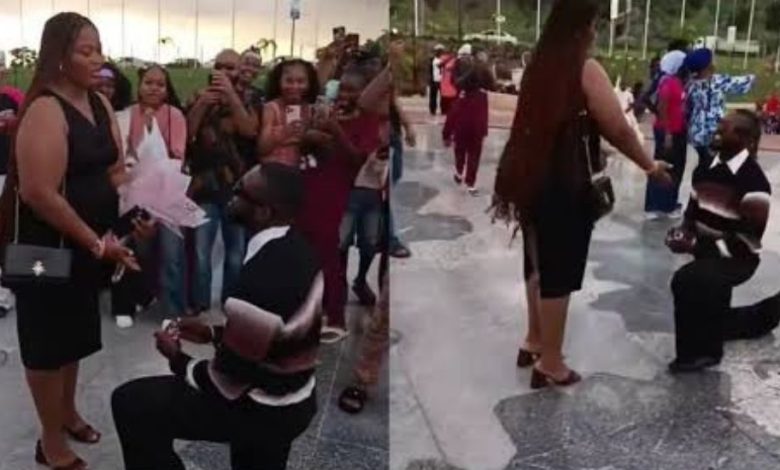
A man kneels, opens a ring box, and asks a woman to marry him. She covers her mouth, bursts into tears and stretches out her hand. Her friends scream, cameras capture the moment, and within minutes, the video is online, attracting thousands of views and congratulatory comments.
For some couples, it is the perfect proposal. For others, it raises a question that has divided opinions in Nigeria: why should a man kneel before a woman to ask for her hand in marriage?
The disagreement goes beyond the knee touching the ground. It touches on what men are expected to represent in a relationship, how women want to be loved and whether a romantic gesture can threaten a man’s dignity.
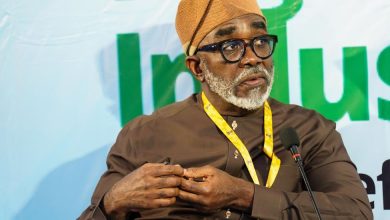
When veteran Nollywood actor Sir Pete Edochie described men who knelt to propose as “idiots” and “bloody fools”, he brought these questions into sharp focus.
The actor argued that the practice reflected Western influence and suggested that a man who knelt was symbolically surrendering his position as head of the family.
His comments, which went viral in February 2020, drew support from Nigerians who saw the gesture as a departure from traditional values. Others argued that kneeling was simply a way to express love and had little to do with who would lead a marriage.
Years later, the debate persists, fuelled by proposals shared on social media, where rings, flowers, elaborate decorations and public declarations have become familiar features of romantic celebrations.
But away from the cameras and carefully planned surprises, what matters to the people involved? Does a man lose something by kneeling, or has a simple expression of affection become entangled in a larger argument about power?
THE WHISTLER spoke with Abuja residents who have different views on the practice. Their responses reveal a disagreement not only about tradition, but also about what a proposal should mean.
For 58-year-old Emeka Nwosu, a trader in Nyanya, Abuja, the question begins with the examples set by previous generations.
Nwosu believes a man can express his intention to marry a woman without kneeling before her. He points to the marriages of older generations as evidence that the gesture is not necessary for a relationship to succeed.
Nwosu continued, “I don’t understand when kneeling became the evidence that a man loves a woman.
“My father never knelt to propose to my mother. Many of our fathers did not do it, yet they married, raised children and took responsibility for their families. What exactly are we trying to prove with the knee?”
For him, the seriousness of a man’s intentions should matter more than the physical gesture accompanying his proposal.
“If I tell a woman that I want to marry her, I should be able to look her in the face and say it confidently. I can buy her a ring, take her out and make the occasion memorable. But I will not kneel simply because people have decided that every proposal must look like a foreign film.”
His position echoes Edochie’s argument about cultural influence, although Nwosu’s emphasis is on personal conviction rather than condemning every man who chooses to kneel.
He questions why a practice associated with Western romantic culture should become an expectation for Nigerian men, particularly when their own family histories offer different examples of courtship and marriage.
Nwosu also draws on his own experience to challenge the notion that a kneeling proposal is necessary for a successful marriage.
“I never knelt to propose to my wife and we are over two decades in marriage. If he loves the woman, why should kneeling be a problem?”
Yet the belief that a man must stand to preserve his dignity is far from universal among Abuja residents.
At 26, Susan Ejembe, a young professional living in Gwarinpa, sees little reason to interpret kneeling as a surrender of authority.
“I think people are making this more complicated than it is,” Ejembe said, adding that, “If a man kneels to propose, it does not mean he has surrendered his life to me. It means he has chosen a way to express his love. Why should that be a problem?”
For Ejembe, relationships already require both partners to make compromises and sacrifices. She questions why a gesture that lasts a few seconds should be treated as a threat to a man’s position in the family.
“If I relocate because of my husband’s job, does that mean I have surrendered my destiny to him? If I support him when he has no money, does that mean I am now his servant? We make sacrifices because we love people. Why must a man kneeling suddenly become a question of who is superior?”
Her argument challenges the assumption that women who appreciate kneeling proposals necessarily want to dominate their partners. She sees the gesture as romantic rather than political.
“The proposal is one moment. Marriage is a lifetime. If a man is responsible, respectful and confident, I don’t see how kneeling for a few seconds will destroy his authority.”
Ejembe also cautions against allowing online trends to dictate what couples should do.
”I will not import everything i see on social media” Ejembe noted.
Her position presents a contrast to Nwosu’s. While he questions the adoption of a practice he considers foreign, she believes that a gesture should be judged by what it means to the couple rather than by assumptions about its cultural origins.
For her, a man should be free to kneel if he wants to, just as another should be free to propose without doing so.
For 34-year-old Tanko Yinusa, a commercial driver living in Kubwa, Abuja, the argument is not primarily about masculinity. It is about the growing pressure to make romantic relationships look impressive.
Yinusa believes social media has changed expectations around proposals, turning what could be a private conversation into an elaborate production.
“Today, people are no longer satisfied with simply asking a woman to marry them. You need a ring, flowers, a hotel, music, cameras and sometimes an audience. If you don’t do all these things, somebody will say you are not serious.
“Now we have added kneeling to the list. What happens if a man cannot afford all these things? Does it mean he cannot marry? A serious man should be judged by what he can do for his family, not by how well he performs a proposal” he said.
Yinusa would rather keep a proposal simple and direct the money towards preparing for married life.
“I would rather use the money to prepare for the marriage itself. I want to build a home, not produce a video that will trend for three days” he stressed.
His concerns introduce a financial dimension to a debate often framed around culture and male authority. For couples already facing the costs of housing, family introductions, wedding preparations and daily living, elaborate romantic displays can seem like another expectation to meet.
The issue, in his view, is not whether a man should kneel but whether the growing performance around proposals has distracted people from the responsibilities that follow.
A proposal may attract attention online, but the expenses and decisions involved in building a home remain after the audience has moved on to the next viral video.
Aisha Bello, a 29-year-old hairdresser in Wuse Market, Abuja, questions the assumption that kneeling automatically places a woman above a man.
“Are we saying that every man who kneels to pray has surrendered his life to whoever he is praying to? Does a man lose his dignity when he apologises to his wife? Must everything be about who is above whom?” she asked.
Bello believes that a healthy relationship should allow both partners to express affection without turning every action into a contest over authority.
“I understand that people have different cultures and beliefs. If a man does not want to kneel, that is his choice. But if another man wants to kneel, why should we insult him? A woman is not a throne, and a proposal is not a coronation.”
Her argument is not that every man must adopt the practice. Rather, she objects to the suggestion that those who choose to kneel have compromised their masculinity.
“If a man believes he is the head of his family, he should show it through responsibility, wisdom and care. His wife should also respect him. But I don’t see how the position of his knee determines any of that” Bello argued.
For Bello, the symbolism attached to the gesture is less important than how a couple treats each other. A man can maintain his convictions without ridiculing another man’s romantic choices, just as a woman can appreciate a kneeling proposal without demanding that every man follow suit.
The question of masculinity is central to the disagreement. Edochie’s criticism rests partly on the idea that kneeling to propose represents a symbolic transfer of family leadership to the woman.
Alachenu Ichonye, a 28-year-old banker living in Lugbe, Abuja, rejects that interpretation. He says he would have no problem kneeling if the gesture mattered to his partner and felt right to him.
“I don’t believe my masculinity is so fragile that bending one knee will destroy it,” he said. “I know who I am. I know my responsibilities. If I decide to kneel because I love a woman, that is my decision.”
Ichonye believes the ability to express affection should not be confused with weakness or an inability to lead a family.
“A man who cannot show affection because he is afraid of appearing weak has a problem he needs to examine. You can be responsible for your family and still be romantic. The two things are not enemies.
“If a man does not believe in it, he should not be forced to do it. The woman should be able to explain why it matters to her, and the man should be able to explain why he disagrees. They need to understand each other before marriage” Ichonye said.
His position shifts the debate from whether kneeling is right or wrong to whether couples can discuss their expectations without treating their differences as evidence of disrespect.
It also raises a question for men who see the gesture as a threat to their authority: if a man is secure in his identity and clear about his responsibilities, does a brief romantic gesture really diminish him?
For Ichonye, masculinity is not something that can be surrendered simply by bending one knee. What matters is how a man understands and carries out his responsibilities.
The one-knee proposal, often accompanied by an engagement ring, has become familiar through films, celebrity relationships and social media. Its popularity has helped make it a recognisable symbol of romance in contemporary culture.
But the fact that a practice has gained popularity through Western media does not, on its own, settle whether Nigerians should adopt it. Cultural exchange has long shaped music, fashion, religion, education and family life, with people adapting outside influences to suit their own circumstances.
African marriage customs are also diverse, varying across ethnic communities and changing between generations. It would be inaccurate to suggest that every African society rejects kneeling or that every man who adopts the gesture has abandoned his cultural identity.
The more useful distinction may be between a practice someone freely chooses and one imposed as a test of worth.
A man may kneel because he considers it a beautiful expression of affection. Another may stand because he prefers a different form of proposal. Neither choice, on its own, establishes the quality of the relationship.
The disagreement among Abuja residents suggests that there is no single answer that satisfies everyone. Nwosu sees a need to preserve familiar traditions. Ejembe and Bello reject the idea that kneeling diminishes a man, while Yinusa questions the financial and social pressures surrounding modern proposals. Ichonye argues that a man’s confidence and responsibilities should not be measured by the position of his knee.