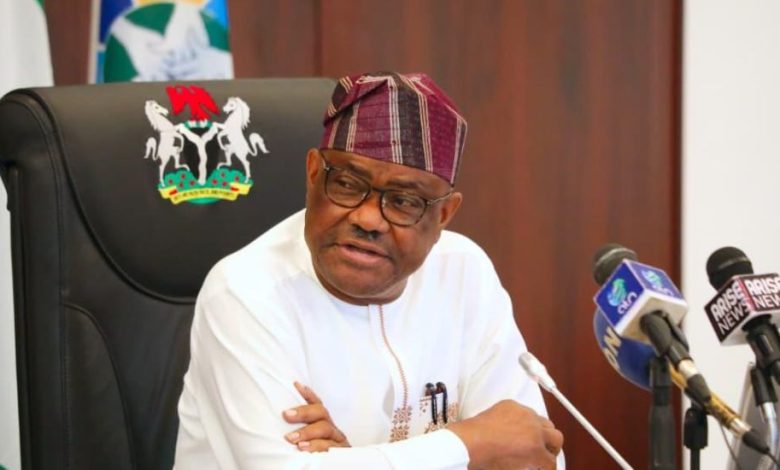
The Minister of the Federal Capital Territory (FCT), Nyesom Wike, has urged Nigerian political leaders to look beyond ethnic and sectional claims to political power.
He said representation must translate into better living conditions and equal opportunities for citizens.
Wike made the call on Thursday while delivering a keynote address titled, “People, Politics and Power Play in Nigeria: The Agitation for Equity and Fairness,” at the first Idoma Hall of Fame induction ceremony held as part of the Idoma Centenary Plus celebration.
He said debates about equity and fairness should focus on how political power is exercised and whether it delivers tangible benefits to Nigerians, rather than which ethnic group, region or political bloc occupies positions of authority.
“We must move from the politics of ‘our turn’ to the politics of ‘our responsibility’,” he said.
Wike argued that political representation alone could not guarantee fairness if it failed to improve living standards, expand economic opportunities and deliver effective public services.
He said Nigeria needs a political system that recognises the country’s ethnic and cultural diversity while retaining competence and performance as essential considerations in public appointments.
“The goal should not be to choose between diversity and merit, as though the two were inherently incompatible,” he said.
The minister warned that political inclusion would remain largely symbolic if citizens continued to face unemployment, insecurity, poor healthcare, inadequate education and limited economic opportunities.
“A young Nigerian without employment does not necessarily experience political inclusion because someone from his ethnic group has become a minister,” he said.
He maintained that the value of political power should be measured by its effect on ordinary Nigerians, including access to quality education, functional hospitals, reliable infrastructure, security and productive employment.
Wike said public appointments should not become the primary measure of whether a community was adequately represented in government, adding that institutions must guarantee equal opportunities regardless of ethnicity or place of birth.
He also criticised the selective application of equity and fairness, saying political leaders should oppose injustice even when it does not directly affect their communities.
“If we complain about marginalisation only when our own people are excluded, but become silent when others are marginalised after our people gain power, we are not opposing injustice; we are seeking access to its privileges,” he said.
Wike said the federal character principle, enshrined in Nigeria’s constitutional framework, was intended to promote national unity and prevent the domination of public institutions by a few states or sectional interests.
However, he cautioned that its implementation should not undermine merit or turn political representation into a means of sharing privileges among competing political elites.
He urged political leaders to distinguish genuine grievances over marginalisation from dissatisfaction arising from unsuccessful political contests, arguing that such claims should be assessed against evidence, historical circumstances and the principles at stake.
The minister called for stronger institutions, transparent public appointments, internal democracy in political parties and greater economic opportunities for young Nigerians.
He said political parties should regard citizens as partners in governance rather than merely as instruments for winning elections.
Wike also warned that the exploitation of ethnic and religious differences for political gain could deepen divisions and weaken national cohesion.
He argued that Nigeria’s diversity should not be treated as a contest in which the advancement of one group automatically comes at the expense of another.
“The question before us is therefore no longer simply: Who gets power? The more important question is: What do we do with power when we get it?” he said.
The minister said Nigeria’s future depended on the ability of its leaders to turn ethnic and regional differences into opportunities for national development and ensure that no citizen was excluded from governance.