The funding, announced under the fourth edition of the NSIA Prize for Innovation (NPI 4.0), is targeted at businesses developing solutions to economic and social challenges, with additional opportunities for eligible winners to access up to $1.5 million in growth capital through the Pula Xcelerator.
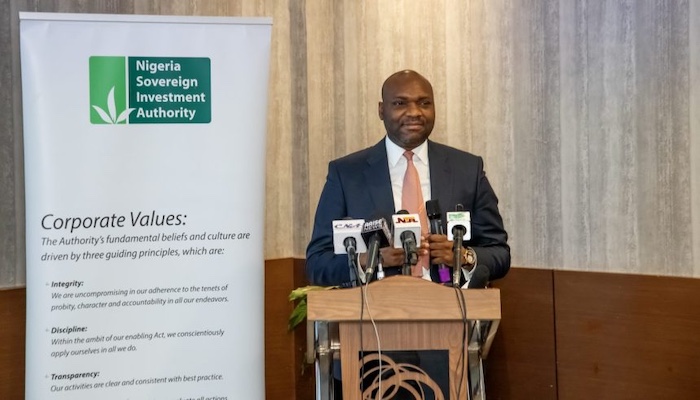
Speaking at the Demo Day of the innovation prize awards in Abuja, over the weekend, Managing Director/Chief Executive, NSIA, Mr. Aminu Umar-Sadiq, said supporting entrepreneurs to expand their businesses and create jobs remained central to the authority’s investment strategy, with a focus on helping promising Nigerian businesses achieve long-term growth.
He said the NSIA Prize for Innovation (NPI) was designed not only to provide funding but also to equip entrepreneurs with the education, business support and market exposure needed to build sustainable enterprises.
Meanwhile, Come Again Foods, a manufacturer of packaged snacks using locally sourced agricultural commodities, emerged overall winner, securing a combined prize valued at $100,000.
Protein Kapital, which produces protein and biofertilisers through insect farming and organic waste processing, came second with $70,000, while Instant Rad Inc., an artificial intelligence-powered teleradiology platform connecting hospitals and diagnostic centres with radiologists across Africa, placed third with $50,000.
The three businesses were among 12 finalists selected from 6,000 applications for the competition, themed Building for Impact.
The prize pool comprised $220,000 from NSIA, $45,000 from Cascador and $10,000 from Wema Bank.
Beyond the immediate financial awards, the programme offers a pathway to further funding, entrepreneurial training, mentorship and market access, although access to the additional growth capital is subject to eligibility.
Umar-Sadiq, small and medium-sized enterprises (SMEs) are critical to employment generation and economic expansion, making support for innovative businesses an important part of efforts to strengthen Nigeria’s productive capacity.
“Without SMEs, you have no job creation. Without SMEs, you are unable to actually grow economically,” he said.
He explained that the authority supported entrepreneurs through several initiatives, including its funds for cultural finance in Nigeria, the Development Bank of Nigeria and the NSIA Prize for Innovation.
The NSIA managing director said the innovation prize had evolved over its four editions, with improvements in prize funding, strategic partnerships and the capacity to support a broader pool of entrepreneurs.
He noted that this year’s programme prioritised healthcare, manufacturing and food systems, although the initiative remained open to ideas across different sectors.
According to him, the selection of the three sectors was intended to identify innovations capable of generating employment while achieving the scale required to make a wider economic impact.
The programme offers about $350,000 in equity funding, alongside accelerator training, business education and opportunities for market exposure.
He disclosed that the top 200 participants benefited from an accelerator programme designed to refine their ideas and strengthen their business propositions, with the process narrowing to the final 12 contestants.
He further explained that the programme was designed to help promising entrepreneurs obtain the capital, expertise, networks and partnerships required to build sustainable businesses.
He said the quality of the solutions presented demonstrated the depth of Nigeria’s entrepreneurial talent, adding that the authority intended to support businesses capable of scaling their operations and delivering measurable economic and social benefits.