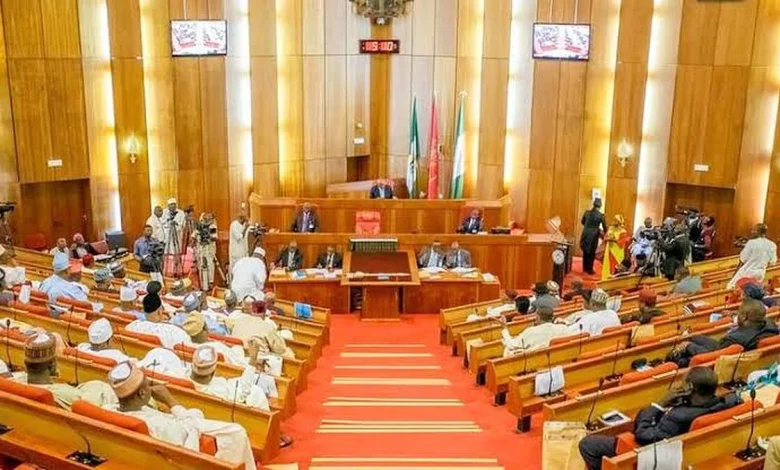
The Senate has ruled out any amendment to the Electoral Act 2026 before the 2027 general elections, despite renewed debate over political party membership registers and candidate nomination procedures following a recent Supreme Court judgment.
Senator Yemi Adaramodu, Chairman of the Senate Committee on Media and Public Affairs, said the National Assembly had completed the legislative process and would not reopen the law while political parties were preparing for the forthcoming elections.
Adaramodu maintained that any review of the legislation would have to wait until after the 2027 polls, when lawmakers could assess its implementation and consider whether changes were necessary.
His position comes after the Supreme Court overturned an earlier Court of Appeal judgment that had invalidated key provisions of the Electoral Act 2026.
The disputed sections concern party membership records and the procedures political parties must follow when selecting candidates for elective offices.
The apex court’s decision has restored the legal provisions and renewed attention on how political parties will comply with the requirements ahead of the next general elections.
Speaking in an interview with Saturday PUNCH, Adaramodu said the Senate had already completed its work on electoral reform and that the legislation was intended to guide the 2027 elections.
“We have already done the electoral reform and passed that one; it is meant for the 2027 elections.
“It is only after the elections that we can consider a review if there is any necessity or calls for amendments and rejigging.
“Anybody who has any petition against it should submit it to the Senate, but for us at the Senate and National Assembly, we have passed the electoral bill into law,” he said.
The lawmaker argued that reopening the legislation at this stage could create uncertainty for political parties that had already relied on its provisions in their preparations for the elections.
He also questioned the practicality of changing the rules after parties had commenced the process of producing candidates.
“Parties have used the law to produce candidates who are going to contest in January and February.
“So, are you now going to shift the goalpost in the middle of the game?
“How do you halt an electoral act that is already in use for a new one? We are not going to do that,” he said.
The Senate’s position indicates that the existing legal framework will remain in place for the 2027 elections unless a relevant judicial development or other lawful process changes its application.
Adaramodu, however, said petitions against the law could still be submitted to the National Assembly for consideration.
The Supreme Court delivered its judgment on September 24, in an appeal filed by the Independent National Electoral Commission (INEC) against the Court of Appeal’s decision.
The seven-member panel, led by Justice Adamu Jauro, set aside the earlier ruling and restored the judgment of the Federal High Court, Abuja, which had dismissed the challenge brought by the Zenith Labour Party (ZLP).
The dispute began when the ZLP challenged provisions of the Electoral Act, arguing that they interfered with political parties’ constitutional powers to manage their internal affairs and select candidates.
The Federal High Court dismissed the suit on May 5, 2026.
However, the party appealed the decision, leading to the Court of Appeal judgment of July 16, which declared the disputed provisions unconstitutional.
INEC subsequently approached the Supreme Court to challenge the appellate court’s decision.
The commission maintained that the provisions should remain in force as part of the legal framework governing political party activities and candidate selection.
In its final decision, the Supreme Court upheld INEC’s appeal and awarded N2 million in costs against the Zenith Labour Party. The ruling restored the provisions that had been struck down by the Court of Appeal.