2027: Jega, Amupitan, EU Raise Alarm Over AI-Driven Election Manipulation, Warn Of Fake Results, Cloned Voices

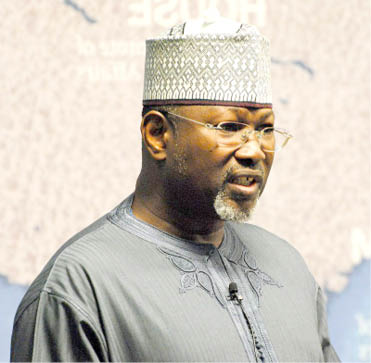
Daud Olatunji
As Nigeria moves towards the 2027 general elections, former Chairman of the Independent National Electoral Commission, Prof. Attahiru Jega, the incumbent INEC Chairman, Prof. Joash Amupitan, and the European Union Ambassador to Nigeria and ECOWAS, Gautier Mignot, have raised concerns over the growing threat of artificial intelligence-driven disinformation to electoral credibility.
The stakeholders warned that the increasing sophistication and accessibility of Artificial Intelligence tools could provide politicians and other malicious actors with new opportunities to manipulate public opinion, circulate fabricated electoral information and undermine citizens’ confidence in the electoral process.
They spoke on Monday in Abuja at a national summit on Artificial Intelligence, Foreign Information Manipulation and Interference, and electoral information integrity, themed, ‘Beyond The Ballot: Safeguarding Electoral Information Integrity In The Age Of AI’.
Jega, who advocated the deployment of AI-powered chatbots by INEC, said the technology could help voters access accurate electoral information and verify questionable claims before they spread across communities and social media platforms.
The former INEC chairman, however, stressed that the commission must not wait until the election period before developing mechanisms to tackle emerging technological threats.
He urged the electoral umpire and other stakeholders to anticipate possible challenges, strengthen their preparedness and establish a rapid-response framework capable of addressing disinformation before it causes significant damage.
Jega said, “What is most important, of course, is how we prepare, anticipate these challenges, and take appropriate measures, particularly in terms of setting up a framework of rapid response to address this.”
Drawing from his participation in the 2024 Cambridge Conference on Electoral Democracy, he said election management bodies, particularly in Africa, should consider using chatbots equipped with officially verified information to provide reliable answers to voters.
According to him, such platforms could enable citizens to obtain accurate information and determine the authenticity of electoral claims circulating online.
He said, “I participated in the 2024 Cambridge Conference on Electoral Democracy, during which a lot of time was spent on discussing the need for election management bodies specifically in Africa to consider, among other things, employing chatbots with officially provided accurate data and information so that people who are looking for information can quickly obtain it, over the day, and for ascertaining the verity or otherwise of information being circulated.”
Jega maintained that AI should not be viewed exclusively as a threat, noting that its constructive applications could help electoral institutions improve communication and protect information integrity.
He added that public confidence in INEC and other electoral stakeholders would depend largely on their ability to respond promptly and effectively to emerging challenges.
The incumbent INEC chairman, Amupitan, also warned that the rapid spread of generative AI tools had lowered the barriers for individuals and organised groups seeking to interfere with electoral processes.
He explained that although AI could improve voter registration, election logistics, data analysis and administrative efficiency, its misuse could produce highly convincing falsehoods capable of misleading voters and provoking political tension.
Amupitan identified cloned voices, fabricated videos of electoral officials, fake operational directives and automated online campaigns designed to create artificial public outrage as some of the emerging threats.
He warned that malicious actors could circulate forged accreditation portals, fabricate information about voter registration and manipulate announcements concerning election results or the cancellation of elections in strategic constituencies.
Such false announcements, he noted, could confuse voters, trigger unrest and weaken public confidence in the credibility of the 2027 elections.
The INEC chairman consequently called for stronger collaboration among the commission, security agencies, independent fact-checkers, media organisations and technology platforms to identify emerging threats, authenticate evidence and provide timely responses.
He also stressed the need to strengthen INEC’s digital infrastructure and intensify voter education to ensure that citizens could distinguish official electoral communications from manipulated content.