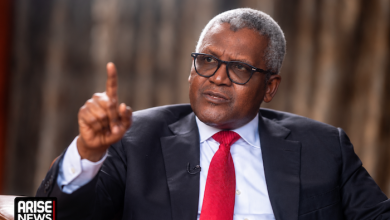
Adeniyi said the exercise of police powers by customs officers must be guided by strict adherence to the law, stressing that searches, arrests, and detention must have legitimate legal grounds and withstand both pub-lic and judicial scrutiny.
Adeniyi spoke at the inaugural Customs Police Summit 2026 in Abuja.
He stated that the credibility of the service’s enforce-ment operations depended substantially on its ability to regulate the conduct of its personnel and prevent the abuse of institutional authority.
Adeniyi, who is also Chairman of World Customs Or-ganisation (WCO) Council, described the Customs Po-lice Unit (CPU) as a critical internal accountability mechanism responsible for ensuring that officers en-trusted with enforcement powers did not operate above the law.
Adeniyi said the service could not effectively facilitate legitimate trade and suppress illicit commerce without a disciplined and trusted internal police structure ca-pable of enforcing professional standards.
He declared that the fundamental principle underpin-ning the establishment of the CPU remained that no of-ficer was above the law.
The unit, inaugurated in July 2019, was established to investigate erring personnel, prevent crime, and strengthen compliance within the service.
The CGC said the increasing sophistication of transna-tional criminal activities required customs to strength-en its internal enforcement capacity while ensuring that legitimate businesses were not subjected to un-necessary disruptions.
He identified three fundamental lessons from the evo-lution of customs enforcement: integrity must begin within the institution, authority must be exercised with restraint, and enforcement must be supported by institutional collaboration.
According to him, although the Nigeria Customs Ser-vice Act 2023 provides the service with police powers, the legislation does not confer unlimited authority on officers.
He said every enforcement action must be legally de-fensible, adding that the exercise of statutory powers without appropriate safeguards could undermine pub-lic confidence in the institution.
Adeniyi also cautioned against treating enforcement and trade facilitation as competing responsibilities, stating that both could be strengthened through coor-dinated interventions.
He cited the One-Stop Shop initiative as an example of how collaboration could improve operational efficien-cy while maintaining effective enforcement controls.
Intelligence-led Enforcement
The customs chief said the service must increasingly re-ly on intelligence, data, and technology rather than in-discriminate enforcement to identify criminal networks and intercept illicit consignments.
He pointed to the World Customs Organisation’s SAFE Framework, Authorised Economic Operator pro-gramme, advance rulings, Time Release Study and Re-vised Kyoto Convention as instruments that could im-prove compliance, accelerate legitimate trade, and en-able officers to concentrate on high-risk transactions.
He explained that those mechanisms would also re-duce opportunities for corruption and arbitrary exer-cise of discretion by customs personnel.
Adeniyi identified the service’s B’Odogwu digital plat-form, which integrates declarations, valuation, risk management and Authorised Economic Operator pro-cesses, as an important instrument for strengthening transparency and accountability.