Adesina Urges Tinubu, Kagame, el-Sisi To Lead $50bn Africa Space Investment Drive

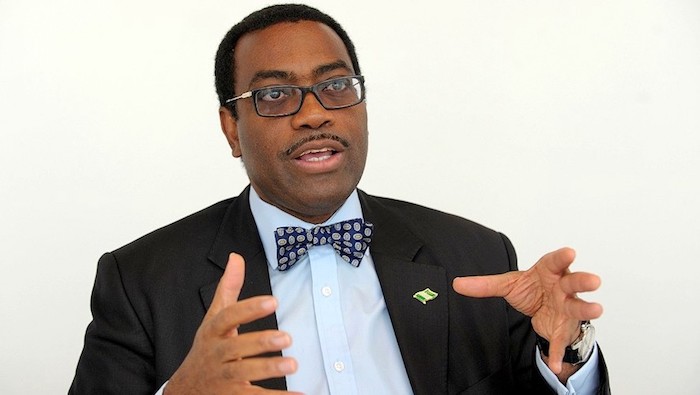
Adesina proposed the establishment of a $50 billion Africa Space Future Fund, with an initial capitalisation target of $5 billion, to finance satellite infrastructure, scientific research, indigenous technology development and space-related enterprises across the continent.
He called on Tinubu, alongside Rwandan President Paul Kagame and Egyptian President Abdel Fattah el-Sisi, to provide founding political leadership for the initiative by convening a presidential summit to secure investment commitments and establish an institutional framework for the proposed continental programme.
The former AfDB president made the proposal on Tuesday in Abuja while delivering a keynote address titled, “Financing Africa’s Space Future: Mobilising Capital for Space Science, Innovation and Technology,” at the Africa Space Economy, Innovation and Communication Conference organised by the Nigerian Space Research and Development Agency (NASRDA).
The conference attracted leaders of space agencies, astronauts, representatives of space businesses and other stakeholders in the global space ecosystem to explore investment opportunities, innovation, technological advancement and international cooperation.
Making a case for a coordinated continental investment strategy, Adesina said Africa’s commercial space industry was gradually emerging, with 321 active commercial space companies operating across 36 African countries and generating approximately $373 million in revenue in 2024, but warned that the continent’s ambitions were not matched by the scale of investment required to compete globally.
He cited the approximately $24.4 billion funding approved for the United States National Aeronautics and Space Administration (NASA) in 2026, compared with about $828 million in combined government space allocations across Africa, noting that although the figures were not directly comparable, they illustrated the enormous investment deficit confronting the continent.
According to him, NASA alone received almost 30 times Africa’s combined public space allocation, underscoring the urgency of mobilising capital to develop the infrastructure, research and technological capabilities required to compete in the global space economy.
Adesina argued that Africa could not expect to compete meaningfully in an increasingly lucrative global space industry while investing comparatively little in the infrastructure and technologies that would determine who captures its value, insisting that the continent must move beyond fragmented national programmes to build an integrated and commercially viable space ecosystem.
In a direct appeal to Tinubu, he commended the President’s ambition to build a $1 trillion Nigerian economy and his approval of four new Nigerian satellites, describing the decision as a powerful demonstration of the administration’s recognition of science, technology and innovation as critical drivers of economic transformation.
“I particularly commend your commitment to Nigeria’s space programme. Your approval of four new Nigerian satellites sends a powerful message. It demonstrates your conviction that science, technology and innovation must drive our economic transformation,” he said.
Adesina expressed confidence in Nigeria’s economic prospects under Tinubu’s leadership, stressing that continuity, consistency and a bold vision would be critical to sustaining economic reforms, achieving broad-based prosperity and strengthening the country’s global standing.
“I have no doubt that, under your leadership, and with continuity, consistency and a bold vision for the future, Nigeria will achieve sustained economic growth, broad-based prosperity and a position of greater strength and influence in the global community.
“Knowing you, Mr. President, I am confident that you will sustain and drive this vision forward.
“Let there be renewed hope on the ground, and renewed hope in space as well!” he said.
At the centre of his proposal is the Africa Space Future Fund, which he said would mobilise up to $50 billion in cumulative investments over 10 to 15 years, bringing together African governments, sovereign wealth funds, development finance institutions, pension funds, insurance companies, private investors, international partners and the African diaspora.
The proposed fund would prioritise commercial space infrastructure, including satellite communications, low-Earth orbit broadband capabilities, Earth observation, ground stations, gateways and data infrastructure, while also supporting scientific missions, university research, advanced technologies and international research partnerships.
It would equally invest in African startups, satellite component manufacturers, artificial intelligence, robotics, sensors and emerging space businesses, with particular emphasis on African ownership, intellectual property development, technology transfer, indigenous innovation and local manufacturing capacity.
Adesina said the investments would help Africa develop the technological capabilities, enterprises and industrial ecosystems necessary to generate and retain economic value from the global space economy, create skilled employment and build globally competitive businesses.