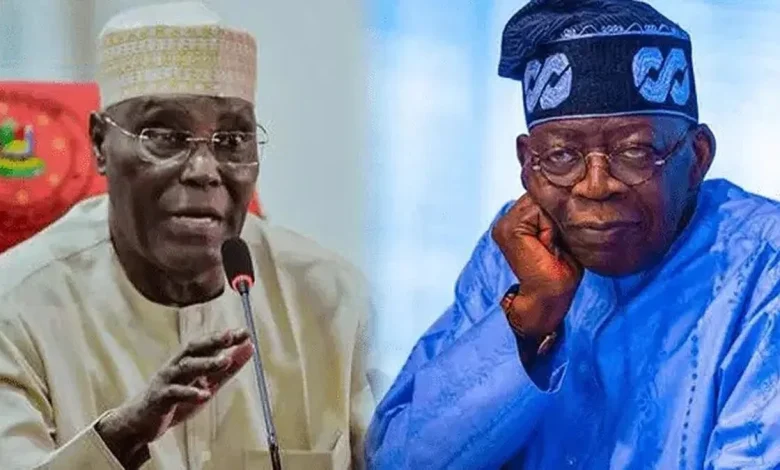
The presidential candidate of African Democratic Congress (ADC), Atiku Abubakar, has faulted the All Progressives Congress Presidential Campaign Council (APC-PCC) over its defence of President Bola Tinubu’s electricity pledge.
This was just as he insisted that Nigerians cannot power their homes and businesses with policy announcements and financial commitments of the government.
Atiku said Nigerians were still grappling with unreliable electricity, rising tariffs and the high cost of alternative power, three and a half years after Tinubu promised steady electricity supply and an end to estimated billing.
The former vice president made his position known in a statement issued on Sunday by the Director of Strategic Communication of the ADC Presidential Campaign Council, Phrank Shaibu.
He accused the ruling party’s campaign council of highlighting policy documents and financial interventions without addressing the failure to translate them into improved electricity supply.
“The APC should spare Nigerians the spectacle of celebrating paperwork while homes and businesses remain in darkness. After three and a half years, families still struggle to keep their homes lit. Traders and small business owners spend scarce resources on alternative power, yet struggle to keep their businesses alive. Nigerians are billed for electricity they cannot rely on. President Tinubu promised steady power and an end to estimated billing. That promise has not been kept,” he said.
Atiku also criticised the electricity band system, arguing that consumers were paying different tariffs without corresponding improvements in power supply.
He cited Band A tariffs of about N209.50 per unit in many areas, excluding Value Added Tax (VAT), as an example of the financial burden on electricity consumers.
He maintained that Nigerians across the five electricity bands were paying for a service they could not reliably access.
“No family should have to weigh the cost of electricity against the cost of food. No business should be left to pay more while receiving less,” he said.
The ADC presidential campaign council also questioned the Federal Government’s plan to end electricity subsidies from 2027, demanding clarity on how the policy would affect household and business electricity bills.
Atiku proposed collaboration with state governments and regulators to abolish the existing band system and introduce what he described as a fairer and more affordable framework that would hold electricity companies accountable for the power they deliver.
He also criticised the administration’s multitrillion-naira bond programme designed to settle legacy debts owed to electricity generation companies, arguing that clearing outstanding debts should not be presented as investment in new generation infrastructure.
The former vice president alleged that the Tinubu administration had not constructed any new power generation infrastructure of its own to expand the country’s electricity capacity.
“Paying old debts is not the same as building new power infrastructure. Bonds cannot be presented as a substitute for power in people’s homes,” he said.
He further raised concerns about VAT on electricity and the five per cent surcharge provided for certain fossil fuels, including petrol and diesel, under the Nigeria Tax Act.
Atiku argued that Nigerians already struggling with energy costs deserved clarity on the possibility of additional charges.
His remarks followed a defence of the administration’s electricity policies by APC-PCC spokesman Dele Alake, who described the power sector reforms as ongoing work.
Alake had cited the Electricity Act 2023, a N4 trillion bond programme to settle verified debts owed to generation and gas companies, metering initiatives, transmission projects and state electricity reforms as evidence of the government’s efforts.
However, Atiku insisted that policy announcements and financial commitments could not replace measurable improvements in electricity supply.
“Dele Alake’s statement cannot light a home. Signing a law is not electricity. Raising a bond is not electricity. Approving a project is not power delivered. Nigerians cannot cook, study, work or sustain a business on announcements.”
He also recalled Tinubu’s campaign promise ahead of the 2023 presidential election, in which the president challenged Nigerians not to re-elect him if he failed to provide constant electricity within four years.
“If I don’t give you constant electricity for four years, when I come back for a second term, don’t vote for me,” Tinubu had said.
Atiku argued that Nigerians had now experienced the period the president set for himself and should no longer be expected to rely on explanations from his campaign council.
“They do not need his campaign council to interpret his words for them. They need him to answer for them,” he said.