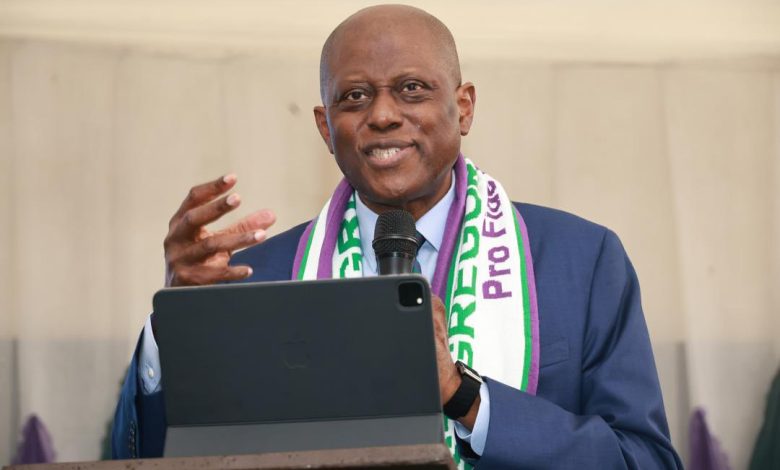
The Governor of the Central Bank of Nigeria (CBN), Olayemi Cardoso, on Friday announced that Nigeria has achieved its long-standing target of attracting $1 billion in monthly diaspora remittances, setting a new goal of raising the inflows to $1.5 billion by June 2027.
Equally, the Body of Bank Chief Executive Officers in Nigeria assured customers of seamless banking services during the forthcoming festive season, pledging that digital transactions would remain uninterrupted despite the anticipated increase in payment activities.
Cardoso spoke at the 61st Annual Bankers’ Dinner of the Chartered Institute of Bankers of Nigeria (CIBN) in Lagos, where he outlined the next phase of the apex bank’s financial sector reforms, including plans to deepen money markets, strengthen regulatory oversight and expand credit to the private sector.
The remittance milestone represents a significant development in the CBN’s efforts to channel more diaspora funds through formal financial institutions, particularly as Nigeria seeks to strengthen foreign exchange liquidity and reduce pressure on the naira.
Beyond remittances, the CBN Governor announced plans to introduce interbank repo and overnight indexed swap markets in the first quarter of 2027, while setting a target for the banking industry to at least double the private sector credit-to-GDP ratio by 2030.
He said: “When I stood before you last year, I spoke of our ambition to increase monthly remittances to $1 billion. I am pleased to report that this milestone has been achieved.
“We are now working towards increasing monthly remittances to $1.5 billion by the end of the first half of 2027.”
The planned introduction of the interbank repo and overnight indexed swap markets, which will be undertaken in collaboration with market participants, is expected to deepen liquidity management and strengthen financial institutions’ capacity to manage financing and interest rate risks.
It is also expected to gradually reduce dependence on the apex bank for functions that can be effectively handled by market participants.
“To further deepen liquidity and improve market efficiency, we will work with market participants to launch the interbank repo and overnight indexed swap markets in the first quarter of 2027,” Cardoso said.
He added that the development of these instruments would give market participants greater capacity to manage liquidity and longer-term financing risks.
“As these capabilities develop, our markets should become better equipped to manage liquidity and longer-term financing risks, with less reliance on the Central Bank for functions that can be performed effectively by market participants,” he said.
The planned introduction of the markets comes as the CBN continues to strengthen the infrastructure supporting monetary policy transmission and price discovery.
Earlier this year, the apex bank introduced the Nigeria Overnight Financing Rate (NOFR) as a pricing benchmark, which Cardoso said should see wider adoption by banks, including in loan pricing.
He said the benchmark would provide a more transparent reference point for financial transactions and support the development of more sophisticated lending, financing and risk-management products.
The governor also disclosed plans to introduce a comprehensive regulatory rulebook in 2027 to provide financial institutions with greater clarity on regulatory requirements and supervisory expectations.
According to him, the proposed framework was part of efforts to ensure that reforms undertaken over the past three years become embedded in the operations of the financial system rather than remain dependent on individual policy decisions.
“In the coming year, we will take a further step towards this objective with the introduction of a comprehensive and accessible regulatory rulebook, bringing greater clarity to regulatory requirements and supervisory standards.