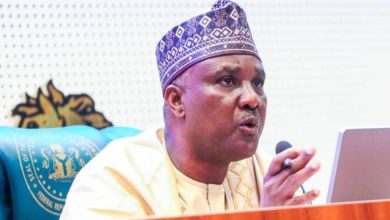
The Chief Justice of Nigeria (CJN), Justice Kudirat Kekere-Ekun, has warned magistrates and other lower court judges against yielding to pressure to deliver hurried judgments, insisting that judicial officers must balance speedy justice with fairness and thorough consideration of cases.
Kekere-Ekun said judicial officers must resist attempts to stampede them into making hasty decisions, even as they work to address delays that have continued to undermine public confidence in Nigeria’s justice system.
She gave the warning on Monday at the opening of the 2026 All Nigeria Judges’ Conference of the Lower Courts, organised by the National Judicial Institute (NJI) in Abuja.
The conference has as its theme, “Enhancing Effective Justice Delivery Through Innovation and Institutional Efficiency.”
The CJN stressed that magistrates, Sharia Court judges, Area Court judges and Customary Court judges occupy a critical position in the country’s judicial system because they handle disputes that directly affect the daily lives of ordinary Nigerians.
According to her, these courts adjudicate cases involving family relationships, inheritance, land disputes, commercial transactions and personal liberty, making them the first and, in some cases, only point of contact between citizens and the judiciary.
She warned that the experiences of litigants in lower courts often shape their perception of the entire judicial system.
Kekere-Ekun identified prolonged court proceedings and repeated adjournments as some of the most persistent complaints against the Nigerian justice system, noting that ordinary litigants bear the greatest burden.
She said people seeking justice over land disputes, family disagreements and criminal charges often spend scarce resources on transportation, legal fees and repeated court appearances while waiting for their cases to be resolved.
Although she acknowledged that inadequate facilities, insufficient manpower and limited resources contribute to delays, the CJN said some of the problems could be addressed through personal discipline and effective courtroom management.
She urged magistrates and other lower court judges to take responsibility for proceedings before them by monitoring cases, identifying matters that have remained unresolved for too long and preventing unnecessary adjournments.
“Counsel must be afforded a fair opportunity to present their cases, but the court must retain control of its proceedings. Equally, judicial officers must not allow themselves to be stampeded into making hasty decisions,” she warned.
The CJN also criticized poor time management in courts, describing punctuality as an essential demonstration of respect for the administration of justice.
She said judicial officers should make reasonable efforts to commence proceedings at scheduled times and promptly notify litigants and lawyers whenever unforeseen circumstances make court sittings impossible.
Kekere-Ekun noted that it was unfair to compel litigants, some of whom travel long distances and spend considerable sums to attend court, to wait only to discover that proceedings would not hold without prior notice.
She further charged judicial officers to treat litigants, lawyers and witnesses with dignity, irrespective of their educational background, financial status or whether they had legal representation.
According to her, judges must exercise authority with patience and restraint, stressing that firmness should never be an excuse for discourtesy or humiliation.
On the quality of judgments, the CJN said decisions must demonstrate that judicial officers understood the issues before them, carefully evaluated the evidence and correctly applied the relevant laws.
She also urged lower court judges to embrace technology, particularly digital case management systems, electronic filing and electronic records, to reduce administrative bottlenecks and improve access to court information.
Kekere-Ekun identified the Nigerian Case Management System and other digital initiatives as part of efforts to modernise court administration, urging judicial officers and registry personnel to acquire the skills required to operate the emerging systems.
However, she cautioned that technological advancement must be supported by reliable infrastructure, adequate training, technical assistance and safeguards for confidential information.
She also warned against allowing digital reforms to exclude Nigerians who lack access to technological facilities.
On artificial intelligence, the CJN said the technology could support legal research, document summarisation and administrative duties but urged judicial officers to approach its adoption with caution.
Earlier, the Administrator of the National Judicial Institute, Justice Babatunde Adejumo, warned judicial officers against allowing technological innovation to compromise judicial ethics and institutional discipline.
Adejumo urged participants to remain within established ethical boundaries and avoid actions capable of undermining the integrity of the judiciary or the authority of their heads of courts.
“Bear in mind that innovation without control or discipline often gives rise to severe risks and flawed solutions,” he said.
He said the NJI had intensified capacity-building programmes for judicial officers in fulfilment of its mandate to provide judicial education across different categories of the judiciary.
Adejumo described the biennial conference as a major gathering of judicial officers whose contributions remain essential to the rule of law and administration of justice in Nigeria.