Dollar Near 20-Month High as Fed Rate Hike Expectations Threaten Emerging Markets

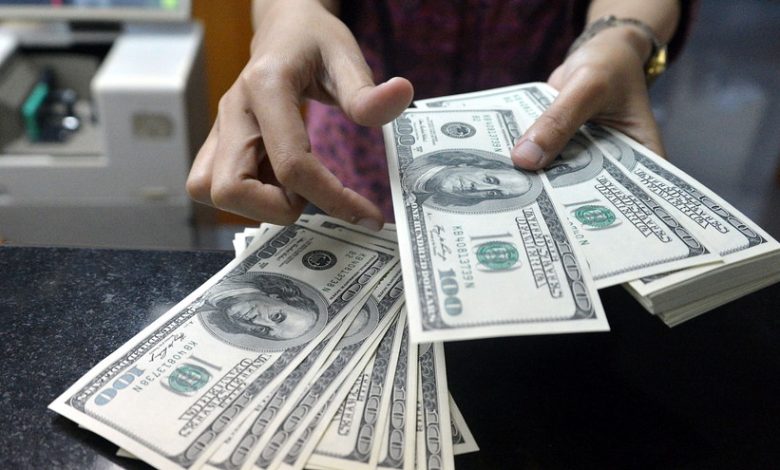
The United States dollar remained near a 20-month high on Tuesday as expectations of further monetary policy tightening by the Federal Reserve increased concerns over capital flows and financing costs across emerging-market economies.
The dollar index, which measures the performance of the American currency against six major currencies, traded at approximately 104.28 after reaching 104.53 during Monday’s session.
The euro hovered near an 18-month low at $1.0911, while the British pound traded around $1.3043 and the Japanese yen weakened to 159.18 per dollar.
According to Reuters, financial markets have fully priced in a 25-basis-point Federal Reserve interest rate increase in December with traders also assigning a small probability to a larger 50-basis-point adjustment.
The renewed strength of the dollar followed a sharp recovery in global technology stocks, which eased concerns that deteriorating financial market conditions might prevent further monetary tightening in the United States.
For emerging-market economies, the prospect of higher US interest rates presents a significant challenge.
Higher returns on dollar-denominated securities can reduce the relative attractiveness of investments in developing economies, particularly when investors are concerned about currency depreciation and economic uncertainty.
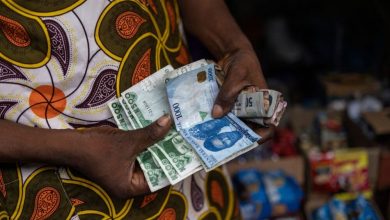
Nigeria remains exposed to this changing international investment environment through its dependence on foreign exchange inflows, external financing and foreign participation in domestic financial markets.
A stronger dollar could increase the naira-denominated cost of servicing foreign currency obligations, even where the dollar value of outstanding debt remains unchanged.
Businesses dependent on imported machinery, industrial equipment and raw materials could also face additional cost pressures if dollar appreciation translates into renewed weakness in the naira.
The development presents a further challenge for the Central Bank of Nigeria as it attempts to balance exchange rate stability, inflation management and domestic economic growth.
Reducing domestic interest rates while US yields rise could narrow the return differential available to international investors and potentially weaken demand for Nigerian financial assets.
Conversely, maintaining elevated domestic interest rates to attract foreign capital could increase financing costs for businesses and households.
The ultimate effect on the Nigerian economy will depend on domestic foreign exchange liquidity, crude oil export earnings, monetary policy credibility and the direction of international capital flows.
While markets currently anticipate another Federal Reserve rate increase, the decision remains dependent on incoming United States economic data.
For Nigeria and other emerging economies, the risk is not merely the immediate appreciation of the dollar but the possibility that sustained US monetary tightening could make international capital more expensive and increasingly difficult to attract.