How ISWAP Turns Attacks On Military Bases Into Lucrative Business, Pays Fighters For Stolen Weapons

….ISS report exposes ‘ghan imah’ reward system, says AK-47 fetches $750, RPG launcher $1,000, while gun-mounted pickup attracts $30,000
….Ex-fighters reveal Middle East funding, currency exchange networks linking Dubai, Kano, Lagos to insurgents’ supply chain
Daud Olatunji
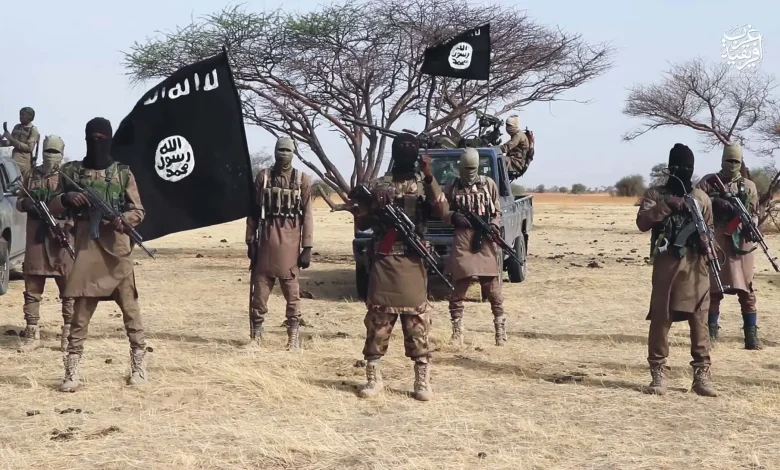
Nigerian military bases have become lucrative targets for Islamic State West Africa Province (ISWAP) fighters, who reportedly receive financial rewards for weapons and military equipment seized during attacks on security formations, a new report by the Institute for Security Studies (ISS) has revealed.
The report, which exposes the financial incentives sustaining the insurgency in the North-East, said the terrorist group operates a structured reward system known as ghan imah, under which fighters are paid for weapons and other military assets captured during raids on military installations.
According to the report, the arrangement has transformed attacks on Nigerian troops and military bases into a source of financial gain for insurgents, providing an additional motivation for recruitment, retention and participation in battlefield operations.
Under the system, fighters are required to surrender captured weapons to the dawlah, the Islamic State’s administrative structure, which subsequently pays them predetermined amounts for the recovered military equipment.
The ISS report, titled Wiring the Insurgency: Inside ISWAP’s Adaptive Technology Programme, was released on Thursday and draws on intelligence gathered from informants, including former fighters and early members of the Islamic State faction.
Taiwo Adebayo, the ISS researcher who authored the report, disclosed that the amounts paid to fighters depend on the categories of weapons and equipment seized.
He told TheCable that an AK-47 rifle attracts $750, while a rocket-propelled grenade launcher is valued at $1,000.
A box of ammunition reportedly fetches between $500 and $1,000, depending on its calibre, while a pickup truck fitted with a heavy weapon is valued at $30,000.
“These sums are paid in naira to the fighters, and are not trivial amounts in the Lake Chad Basin economy,” Adebayo was quoted as saying.
He explained that although the reward arrangement had existed for years, its growing institutionalisation had made it a central component of ISWAP’s operational strategy.
According to him, the system has become particularly important in motivating fighters who may not necessarily be driven by religious ideology.
“Ex-fighters told me that the ghanimah pricing system helped attract and keep members when faith and ideology alone were insufficient.
“Without it, they said, ISWAP would struggle to retain its newer generation of fighters, especially those recruited through coercion or economic incentives,” he said.
Nigeria has battled jihadist violence in the North-East since 2009, when the Boko Haram insurgency began. The conflict has since evolved, with the emergence of different factions, including ISWAP, which has intensified attacks on military formations and security personnel.
The report indicated that ISWAP had carried out dozens of attacks on military bases since 2025, with captured weapons believed to constitute a major source of its arms supply.
Although the exact quantity of weapons seized during individual attacks remains unclear, a senior Nigerian intelligence source reportedly acknowledged the scale of military equipment lost to the insurgents.
“At a time, it was as if we were handing weapons to ISWAP,” the intelligence source was quoted as saying.