Firdaus Obiremi
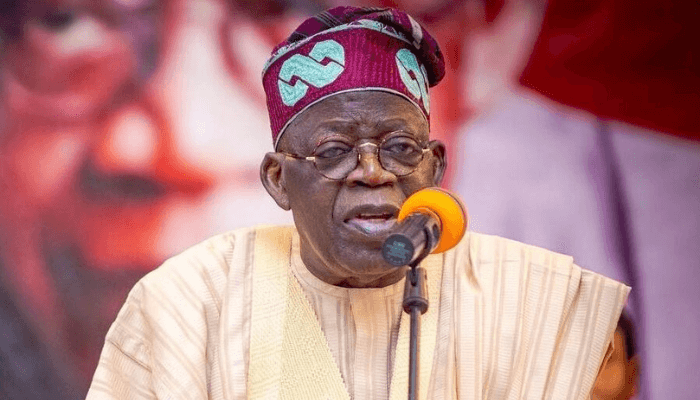
President Bola Tinubu has said his experience of working as a taxi driver and taking up other jobs to finance his university education in the United States influenced his decision to establish the Nigerian Education Loan Fund (NELFUND).
The President said he understood the financial difficulties confronting students, particularly the burden of tuition fees, accommodation and other educational expenses, having experienced similar challenges during his studies abroad.
Tinubu disclosed this in a statement posted on his X handle on Wednesday, where he explained that he had to postpone the commencement of his studies for several months to save enough money before relocating to Chicago.
According to him, he subsequently took up different jobs, including driving a taxi, to raise funds for his university education.
“When I first arrived in the United States as a young man, I drove a taxi to earn money for my education. I even had to postpone starting school for several months to save enough,” he said.
“When I eventually got to Chicago, I worked different jobs to support myself and pay my way through university. I know what it means to worry about tuition, accommodation and how to make ends meet while pursuing an education.”
The President said his personal experience reinforced his belief that no Nigerian child should be denied access to education because of the financial circumstances of their parents.
He maintained that every child deserved equal opportunities to pursue their ambitions, irrespective of their family background.
Tinubu disclosed that NELFUND had provided more than N372bn in student loans to cover institutional fees and students’ upkeep, describing the initiative as part of his administration’s efforts to widen access to tertiary education.
He added that students in federal and selected state technical colleges were benefiting from free tuition, boarding, textbooks and uniforms.
The President further revealed that the Federal Government’s technical and vocational education programme had attracted more than 2.8 million applications, while 38 technical colleges had been rehabilitated.
On industrial harmony in the university system, Tinubu said his administration had reached a fresh agreement with the Academic Staff Union of Universities, providing for a 40 per cent increase in academic staff remuneration and other measures aimed at improving stability in tertiary institutions.
He said the government was also committed to addressing disruptions to academic calendars, insisting that students should complete their programmes within the stipulated periods.
“A four-year course must take four years. Our young people deserve to complete their education on time and get on with their lives,” he stated.
The President also disclosed that more than one million children who were previously out of school had returned to classrooms under his administration’s education interventions.
He said the government was investing in teacher development, expanding educational opportunities for girls and implementing a new national curriculum designed to restore Nigerian history to classrooms.
On medical education, Tinubu said the Federal Government was investing N110bn in the rehabilitation of 24 medical schools to strengthen the country’s capacity to train healthcare professionals.
He disclosed that annual nursing enrolment had increased from 28,000 to 115,000, while admission into medical and dental programmes had risen from 5,000 to 12,000.
According to him, the expansion was necessary to improve the availability of trained healthcare professionals and strengthen Nigeria’s domestic health workforce.