NLC Demands Prompt Payment Of N70,000 Transport Allowance, Warns Against Division

The Nigeria Labour Congress (NLC) has called on the Federal Government to implement its October 27 agreement with organised labour, particularly the payment of the N70,000 transportation allowance and the formation of the Tripartite National Minimum Wage Negotiation Council.
The labour centre also warned against alleged efforts to create divisions within the labour movement ahead of negotiations for a new national minimum wage, saying such actions could weaken workers’ collective bargaining position.
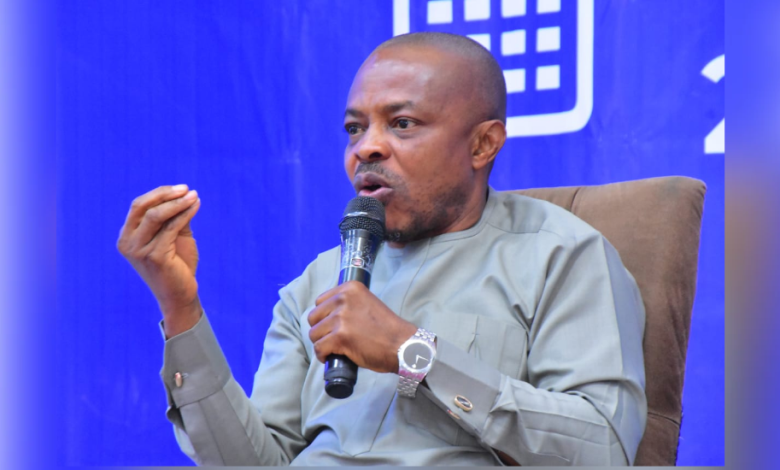
NLC President, Joe Ajaero, made the call during the opening of the 2026 NLC Harmattan School at the Public Service Institute in Abuja.
Speaking at the event, themed “Organising in the Context of Socio-economic Transformation,” Ajaero said workers expected the government to fulfil all provisions of the October 27 agreement, including the transportation allowance and the scheduling of a monitoring meeting.
He said the labour movement expected the agreed benefits to be paid within the month, alongside the convening of the monitoring meeting.
Ajaero also appealed to state governments and private sector employers to honour the agreement, noting that compliance with negotiated commitments was necessary to build confidence and maintain stable industrial relations.
Turning to the forthcoming minimum wage negotiations, the NLC president alleged that some interests were attempting to weaken organised labour by exploiting differences among unions and workers.
He warned that such groups could spread misinformation and encourage conflicts within the labour movement to undermine its position before negotiations commenced.
Ajaero urged workers to remain united and resist attempts to create divisions, stressing that solidarity would be crucial to securing improved wages and working conditions.
He said the rising cost of living, shrinking purchasing power, insecurity, unemployment and growing poverty had made workers’ education and collective organisation increasingly important.
According to him, many workers were struggling to cope with rising expenses on food, transportation, housing, healthcare and education.
He maintained that wages should be evaluated based on whether they could provide workers with a decent standard of living, rather than simply the amount paid.
Ajaero said economic reforms should not be judged solely by macroeconomic indicators but also by their effects on workers, pensioners, unemployed youths, small business owners and vulnerable households.
He stressed that the central issue was whether Nigerians could live decently on their earnings.
The NLC president also called for issue based campaigns ahead of the 2027 general elections, urging political parties and candidates to clearly state their positions on employment, wages, social protection, education, healthcare, security, food production, infrastructure, taxation and workers’ welfare.
He cautioned against reducing the elections to personality contests, slogans, ethnic considerations or unfulfilled promises.
Ajaero further urged the Independent National Electoral Commission (INEC) to ensure transparency and maintain a credible voters’ register to protect the integrity of the 2027 electoral process.
He said workers and other citizens had the right to scrutinise political programmes and demand accountability from candidates.
The NLC president maintained that workers were not merely an electoral bloc but active citizens who contributed to the country’s economy and deserved to have their concerns reflected in political decisions.
He added that the responsibilities of trade unions extended beyond defending wages and employment conditions to promoting democracy, social justice, equality and human dignity.
Ajaero said workers’ education should equip union members with a better understanding of economic policies, labour laws, taxation, social protection, democratic governance, climate change and technological developments affecting employment.
He noted that artificial intelligence, automation and digital platforms were reshaping traditional employment relationships, requiring unions to improve their organising methods and leadership capacity.
The NLC president urged participants at the Harmattan School to focus on developing practical solutions to workers’ challenges rather than attending the programme solely to obtain certificates.
He also advocated stronger partnerships between trade unions and civil society organisations, saying the labour movement must continue to defend workers and the wider population.
Meanwhile, the Director of the International Labour Organisation (ILO) Country Office for Nigeria, Ghana, Liberia and Sierra Leone, and Liaison Office for ECOWAS, Dr Vanessa Phala, called for stronger workers’ organisations, collective bargaining and social dialogue to ensure that economic growth translated into better living and working conditions.
In her goodwill message to participants, Phala said rising living costs, inequality, unemployment and underemployment had continued to erode workers’ purchasing power in Nigeria.
She said the pursuit of a living wage went beyond meeting the statutory minimum, noting that employment should provide workers with a dignified livelihood and a means of escaping poverty.
According to her, a living wage was linked to income, social protection, collective bargaining, public services, productivity, economic development and the equitable distribution of national wealth.
Phala also urged trade unions to adjust their organising strategies to accommodate workers in the informal sector, platform based employment, outsourced jobs and other emerging forms of work.
She identified young people and women as important groups requiring greater attention, while calling for improved representation and protection for informal workers who often face unstable earnings, limited social protection and inadequate collective representation.
The ILO official stressed that economic growth must be accompanied by social justice, adding that job creation, workplace rights, social protection and dialogue were essential to sustainable development.