Kremlin Tightens Putin’s Security Amid Assassinations, Internal Tensions and Coup Fears – Intel Report

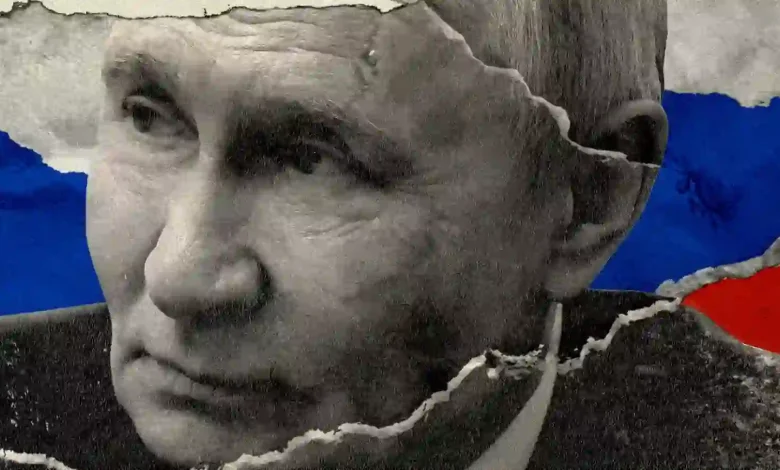
An intelligence report cited by CNN says the Kremlin has significantly strengthened the personal security of Russian President Vladimir Putin following a series of assassinations of senior military figures and growing fears of internal instability and a possible coup.
According to the European intelligence dossier, security around Putin has been expanded to include stricter screening procedures, tighter movement controls, and increased surveillance of individuals within his close circle. Staff such as cooks, bodyguards, and photographers are reportedly barred from using public transport, while all visitors to the Kremlin leader must pass multiple security checks. Those working closely with him are also restricted to phones without internet access.
The report says some of these measures were introduced after the killing of a senior Russian general in December 2025, an incident that triggered tensions within Russia’s security establishment. Since then, internal concerns have reportedly grown over leaks, sabotage risks, and the possibility of assassination attempts, including via drones.
The Kremlin has also sharply reduced the number of locations Putin regularly visits. His residences in the Moscow region and at Valdai are now largely unused, and he has reportedly avoided military facilities this year, unlike in 2025. In some cases, officials have relied on pre-recorded footage of Putin to maintain public appearances.
The intelligence assessment claims that since the invasion of Ukraine in 2022, Putin has increasingly spent extended periods in secure bunkers, including locations in the Krasnodar region near the Black Sea.
The war in Ukraine is said to be a major factor driving internal anxiety. Western estimates suggest heavy Russian casualties each month, while Ukraine continues to carry out drone strikes deep inside Russian territory, including Moscow. Economic disruptions, including infrastructure failures and communication outages in major cities, are also increasing domestic pressure.
The report further alleges that concerns within the Kremlin intensified after a heated internal dispute over responsibility for protecting senior military officials. Following the December assassination of Lieutenant General Fanil Sarvarov, top security figures reportedly clashed over failures in protection systems. During a closed-door meeting, senior officials including Chief of the General Staff Valery Gerasimov and FSB head Alexander Bortnikov allegedly exchanged blame over security lapses.
The intelligence document also highlights former defence minister Sergei Shoigu as a potential internal risk factor, claiming he retains influence within military structures. It further references the arrest of his former deputy, Ruslan Tsalikov, on corruption-related charges, describing it as a sign of increasing instability within elite networks.
However, the report provides no concrete evidence supporting allegations of coup plotting. It notes that European intelligence agencies may also have strategic motives in highlighting internal divisions within the Kremlin during the ongoing war.
Putin previously survived a major internal challenge in 2023, when Wagner mercenary leader Yevgeny Prigozhin led a short-lived rebellion against Moscow before being killed later that year.
Other officials mentioned in the report include Chechen leader Ramzan Kadyrov, who was recently seen meeting Putin as part of ongoing high-level engagements.
Despite the heightened security environment, Putin continues limited public appearances, though analysts say his movements are now far more restricted and heavily controlled.
The Kremlin has not officially commented on the intelligence report.
READ ALSO: