The Lagos State Government has warned that unchecked, illegal sand dredging is directly driving up the cost of construction and worsening the housing crisis across the state.
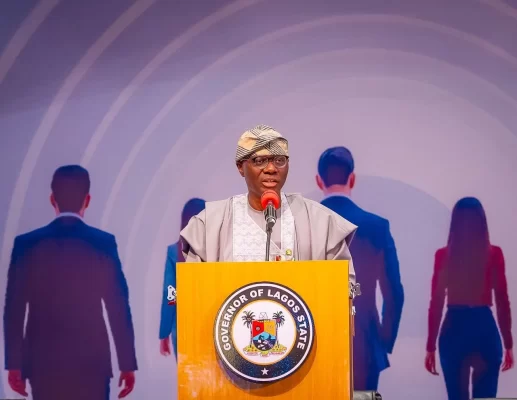
The State Commissioner for Waterfront Infrastructure Development, Mr Dayo Bush-Alebiosu, made this known at the 2026 Lagos State Ministerial Press Briefing.
The briefing was in commemoration of Governor Babajide Sanwo-Olu’s third year of his second term in office.
Alebiosu raised concerns over indiscriminate dredging activities across the state, warning that increasing sand scarcity and rising costs could trigger economic, environmental and food security challenges.
According to him, developers carrying out reclamation projects in the Lekki-Ajah axis now source sand from communities as far as Ikorodu because deposits in closer locations are gradually depleting.
“It confirms my fears. If you are reclaiming land in Ajah and pumping sand from Ikorodu, it means the sand resources within Ajah are gradually running out,” he said.
The commissioner emphasised the need for stricter regulation and accurate data on dredging activities to determine the volume of sand being extracted daily as well as the number of operators involved.
“We need proper data. We need to know how many people are dredging, how much sand is being dredged daily and what is left within those areas,” he said.
He warned that continued depletion of sand resources could increase construction costs and worsen pressure on housing and infrastructure delivery in Lagos.
The commissioner also linked indiscriminate dredging to threats against aquatic ecosystems and fishing activities.
“It is putting food security at risk. Whenever dredging disturbs aquatic life, fishermen are forced to work harder and, naturally, the cost of fish goes up,” he said.
The commissioner said that some waterfront communities were suffering infrastructure damage caused by heavy-duty dredging equipment and intensified commercial activities.
He cited Ibese in Ikorodu as one of the communities where roads and public infrastructure had been damaged by dredging operations.
He said that the ministry was legally empowered to regulate sand-dredging and sand-dealing activities in the state.
He said the ministry was collaborating with relevant agencies and local communities to curb illegal dredging through monitoring, enforcement operations and whistleblowing mechanisms.
“We thank the communities that alert us whenever illegal activities take place. Enforcement is continuous because many of these operators try to hide their activities,” he said.
The commissioner blamed some residents for collaborating with illegal dredging operators, including foreign nationals.
“We cannot continue blaming foreigners alone.
“We must ask ourselves how they got there in the first place. They definitely have the connivance of some locals,” he said.
He reiterated the state government’s commitment to sustainable dredging practices, environmental protection and continued investment in waterfront infrastructure.
More so, the Commissioner disclosed that the Lagos State Government has completed over 50 km of channelisation works across major ferry routes.
He added that the government has also begun installation of modern floating pontoons in an effort to boost water transport infrastructure development.
The commissioner said the projects formed part of the government’s THEMES Plus Agenda and were aimed at integrating road, rail and water transport systems to improve mobility and safety.
According to him, the channelisation works are designed to improve navigation, open up new ferry routes, reduce boat accidents and tackle erosion and flooding in waterfront communities.
“These interventions will significantly reduce incidents of head-on collisions and accidents caused by submerged wrecks and other navigational hazards,” he said.
The commissioner listed the routes covered under the project to include the 14.8km Ikorodu–Mende channel in Kosofe Local Government Area and the 14.8km Ikorodu–Agboyi route.
He also listed the Five Cowries–Lekki–Lagoon–Parkview and the Banana Island channels, as well as the Ilado–Ilashe–Odofin channel, in the Amuwo Odofin council area as parts of the project.
He added that navigation buoys had been installed to aid safer movement of ferries and commercial boats across the waterways.
The official said that the state government had begun installation of modern concrete floating pontoons at selected jetties to replace traditional wooden structures.
According to him, the pontoons are designed to adapt to changing water levels and provide safer boarding and disembarkation for passengers.