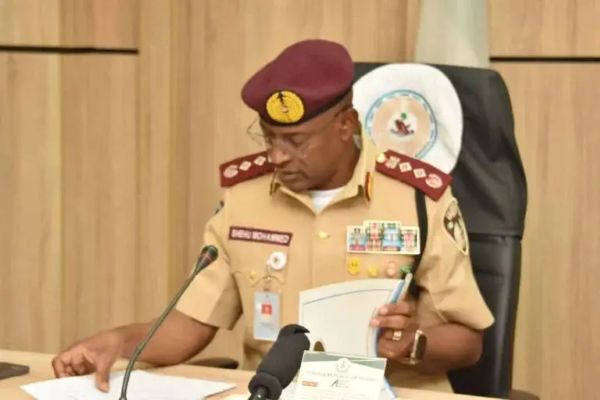
Nigeria recorded a 12 percent reduction in road traffic crash fatalities in the first quarter of 2026 compared to the same period in 2025.
The Corps Marshal, Federal Road Safety Corps (FRSC), Malam Shehu Mohammed, made this known on Friday in Abuja.
He spoke at the commemoration of the 2026 West African Road Safety Organisation (WARSO) Day.
Mohammed said the development remained sobering when placed within the broader African context of road safety challenges.
He noted that Africa accounts for less than three percent of the world’s registered vehicles but records over 20 percent of global road traffic fatalities.
He said the victims often represented human capital, breadwinners, and the future of the sub-region, stressing the urgent need for stronger intervention.
The FRSC boss explained that this reality informed the establishment of the WARSO, adding that it was created to provide a platform for harmonised policies, shared best practices, and joint enforcement strategies among member states.
According to him, the situation in West Africa is also alarming, as thousands of citizens are lost annually to preventable road crashes.
Mohammed said: “Nigeria achieved 12 percent reduction in Road Traffic Crashes (RTCs) and fatalities in Q1 2026 compared to Q1 2025.
“Yet, the statistics remain sobering.
“Today’s theme: ‘From Ratification to Action; African Road Safety Charter,’ is both timely and strategic.
“The African Road Safety Charter represents our collective resolve as a continent to reverse the rising trend of road traffic deaths and injuries.
“While many African nations, including Nigeria, have ratified this Charter, the real task before us now is translation of commitment into measurable action on our roads.”
Mohammed emphasised that road traffic injuries and road traffic crashes were issues of major concerns adding that impact on health, economy, and man-hour was enormous.
This, he said, was considered as a health problem globally, adding that all over the world annually, RTCs have been responsible for over 1.5 million deaths and over 70 million injuries.
He added: “According to PricewaterhouseCoopers (PwC) analysis and World bank report (2023), RTC is responsible for about 7 percent loss of Gross Domestic Products (GDP) in Nigeria.
“As part of our administration’s effort, the African Association of Road Safety Lead Agencies (AARSLA) Office was launched on Tuesday, May 5.
“This is to position Nigeria as the Secretariat of the Lead Road Safety Agencies, to further deepen road safety management in Africa.
“Nigeria, under the leadership of the FRSC, has taken bold steps since ratifying the Charter.
“We have aligned our National Road Safety Strategy II (2021–2030) with the Charter’s provisions.
“The corps has strengthened data management through the National Crash Information System, intensified public enlightenment, and deepened inter-agency collaboration.
“Our enforcement of speed limiting devices, introduction of the FRSC Mobile App for real-time reporting, and capacity building for first responders are all deliberate actions to give life to the Charter.”
Mohammed reiterated the need for sustained regional collaboration to reverse the trend of road traffic deaths and improve safety outcomes across Africa.
Representing Nigeria’s Ministry of Transportation, Deputy Director, Abubakar El-Nafaty, warned that every life lost on the roads was one too many.
El-Nafaty added that collective efforts were required to build a safer and more responsible road culture for present and future generations.
He called for strengthened collaboration among member states, increased investment in road safety education, stricter enforcement of traffic regulations, and improved road infrastructure.
He commended the leadership of WARSO and other partners for their sustained efforts in advancing road safety initiatives across the region adding that their dedication continues to inspire hope and progress in the drive toward safer roads in Africa.
In his welcome remarks, FRSC Deputy Corps Marshal (DCM) Planning Research and Statistics (PRS), Clement Oladele, emphasised the need for stronger regional cooperation, investment in safer infrastructure, and sustained public awareness to build a culture of road safety.
Oladele called on policymakers to integrate the Charter into national laws and budgets, while urging enforcement agencies to strengthen compliance and ensure fairness in application of traffic regulations.
He also appealed to Civil Society Organisations (CSOs) to intensify awareness campaigns and hold leaders accountable, while urging the private sector to invest in safer transport systems and infrastructure.