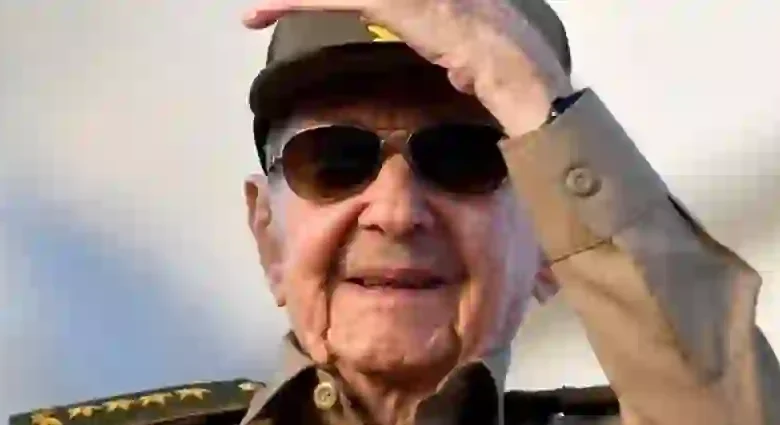
The United States has formally charged former Cuban leader Raúl Castro over the 1996 downing of two aircraft operated by Cuban-American group Brothers to the Rescue, an incident that killed four people, including three Americans.
The charges, which were reintroduced on Wednesday after initially being filed in 2003, accuse Castro and five others of conspiracy to kill US nationals, destruction of aircraft, and multiple counts of murder linked to the attack that occurred between Cuba and Florida.
At the time of the incident, Castro was serving as head of Cuba’s armed forces and faced strong international criticism over the deadly operation. Now 94, he remains an influential figure in Cuba despite stepping away from active government duties.
Speaking in Miami, Acting US Attorney General Todd Blanche announced additional charges against Castro, including four individual murder counts over the deaths of Armando Alejandre Jr, Carlos Alberto Costa, Mario Manuel de la Peña, and Pablo Morales.
“The United States, and President Trump, does not, and will not, forget its citizens,” Blanche stated during the announcement at Freedom Tower.
Cuba strongly rejected the charges, with President Miguel Díaz-Canel describing the case as politically motivated and lacking any legal basis. He accused Washington of distorting facts surrounding the incident and insisted Cuba acted in self-defence within its territorial waters.
The renewed case comes as the US intensifies pressure on Cuba’s communist government through sanctions and restrictions aimed at forcing political and economic reforms. Analysts say the move signals a broader strategy by Washington to increase pressure on Havana.
Latin America expert William LeoGrande said the US appears to be escalating pressure gradually in hopes of forcing Cuba into negotiations.
US Secretary of State Marco Rubio also issued a message to Cubans on the country’s independence day, accusing military-run conglomerate GAESA of contributing to blackouts and food shortages across the island.
In response, Díaz-Canel accused the US of imposing collective punishment on Cubans and using the indictment to justify hostility toward the country.
When asked whether Castro could be brought to the US to face trial, Blanche said an arrest warrant had been issued.
“We expect he will show up here, by his own will or another way,” he said.
During his presidency from 2008 to 2018, Castro oversaw a brief improvement in relations between Havana and Washington alongside former US President Barack Obama.
US President Donald Trump defended the indictment, saying his administration remained committed to supporting Cuban-Americans and addressing humanitarian concerns involving Cuba.
READ ALSO: