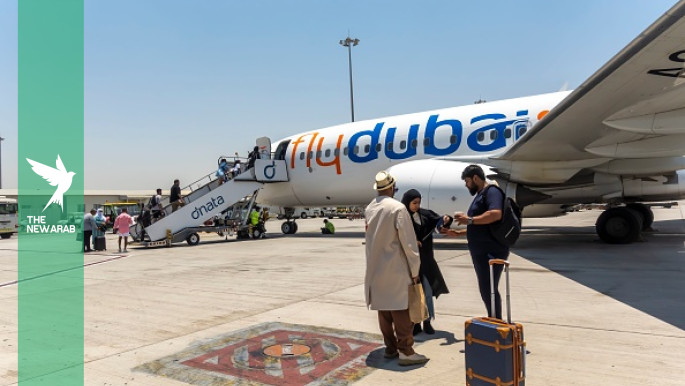
UAE airline flydubai announced on Friday that it will expand its operations in Syria by launching daily direct flights to the northern city of Aleppo, marking the resumption of the route after a more than 14-year suspension.
In a statement carried by the UAE’s state news agency, WAM, the airline said the flights will begin on 20 July, making Aleppo its second destination in Syria after it resumed flights to the capital, Damascus, last year.
The airline said the move reflects its commitment to improving air connectivity with underserved markets.
Flydubai CEO Ghaith Al Ghaith welcomed the resumption of flights to Aleppo after the route was shut down with the outbreak of Syria’s civil war, saying: “The launch of our daily flights to Aleppo marks an important milestone in our network expansion strategy.”
The carrier added that the daily service is expected to strengthen economic, cultural and family ties between the United Arab Emirates and Syria.
Flydubai’s chief commercial officer, Hamad Obaidalla, said the airline had seen strong demand for travel between Syria and the UAE since resuming flights to Damascus on 1 June 2025, adding that “the resumption of direct flights to Aleppo builds on that momentum.”
Flydubai became the first Emirati airline to resume daily flights between Dubai and Damascus after Bashar al-Assad’s regime was ousted by HTS-led rebels in December 2024, and has since increased services to three daily flights in response to growing demand on the route.
Several other Arab and international airlines have resumed flights to Syria since the fall of Assad’s regime. Regional carriers including Qatar Airways, Air Arabia, flynas, Jazeera Airways and Royal Jordanian have all restarted services to Damascus and, in some cases, Aleppo.
The new Syrian government, led by President Ahmed al‑Sharaa, has been seeking to attract foreign investment and restore a semblance of stability, using renewed air links and infrastructure projects to signal that Syria is open for business even as it continues to grapple with sectarian tensions, armed clashes and bombings that underscore the fragility of the post‑Assad transition.