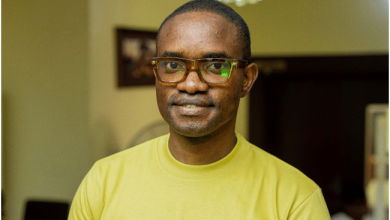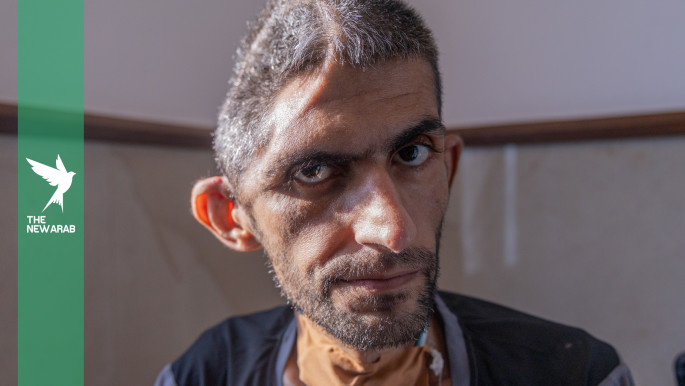
Palestinian journalist Mujahed Bani Moflh, an editor with the media network Ultrasawt, was arrested during an Israeli raid on his home in Beita, in the occupied West Bank, on 28 June 2025.
He spent the next 14 months in Israeli detention without charge or trial before being released on 12 January 2026.
During his detention, Mujahed says he was repeatedly beaten, starved and denied adequate medical care.
He also witnessed two fellow prisoners die — one after being gassed inside his cell, and another after spending his final days pleading for a dose of antibiotics.
Just two days after his release, he suffered a life-threatening brain haemorrhage.
Doctors linked his condition to the severe malnutrition, physical abuse and medical neglect he had endured while in detention. He underwent multiple emergency surgeries and continues to recover.
When someone handed him an apple — the first he had eaten in 14 months — they asked, “Were you living through a famine?” He replied quietly, “What else would you call it?”
On 24 June 2026, after months of treatment, Mujahed shared a photograph of himself showing the dramatic physical toll of his imprisonment alongside an image taken before his arrest.
“Fourteen months in prison and the subsequent treatment journey were enough to change me forever,” he wrote.
“I learned how to feel gratitude and understood the true meaning of suffering; waiting for a morsel that isn’t enough, going to sleep with a stomach ache, and waking up with the same pain. I learned how a loaf of bread can become a real dream, and how a single dose of medicine can feel like a blessing from heaven.
“During my treatment journey, I learned the meaning of helplessness; when taking action becomes an achievement, and sleeping without pain becomes a distant luxury.”
His case has been cited by Palestinian prisoner advocacy groups as an example of what they describe as “slow killing” or “post-release crimes” — where some detainees are released by Israel with severe illnesses and injuries caused by prolonged torture, starvation and the denial of medical care, leaving them to face life-threatening complications after leaving prison.
For many former prisoners, they say, the suffering does not end at the prison gates. It follows them home.
Photo credits: Palestinian photojournalist Wahaaj Bani Mufleh