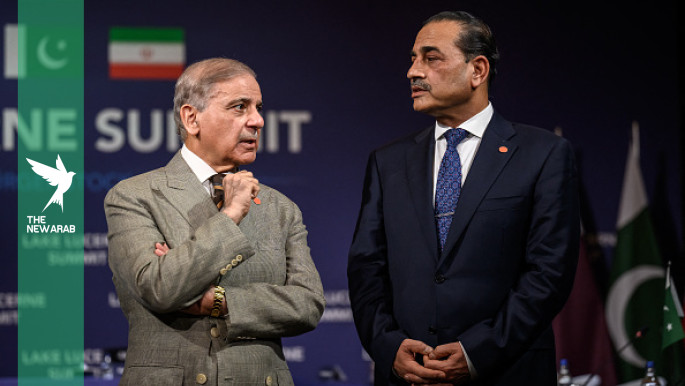
Pakistan and Qatar propose a 10-day Iran-US ceasefire to revive stalled talks as mediators push to halt escalating regional hostilities. [Getty]
Pakistan and Qatar have put forward a joint proposal calling for a 10-day halt in hostilities between Iran and the United States in an effort to revive their stalled Memorandum of Understanding (MoU), as mediators advance efforts to prevent further escalation.
The two mediators presented the proposal on Monday, urging Tehran and Washington to return to their positions held before 9 July as a first step towards resuming negotiations, Iran’s ISNA news agency reported.
The 10-day truce is also designed to give space for efforts to restore the temporary agreement between the two countries, a senior Iranian source told Reuters.
The diplomatic push comes despite continued fighting, with Iran and the United States exchanging attacks in recent days.
US Secretary of State Marco Rubio also said Washington remained open to diplomacy even as US forces carried out a ninth consecutive night of airstrikes on Iranian targets.
Iranian Foreign Ministry spokesman Esmaeil Baghaei confirmed on Monday that Tehran had received proposals and ideas from mediators aimed at reducing tensions, but declined to provide further details.
“I will not reveal the details at this stage,” Baghaei told a press conference in Tehran.
He said Iran continued to base negotiations on the principle of “commitment for commitment”, arguing that Tehran had fully complied with the MoU signed with Washington last month and would continue to honour its obligations as long as the other side did the same.
Baghaei said the primary objective of mediation efforts was to prevent further escalation, while stressing that Iran reserved the right to respond to US attacks.
“Our armed forces continue to respond forcefully and target the sources of US aggression,” he said, adding that Iran’s diplomatic and military institutions were working in “full coordination” to defend the country.
Meanwhile, Rubio reiterated that the United States remained willing to pursue a diplomatic solution.
“The United States is always open to a diplomatic resolution. We have tried over and over again with Iran, and we will continue trying. If that door opens, we will be happy,” Rubio told reporters before departing for Manila to attend the Association of Southeast Asian Nations (ASEAN) summit.
However, he accused Iran of attacking ships and disrupting navigation in the Strait of Hormuz, saying the MoU could not remain in force if Tehran continued to violate its terms.
“They continue to signal that they want dialogue and negotiations, but we are responding to their behaviour, which is launching missiles and drones at ships,” Rubio said.
Asked what would happen if diplomacy failed, Rubio said: “I don’t think that would be in Iran’s interest. I mean, their economy is in terrible shape.”
Meanwhile, Qatar has emerged as a key hub for diplomatic contacts in recent days.
Qatar’s Emir Sheikh Tamim bin Hamad Al Thani met Turkish Foreign Minister Hakan Fidan in Doha on Sunday to discuss regional developments and ongoing diplomatic efforts to reduce tensions and strengthen regional security.
The Qatari leader also met Iraqi Prime Minister Ali al-Zaidi, with both sides stressing the importance of dialogue, diplomacy and implementing the US-Iran memorandum of understanding, including guarantees for freedom of navigation through the Strait of Hormuz.
Separately, Iranian Interior Minister Eskandar Momeni travelled to Islamabad on Monday at the invitation of his Pakistani counterpart Mohsin Naqvi.
The visit, which includes senior officials from several Iranian ministries and security agencies, is expected to focus on bilateral relations, border security, trade, transit and agricultural cooperation. Iranian officials said the trip forms part of President Masoud Pezeshkian’s plan to increase annual trade with Pakistan from $3 billion to $10 billion.
After his visit to Pakistan, Momeni is expected to travel to New Delhi to attend a BRICS meeting of interior ministers and emergency officials on disaster risk reduction.
Al-Zaidi is also expected to begin a regional tour later this week, including visits to Iran, Turkey, Syria and Saudi Arabia, aimed at discussing security, political and economic cooperation while reaffirming Iraq’s policy of avoiding alignment with competing regional blocs.
According to an Iraqi official speaking to The New Arab, Zaidi will use the visits to underline Baghdad’s determination to remain outside any emerging regional alliances.