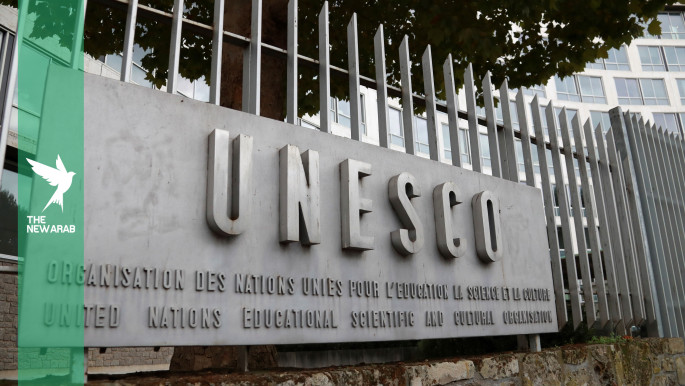
At their meeting in Busan, members of the UNESCO committee decided to place Sebastia and five castles in Lebanon’s Mount Amel area on both the World Heritage List and the List of World Heritage in Danger. [Getty]
A United Nations committee voted Friday to inscribe a major archaeological site in the occupied West Bank and a set of castles in southern Lebanon as World Heritage sites, despite objections from Israel in its attempt to appropriate these places.
At their meeting in Busan, members of the UNESCO committee decided to place Sebastia and five castles in Lebanon’s Mount Amel area on both the World Heritage List and the List of World Heritage in Danger after reviewing the nominations on an emergency basis.
Sebastia, a hilltop town about 10 kilometers (6 miles) northwest of Nablus in the Israeli-occupied West Bank. The area’s archaeological remains span the Iron Age, Roman, Byzantine and Islamic periods. Christian and Islamic tradition holds that John the Baptist was buried there, according to a UNESCO website.
Sebastia’s nomination, first submitted by the Palestinian delegation to UNESCO in 2012, argued that World Heritage status was needed to help preserve the site, saying it remains largely undeveloped under Israeli occupation and requires additional conservation despite attracting tourists.
The designation comes as Israel, which does not recognise a Palestinian state and seeks to stop any such existence, moves to expropriate large swaths of land around the site.
The five castles in the Mount Amel region are recognised for their layered architectural heritage, combining Crusader, Ayyubid, Mamluk and local influences, reflecting the evolution of fortified architecture over nearly nine centuries, according to a UNESCO description.
Israel withdrew from UNESCO in 2019.
Israel’s Foreign Ministry also took objection to efforts to list Beaufort Castle in southern Lebanon as a World Heritage site. The castle was part of the nomination covering five castles in the Mount Amel area.
The UNESCO committee on Wednesday placed another Lebanese site, Tyre, an ancient Phoenician city in the southern part of the country, on the list of world heritage sites in danger.