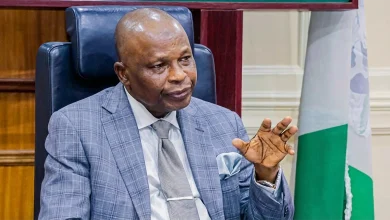
The Attorney-General and Commissioner for Justice, Ondo State, Dr. Kayode Ajulo, has commended the Chairman of the Independent National Electoral Commission, Prof. Joash Amupitan, and President Bola Tinubu for what he described as their commitment to strengthening Nigeria’s democratic process during the Osun State governorship election.
Ajulo, a Senior Advocate of Nigeria (SAN), made his position known in a statement he issued on Saturday to newsmen in Akure.
He said Amupitan inherited an electoral institution burdened by years of public distrust, controversies, and high expectations.
He added in spite the challenges, Amupitan pledged to deliver elections that would be free, fair, credible, transparent, and inclusive.
He said the Osun State governorship election provided the first major opportunity to assess the INEC chairman’s commitment to electoral credibility.
The attorney-general also praised Tinubu for appointing Amupitan and, more importantly, allowing the electoral commission to discharge its constitutional responsibilities without interference.
According to him, democratic leadership is measured not only by the power to appoint public officials but also by the discipline to allow institutions to function independently.
Ajulo particularly commended the President’s reported directive to the Economic and Financial Crimes Commission (EFCC) to seek the vacation of a court order freezing Osun State Government accounts shortly before the governorship election.
He said the intervention demonstrated sensitivity to the need to protect public confidence in the electoral process while reaffirming the independence of anti-corruption agencies.
“The issue was not whether the action was lawful, but whether its timing could create the impression that federal institutions were being used to influence an electoral contest,” he said.
Ajulo said Nigeria’s democracy would only mature if institutions remained strong enough to resist political pressure and leaders accepted institutional restraint.
He also commended the professionalism of security agencies, particularly the Nigerian Army, for directing personnel deployed for the election to remain neutral, support the police where necessary, and stay away from polling units except when required to address security threats.
According to him, democracy can only thrive when electoral officials, security agencies, and the judiciary remain faithful to their constitutional mandates.
Reflecting on his relationship with Amupitan, Ajulo said he was once a student of the INEC chairman at the University of Jos and had publicly expressed confidence in his ability to lead the electoral commission when he was appointed.
He said that while INEC deserved commendation for good performance, the commission must continue to be subjected to public scrutiny whenever it fell short of expectations.
“The standard should not be whether a political party wins an election but whether the process is credible and the will of the electorate is respected,” he said.
Ajulo added that the lessons from the Osun State poll should become a model for future elections, particularly the one in 2027.
He urged political leaders to prioritise institutional independence, professionalism, fairness, and national interest above partisan advantage.
The Commissioner added that democracy would endure only when public office holders respected the sovereign will of the people.
He said that while political offices and victory were temporary, character and commitment to democratic values would remain the enduring measure of leadership.