Dangote Breaks Ground On $16bn Kenya Refinery, Targets Completion In 40 Months

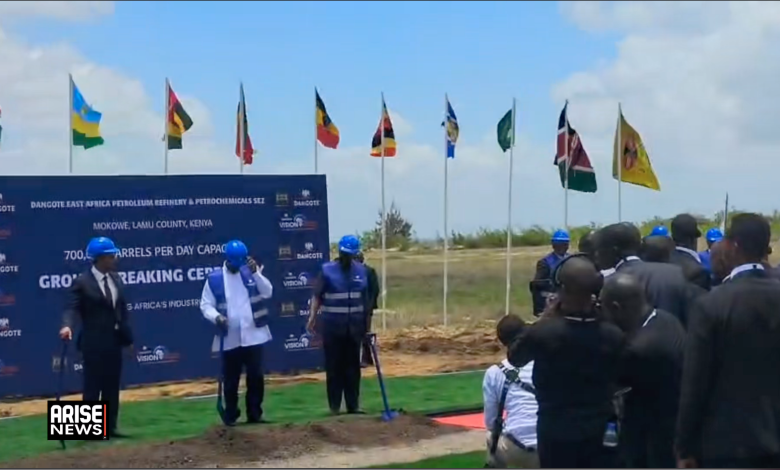
Ruto, in a series of posts on X, described the project as a KSh2.2 trillion ($16 billion) investment that would establish Lamu as a major energy and industrial hub for Kenya and the wider East African region.
The groundbreaking ceremony was attended by the presidents of Uganda, Yoweri Museveni; Benin, Romuald Wadagni; and Togo, Jean-Lucien Savi de Tové, as well as Ethiopian Prime Minister Abiy Ahmed.
Former Nigerian President Olusegun Obasanjo and senior representatives from other African countries also attended the ceremony.
According to Ruto, the refinery is expected to create about 60,000 direct jobs during construction and attract an additional $4 billion in foreign direct investment annually over the four-year construction period.
He said the project was also expected to increase Kenya’s economy by 12 per cent, while accelerating the development of the Lamu Port-South Sudan-Ethiopia Transport (LAPSSET) Corridor into an industrial hub.
The project is planned as an integrated industrial complex rather than a standalone refinery.
Ruto said it would include a 1,000-megawatt power plant, a plastics factory and facilities for producing fertilisers and chemicals.
The Kenyan president said the project would help reduce the country’s dependence on imported refined petroleum products, strengthen regional energy security and support foreign-exchange stability.
“This is more than a refinery,” Ruto said, describing the project as part of efforts to move African economies away from exporting raw materials and importing finished products.
Dangote, who will lead the construction through his business group, similarly framed the project as part of Africa’s push for greater industrialisation.
Speaking at the ceremony, he said Africa should increasingly process its own raw materials rather than export them and import finished products.
The project will be Dangote’s largest proposed investment outside Nigeria.
His company already operates the Dangote Petroleum Refinery in Lagos, which has a nameplate capacity of 650,000 barrels per day and has been designed for an ultimate capacity of 700,000 barrels per day.
The Lamu refinery is expected to source crude from the wider African region and beyond.
Uganda’s President Museveni said at the event that his government would continue with plans for a smaller refinery to process Ugandan crude locally.
The refinery was initially considered for Tanzania before Lamu was selected, with Dangote citing the area’s deeper waters, suitable ground and access to the Indian Ocean as factors behind the decision.
The project is facing opposition from some residents and environmental campaigners in Lamu.
The BBC reported that residents protested ahead of the groundbreaking over compensation for land being used for the project.