UK Imports £1.73bn In Nigerian Oil, Gas As Dangote Refinery Boosts Fuel Exports

According to the latest UK Trade and Investment Factsheet, released by the Department for Business and Trade, refined petroleum products accounted for 53.5 per cent of the UK’s total goods imports from Nigeria during the four quarters to the end of the second quarter of 2026.
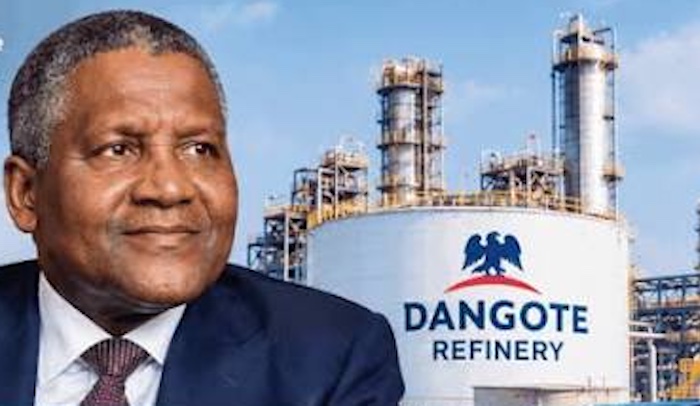
Also, the value of refined oil imports increased by more than 100 per cent compared with the corresponding four-quarter period to June 2025, apparently on the back of the increasing exports of white products from the Dangote refinery located in Lagos.
In contrast, crude oil imports declined by 56.2 per cent to £550.3 million, representing 28.9 per cent of total goods imports from Nigeria. The UK also imported natural gas worth £179.5 million, accounting for 9.4 per cent of the total, an increase of 7 per cent over the corresponding period.
Combined, the three commodities generated £1.73 billion in exports to the UK, out of approximately £1.9 billion in total Nigerian goods imports recorded by Britain.
Other significant Nigerian exports to the UK included coffee, tea and cocoa, valued at £40.3 million, representing 2.1 per cent of goods imports, while beverages and tobacco accounted for £30 million, or 1.6 per cent.
The development is particularly noteworthy against the background of the UK’s own petroleum products exports to Nigeria. Britain exported refined oil worth £772.3 million to Nigeria during the same four-quarter period, although the value represented a 42.7 per cent decline from the corresponding period a year earlier.
Refined oil remained the single largest commodity exported by the UK to Nigeria, accounting for 51.5 per cent of its total goods exports to the country.
The figures therefore show that Britain was simultaneously a major market for Nigerian refined petroleum products and a significant supplier of refined oil to Nigeria, even as the value of its exports to the country declined sharply.
The other major British exports to Nigeria included toilet and cleansing preparations worth £64.4 million, up 14.2 per cent; textile fabrics valued at £53.2 million, up 32.8 per cent; intermediate industrial machinery worth £44.4 million, up 4.1 per cent; and capital industrial machinery valued at £42.7 million, up 55.2 per cent.
Beyond the energy trade, total trade in goods and services between both countries stood at £7.3 billion in the four quarters to June 2026, representing a decline of 1.8 per cent, or £132 million, compared with the corresponding period a year earlier.
Of this amount, UK exports to Nigeria stood at £4.8 billion, a decline of 6.8 per cent, or £345 million, while British imports from Nigeria rose by 9.3 per cent, or £213 million, to £2.5 billion.
Nigeria consequently remained a net exporter to the UK in overall trade terms, although Britain retained a substantial trade surplus because of its much larger services exports.
According to the factsheet, total UK goods exports to Nigeria fell by 25.9 per cent to £1.5 billion, while services exports increased by 5.8 per cent to £3.3 billion. On the import side, British purchases of Nigerian goods rose by 10.4 per cent to £1.9 billion, while services imports increased by 5.7 per cent to £607 million.
In all, the UK recorded an overall trade surplus of £2.2 billion with Nigeria during the period, compared with £2.8 billion in the corresponding four quarters to June 2025.
However, the balance of trade in goods moved against Britain, with the country recording a £404 million goods trade deficit, compared with a £299 million surplus in the preceding corresponding period.
In services, Britain maintained a substantial surplus of £2.6 billion, slightly higher than the £2.5 billion recorded a year earlier, underlining the importance of services to the UK’s overall trade relationship with Nigeria, which accounted for 68.4 per cent of British exports to the country and 24.2 per cent of its imports from Nigeria.
Historically, total trade between the two countries has experienced considerable fluctuations. It increased from £3.7 billion in 2016 to £5.6 billion in 2018 before falling to £4.7 billion in 2019 and £3.5 billion in 2020, amid the global economic disruptions associated with the COVID-19 pandemic.
Trade subsequently recovered to £4.5 billion in 2021 and £7 billion in 2022, reaching a peak of £8.1 billion in 2023 before declining to £6.8 billion in 2024. It remained at £6.8 billion in 2025, representing a marginal increase of 0.4 per cent over the previous year.