China’s ICE Vehicle Influx Raises Concerns Over Nigeria’s Auto Industry, Local Assembly

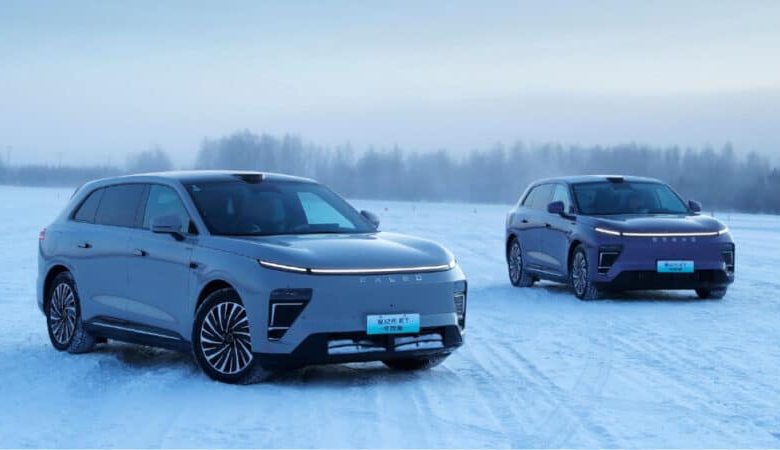
China’s continued shipment of large numbers of internal combustion-engine (ICE) vehicles to Nigeria and other African markets is being driven less by a retreat from electric mobility than by a major restructuring of the Chinese automobile industry, with manufacturers increasingly looking overseas for markets, revenue and capacity utilisation.
The development has important implications for Nigeria, where weak charging infrastructure, unreliable electricity supply, high vehicle acquisition costs and limited consumer purchasing power continue to constrain the mass adoption of electric vehicles (EVs).
China has become the world’s dominant vehicle manufacturing base while simultaneously undergoing one of the fastest transitions from petrol and diesel vehicles to new-energy vehicles. The result is a growing pool of conventional vehicles that manufacturers can still sell profitably in markets where the transition to electric mobility is slower.
The International Energy Agency (IEA) said Chinese vehicle exports increased sharply in the first half of 2026 as domestic sales weakened, with total Chinese car exports rising 65 per cent year-on-year. Although electric-car exports grew even faster, ICE vehicles remain a major component of China’s overseas shipments.
For Africa, the continent’s relatively young motorisation market makes it particularly attractive, according to IEA. Unlike Europe and some Asian markets, where stringent emissions regulations and EV incentives are accelerating the replacement of petrol and diesel vehicles, many African countries still depend heavily on conventional vehicles, particularly imported used cars.
Nigeria is a major example. The country’s vehicle market remains overwhelmingly dependent on petrol and diesel technology, while the infrastructure required for large-scale EV adoption is still developing.
China’s strategy therefore allows its automakers to serve different markets according to their level of technological transition. EVs can be targeted at markets with adequate charging networks and supportive policies, while ICE vehicles can continue flowing into markets where consumers prioritise affordability, driving range, easy access to mechanics and the availability of fuel.
There is also a broader industrial dimension. China’s highly competitive automobile industry has experienced intense price competition and excess production capacity. Overseas markets provide manufacturers with an outlet for vehicles that may face declining demand at home.
The IEA noted that Chinese automakers are increasingly relying on overseas markets as domestic growth slows, with major manufacturers setting ambitious export targets.
For Nigeria, the influx presents both opportunities and risks.
On the positive side, increased Chinese competition could make vehicles more affordable, expand consumer choice and force established global brands to reduce prices. It could also create opportunities for local assembly, component manufacturing, servicing and technical employment if Nigeria successfully links vehicle imports to an industrialisation strategy.
But continued dependence on ICE imports could also slow Nigeria’s own transition to cleaner transportation.
Nigeria’s Energy Transition Plan envisages a gradual shift towards electric mobility, while the country’s automotive policy seeks greater local vehicle production and increased EV manufacturing. The Nigerian Automotive Industry Development Plan, for instance, targets 30 per cent of locally produced vehicles being electric by 2032.
The danger, therefore, is that Nigeria could become a dumping ground for ageing or declining ICE technology just as major manufacturers are moving their technological investments towards batteries, software and electric drivetrains.
There is also an environmental and economic cost. Continued dependence on petrol and diesel vehicles means higher exposure to fuel-price shocks, import dependence and transport-sector emissions.
Yet the answer is not necessarily to shut the door on Chinese ICE vehicles immediately. Nigeria’s transition must reflect its infrastructure realities. The government would need to expand charging infrastructure, stabilise electricity supply, establish battery and vehicle standards, develop local technical capacity and create incentives for manufacturers to assemble EVs locally.
Importantly, 2035 is not a blanket deadline for China to stop producing or exporting every ICE vehicle.
China’s official New Energy Vehicle Industry Development Plan says that by 2035, electric vehicles are expected to become the mainstream of new vehicle sales, while public transportation is expected to be fully electrified.