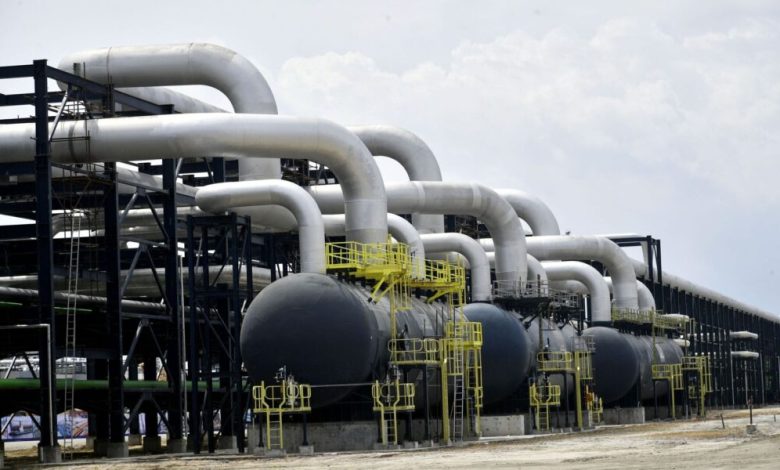
Dangote Petroleum Refinery plans to invest $14.3 billion to double processing capacity to 1.4 million barrels per day as the company prepares to raise N2.15 trillion through what is expected to become Africa’s largest initial public offering.
The expansion programme, disclosed in the refinery’s IPO prospectus on Monday, will increase capacity from about 700,000 barrels per day currently and is targeted for completion by 2029.
The investment represents another major expansion of the refinery barely three years after it began processing crude and would transform the Lagos-based facility into one of the world’s largest refining complexes.
Dangote Petroleum Refinery signed its IPO offering documents with advisers and other transaction parties in Lagos on Monday, completing another major step towards the landmark share sale.
Under the offering, the company plans to sell 4.1 billion ordinary shares at N525 each, potentially raising approximately N2.15 trillion if fully subscribed.
A presentation at the signing ceremony showed that the offer is expected to run from September 14 to October 13.
The refinery could also issue up to 30 percent more shares than the base offer if demand exceeds the shares available, subject to regulatory approval.
The oversubscription provision could substantially increase the eventual size of the transaction if institutional and retail demand is strong.
Dangote is also making the offering accessible to smaller investors.
The minimum subscription has been set at 10 shares, meaning eligible investors can participate with N5,250.
The company is targeting millions of investors across Nigeria and other African markets as it seeks to broaden ownership of one of the continent’s largest privately developed industrial assets.
Aliko Dangote said the transaction is intended to create wider participation in the refinery rather than simply maximise the amount of capital raised.
The company is targeting as many as 10 million shareholders across Africa and potentially other markets.
The N2.15 trillion offering will nevertheless provide substantial additional capital as the refinery embarks on its next phase of expansion.
The $14.3 billion programme will double processing capacity to 1.4 million barrels per day and expand the refinery’s product range and distribution infrastructure across African markets.
At 1.4 million barrels per day, the facility would have capacity significantly greater than Nigeria’s domestic requirement for refined petroleum products, making international exports increasingly important to its growth strategy.
The expansion would strengthen Dangote Refinery’s ability to supply petrol, diesel, aviation fuel and other petroleum products to markets across Africa and beyond.
The company has already emerged as an important international supplier since commencing operations.
Its products have been exported to African and European markets, while disruptions to global refining and petroleum-product supply have created additional opportunities for the facility.
The refinery has particularly benefited from tightening international supplies following geopolitical disruptions affecting the Middle East and Russia.
Global refiners have increasingly prioritised higher-margin products such as diesel, petrol and aviation fuel as crude supply disruptions and reduced refinery utilisation tighten petroleum-product markets.
Dangote Refinery has increased production of those products while reducing output of lower-value fuel oil.
The changing global environment could strengthen the economics of the refinery’s expansion if international demand for refined products remains elevated.
However, doubling capacity will also substantially increase the amount of crude required to keep the facility operating efficiently.
At 1.4 million barrels per day, Dangote Refinery would require access to crude volumes approaching Nigeria’s current daily production if it were to operate entirely on Nigerian feedstock.
The company has already diversified crude procurement beyond Nigeria, sourcing barrels internationally when required.
Its coastal location gives it the flexibility to receive crude by sea and export refined products to international markets, reducing its dependence on domestic supply alone.
The expansion programme will therefore further transform the refinery from a facility initially developed to address Nigeria’s dependence on imported petroleum products into a global refining and trading operation.
Dangote also plans to strengthen the company’s distribution infrastructure across Africa.
The strategy is designed to allow the refinery to supply petroleum products more directly into regional markets where many countries remain heavily dependent on imports from Europe, the Middle East and Asia.
The IPO provides public investors with exposure to that expansion.
The Securities and Exchange Commission approved the offering last week, clearing the regulatory path for the sale of 4.1 billion new shares at N525 each.
The company has also secured substantial institutional backing ahead of the public offering.
A previous private fundraising attracted significantly more demand than initially sought, according to disclosures made at Monday’s ceremony, reinforcing expectations of strong investor interest in the public offer.
The IPO will provide an important test of those expectations.
Beyond Dangote Refinery itself, the transaction could reshape Nigeria’s capital market.
A successful N2.15 trillion offering would establish a new benchmark for equity fundraising in Nigeria and substantially increase the size of the domestic stock market when the refinery eventually begins trading.
It could also encourage other large privately controlled Nigerian companies to consider public listings as an alternative source of long-term capital.
For Dangote, however, the listing represents the beginning of a considerably larger investment cycle.
The $14.3 billion expansion will require the company to execute one of Africa’s biggest industrial projects while simultaneously integrating millions of new shareholders into its ownership structure.
If completed as planned, the project would double refinery capacity to 1.4 million barrels per day by 2029 and strengthen Nigeria’s emergence from a historically import-dependent fuel market into an increasingly important global refining centre.