Lagos partners private developers, Police to deliver 1,000 housing units for officers by February

The Lagos State Government says it is on track to deliver 1,000 housing units for Nigerian Police personnel by February next year (2027), as part of a multi-year partnership between the state, the Nigerian Police Force, and private developers to redevelop dilapidated police barracks across the state.
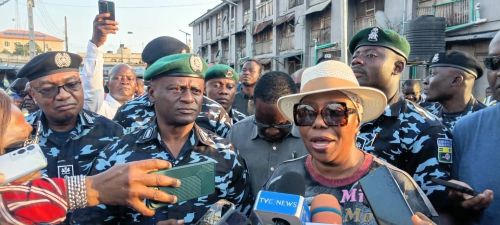
The disclosure was made by the Commissioner for Tourism, Arts and Culture, Toke Benson-Awoyinka, who oversees the initiative.
Benson-Awoyinka was appointed to her current position by Governor Babajide Sanwo-Olu in 2023, having previously served as the Special Adviser to the Governor on Housing, the role in which the barracks redevelopment project was conceived.
The initiative traces back more than two years to Benson-Awoyinka’s tenure as Special Adviser on Housing, when the Lagos State Government began exploring ways to support the welfare of police officers beyond the routine provision of operational vehicles.
Under the state’s Lagos Homes Project, which provides housing for members of the public, officials identified an opportunity to extend similar support to the police by partnering with private developers who would inject equity funding into the redevelopment of ageing and overcrowded barracks.
The project has faced delays, largely due to the challenge of securing vacant possession of barracks sites, a process that has required headcounts of existing occupants, negotiated relocations, and the demolition of structures.
Speaking on Saturday, during Inspector General of Police Olatunji Disu’s visit to several police barracks in Lagos to assess the progress of the redevelopment project, Commissioner Benson‑Awoyinka outlined the origins of the initiative and the strategic vision behind the partnership.
She said: “This project began when I was Special Advisor to the Governor of Lagos State on housing. We are partnering with the Nigerian Police Force to redevelop the barracks in Lagos.”
“It is a very strategic partnership. We are bringing in private developers who will provide equity funds to help the Nigerian Police redevelop the barracks and restore them to good condition. From time to time, the Governor of Lagos State buys vehicles for police officers, but we felt that was not enough.”
According to her, the project was designed to address a broader gap in officer welfare.
She stated: “It was important also to consider their welfare, their accommodation, and where they live. Under our Lagos Homes Project, we provide housing for members of society, and we realised we could also contribute to housing for the police. That is how we came up with this initiative, partnering with the police, engaging the private sector, and bringing in private equity funds to redevelop police barracks.”
Benson-Awoyinka acknowledged that the project has moved slower than initially anticipated, attributing the pace to logistical and legal hurdles around land possession.
“It has been over two years since this partnership began. Progress has been a bit slow because we faced difficulties in securing vacant possession of the barracks. We had to conduct headcounts, arrange relocations, and carry out demolitions. Now, we finally have full possession of Ijeh. Previously, there were power shops in Ijeh that hindered the project. In Obalende, we also have some relocations that still need to take place, but we now have the funds to proceed.”
With possession of the Ijeh site now secured, she said the project is moving into full-scale construction, with an ambitious delivery target.
“We are moving into full-scale development in Ijeh. As the Inspector General said, by February next year, we hope, by the grace of God, to deliver 1,000 housing units for police officers in Ijeh. We are putting all hands on deck, working closely with both the police and private developers, and we are committed to ensuring this project succeeds.”
The Commissioner explained that the Ijeh site’s terrain has added complexity to construction, requiring land reclamation work not typically factored into standard redevelopment timelines.
“Normally, redevelopment takes 24 to 36 months. However, in this case, we had to manage relocations, demolitions, excavations, and land reclamation. The area is swampy, so we must reclaim the land to prevent building collapse and ensure we do not provide substandard homes to Nigerian police officers.”
Beyond Ijeh, Benson-Awoyinka said the redevelopment programme is expanding to other barracks locations across the state, including Obalende, Queens Barracks, Mopol 2, Mopol 20, and Ikeja, reflecting the government’s intent to extend the initiative beyond Lagos Island to the mainland.
She explains: “We’re expanding into Mopol 2, Mopol 20, and other locations across Lagos. On Friday, we were in Ikeja. We do not want to neglect the mainland because policing is needed everywhere, and the welfare of police officers is very important to us.”
Addressing public interest in the newly built units, Benson-Awoyinka moved to clarify that none of the housing would be sold or allocated to private citizens, despite what she described as strong interest from members of the public drawn by the quality of the developments.
“Regarding occupancy, I can assure you that these buildings are strictly for the police. Some private citizens have expressed interest in buying the properties, but we have made it clear that they are reserved for police officers. Many were surprised that such quality housing was being provided for the police. We will hand over all units to the Nigerian Police Force, and none will be allocated to private citizens.”