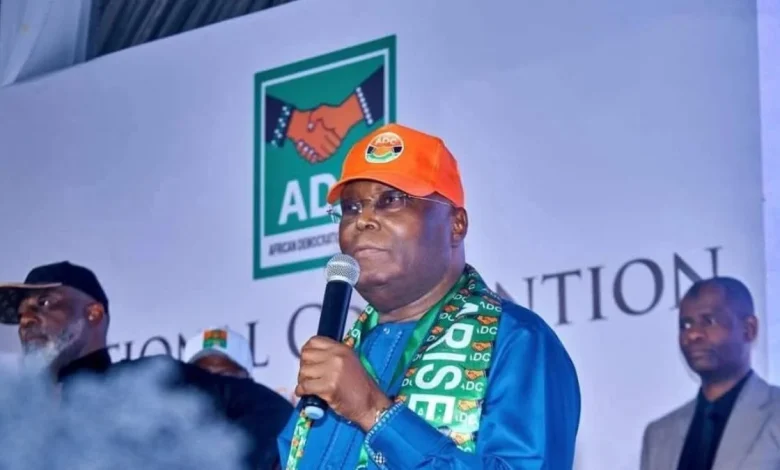
The camp of former Vice-President Atiku Abubakar has faulted the Independent National Electoral Commission (INEC) over its explanation for the appearance of suspected artificial intelligence-generated photographs in the 2027 preliminary voters’ register.
Paul Ibe, media adviser to the African Democratic Congress (ADC) presidential candidate, said the commission’s admission that some registration officers introduced questionable records into its database raises serious questions about its verification procedures.
Ibe, in a post made on Friday, demanded an explanation of how the photographs entered the register, who submitted them and what checks were carried out before their inclusion.
He also questioned the commission’s ability to guarantee the integrity of the register ahead of the 2027 general elections.
According to him, INEC must disclose the number of affected records, their geographical distribution and the percentage they represent in the entire register.
He argued that describing the document as a preliminary register does not address the circumstances that allowed questionable entries into the electoral database.
Ibe further raised concerns about other possible irregularities, including duplicate identities, underage registrations and fictitious voter records.
He said Nigerians were concerned that weaknesses in the register could create opportunities for electoral manipulation ahead of the 2027 elections.
The Atiku aide called on the commission, led by Professor Joash Amupitan, to publish details of the flagged records and explain how they were introduced into the system.
He also demanded an independent forensic audit involving political parties and credible civil society organisations, alongside the preservation of relevant audit records.
“If suspicious photographs could enter the register, what other anomalies might remain undetected? Duplicate identities? Underage registrations? Fictitious entries? These questions require evidence and investigation,” the post read.
“I believe that millions of Nigerians are deeply concerned that weaknesses in the register could provide an opening for manipulation before a single ballot is cast in 2027. The Prof Joash Amupitan-led INEC must urgently demonstrate that these vulnerabilities are being closed.”
Ibe insisted that the findings of any investigation and subsequent corrective measures should be made public without exposing voters’ personal information.
He added that anyone found culpable should face sanctions, while eligible voters must be protected from wrongful removal during the verification exercise.
“Confidence requires a register that can withstand independent scrutiny. Nigerians must choose their leaders through authentic votes. Our democracy cannot be entrusted to an unexplained database.”
The criticism follows INEC’s explanation that some registration officers were responsible for introducing questionable records into the preliminary voters’ register.
Lawrence Bayode, the commission’s director of information and communication technology, disclosed this on Friday during an appearance on Arise Television.
He said some registration officers across the country allegedly used their login credentials to introduce irregularities into the database.
The commission had faced public criticism after social media users identified suspected AI-generated photographs, duplicate entries and names of deceased persons in the preliminary register.
Some of the flagged entries reportedly came from a polling unit in Etsako West Local Government Area of Edo State.
Bayode explained that the commission discovered some of the irregularities after running its Automated Biometric Identification System (ABIS) on the database.
He, however, said the commission could not establish the reasons behind the actions of the officers involved.
He said: “So what we have found is that some of these registration officers, not all of them now, some of them across the states nationwide, they’ve done different things to bring these irregularities onto the register.
“Some of these pictures are AI-generated, but very bad registration. And this thing got into the register by the registration officers and because they have access to register people.”
Bayode added that INEC had commenced the process of cleaning up the register before making the preliminary version public.
He said the commission was also working within the statutory 90-day period provided for the exercise.