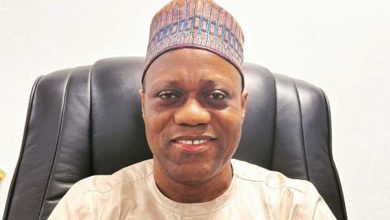
The President of the Chartered Institute of Statisticians of Nigeria (CISON), Dr Godday Uwawunkonye Ebuh, has urged the Federal Government to conduct the country’s long-overdue national population and housing census to strengthen national planning and improve evidence-based policymaking.
Ebuh also called for the restoration of statistics as a subject in secondary schools, improved funding for statistical institutions and greater investment in data infrastructure to enhance the quality and availability of reliable statistics in Nigeria.
He made the call on Thursday in Abuja at CISON’s Third International Conference, themed, “From Legacy to Leadership: 50 Years of Statistical Development in Nigeria.”
The CISON president said credible statistics were essential for effective governance, economic planning and sustainable development, stressing that government policies could only deliver meaningful results when supported by accurate and reliable data.
According to him, conducting a national population and housing census would provide the country with critical demographic information required for planning infrastructure, allocating resources and delivering essential public services.
He noted that the absence of current and reliable population data could undermine development planning and make it difficult for government at all levels to identify the needs of citizens and distribute resources equitably.
Ebuh said Nigeria needed to strengthen its statistical system to ensure that public policies and development programmes were guided by evidence rather than assumptions.
“No government can credibly plan what it does not measure, manage what it does not understand or improve what it refuses to examine,” he said.
He urged the Federal Government to prioritise the development of a time-bound national statistics programme that would establish clear targets for data collection, analysis and dissemination across critical sectors of the economy.
The CISON president also called for stable funding for statistical institutions, noting that inadequate financial support could weaken their capacity to generate timely, accurate and credible data.
He stressed the need to protect the professional independence of statistical institutions to ensure that data production and reporting remained objective and free from undue interference.
Ebuh further urged government ministries, departments and agencies to adopt established statistical standards in collecting, processing and publishing information.
He said stronger coordination among government institutions would help eliminate inconsistencies in official statistics and improve the quality of data available to policymakers, researchers, investors and the general public.
The CISON president also called on state governments to establish functional statistics bureaus capable of generating reliable data to support development planning at the subnational level.
He said strengthening statistical capacity across the states would improve the availability of local-level information and help governments design policies that respond to the specific needs of their populations.
On education, Ebuh called for the reintroduction of statistics as a subject in secondary schools, arguing that early exposure to statistical concepts would help develop a stronger foundation for data literacy and analytical thinking among young Nigerians.
He said improving statistics education was necessary to prepare students for a world increasingly driven by data, technology and evidence-based decision-making.
Ebuh also urged tertiary institutions to strengthen statistics programmes and equip students with the technical skills required to respond to emerging demands in the public and private sectors.
He called for CISON’s involvement in the accreditation of statistics programmes in tertiary institutions to promote professional standards and ensure that graduates possessed the competencies required for the practice.
The institute’s president also advocated for the placement of data science programmes within statistics departments, noting the close relationship between statistical methods, data analysis and modern data-driven technologies.
He said integrating data science into statistics education would help strengthen professional capacity and improve Nigeria’s ability to harness data for economic growth and innovation.
Ebuh further called for the modernisation of the country’s statistical infrastructure, including investments in technology and systems that would support efficient data collection, processing, storage and dissemination.
He said access to reliable statistics should be improved to enable citizens, businesses, researchers and development partners to make informed decisions.
According to him, making official data more accessible would also promote transparency and accountability by allowing Nigerians to assess government policies and programmes against measurable outcomes.
He emphasised the need for stronger collaboration among government agencies, professional bodies, academic institutions and other stakeholders to build a more effective national statistical system.
The CISON president said the institute remained committed to promoting professionalism, strengthening statistical practice and contributing to the development of a reliable data ecosystem capable of supporting national progress.
He noted that the institute’s 50-year history provided an opportunity to assess the progress made in statistical development while identifying gaps that needed urgent attention.
Ebuh said Nigeria’s development ambitions would be difficult to achieve without a functional statistical system capable of producing dependable information on population, economic activity, social conditions and public service delivery.
He urged policymakers and other stakeholders to treat statistical development as a national priority rather than a technical responsibility limited to data-producing agencies.
The conference brought together stakeholders to examine the evolution of statistical development in Nigeria and discuss ways to strengthen the profession’s contribution to governance, economic management and national development.