Dangote Acquires $327m Stake In Kenya Pipeline, Targets $50bn African Investment

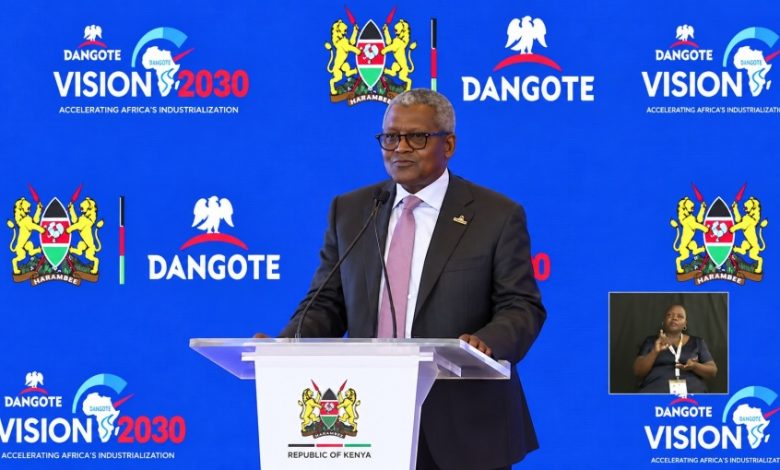
Africa’s richest man, Aliko Dangote, has acquired a 25 per cent stake in Kenya Pipeline Company (KPC) in a deal valued at approximately $327.4 million, deepening his investments in East Africa’s petroleum industry as he advances plans to build a $16 billion refinery in Kenya.
Dangote disclosed the acquisition on Wednesday at the Financial Times Africa Summit in London, confirming that his business interests had bought a significant stake in the company responsible for transporting petroleum products across Kenya and into neighbouring markets.
“We bought 25 per cent of their pipeline network for the distribution of petroleum products,” he said of the transaction which involved the purchase of approximately 4.5 billion shares, according to a report released by the Nairobi Securities Exchange on Monday.
The acquisition comes as the Nigerian industrialist pushes ahead with plans to establish a 700,000-barrel-per-day refinery at Lamu, on Kenya’s Indian Ocean coast. The project, which broke ground on September 30, is estimated to cost between $16 billion and $17 billion, with completion targeted for around 2030.
The refinery is modelled on Dangote’s existing 700,000-barrel-per-day facility in the Lekki area of Lagos, which has become a major component of his expanding interests in refining and petrochemicals.
Kenya Pipeline Company operates critical infrastructure connecting petroleum import facilities along the coast to inland consumption centres, making it a strategic component of the country’s fuel supply chain.
Established in 1973 and commencing commercial operations in 1978, the company operates a pipeline network spanning approximately 1,342 kilometres, supported by storage depots, pumping stations and loading facilities. Its infrastructure also facilitates petroleum distribution to other East African countries.
The latest transaction gives Dangote a substantial interest in the infrastructure through which petroleum products can be moved from coastal import terminals to inland markets, alongside his proposed investment in domestic refining capacity.
“We are going very aggressively with that,” he said at the Financial Times London event. Distribution of oil products is central to his strategy, he said.
In a further indication of the growing links between Dangote’s investments and Kenya’s energy ambitions, the Kenyan government has also expressed interest in taking an equity stake in the proposed Lamu refinery through its National Infrastructure Fund (NIF).
President William Ruto announced the plan at the refinery’s groundbreaking ceremony in September, describing the proposed investment as part of efforts to increase Kenya’s participation in major industrial and infrastructure projects.
Dangote’s latest acquisition extends his interests beyond refining into the transportation infrastructure required to distribute petroleum products across East Africa, potentially positioning his business group to participate in multiple stages of the region’s petroleum value chain.
The Kenyan pipeline company was state-owned until the government floated 65 per cent of its shares earlier this year.
Dangote’s plans represent an ambitious attempt to build an integrated African refining, storage and distribution business, with Kenya serving as a regional hub for east Africa and Namibia for southern Africa.
Kenya Pipeline’s 1,300km network transports diesel, petrol and jet fuel from the port of Mombasa across Kenya, supplying both the domestic market and neighbouring countries including Uganda, the Democratic Republic of Congo, South Sudan and Rwanda.
In Namibia, Dangote plans to build fuel storage tanks that would more than triple the capacity of the country’s existing national storage facility. The Atlantic port of Walvis Bay provides a gateway to inland markets including Zambia, Botswana and Zimbabwe, as well as South Africa. Dangote said his company would begin work on the 330 million litre “tank farm” after a groundbreaking early next month.
A second storage facility in Djibouti would supply Ethiopia, he added. The company’s founder also said he was “finalising plans” for another storage facility in Cameroon, West Africa.
Besides, Dangote rejected any suggestion that he should be investing in renewables instead of oil refining, saying events in Iran had proved his strategy right.