Firdaus Obiremi
Two workers’ organisations, the Workers’ Rights Campaign (WRC) and the Socialist Workers League (SWL), have demanded justice, compensation for victims and an independent investigation into the killings and alleged abuses recorded during the 2020 #EndSARS protests.
The groups also called on the Federal Government to issue a public apology to Nigerians affected by the crackdown, insisting that six years after the nationwide demonstrations, victims and families of those killed were still waiting for justice.
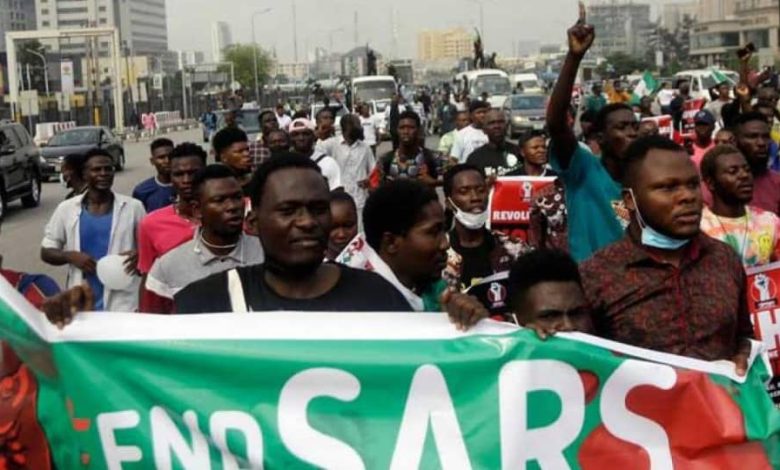
They made the demands in separate statements on Tuesday to mark the sixth anniversary of the protests, which erupted in October 2020 over widespread allegations of police brutality, particularly the activities of the now-disbanded Special Anti-Robbery Squad.
The demonstrations spread across several states, with thousands of young Nigerians demanding an end to police abuses and sweeping reforms in governance.
The October 20, 2020, shootings at the Lekki Toll Gate in Lagos became one of the most controversial episodes of the protests, triggering widespread condemnation and renewed calls for accountability.
The WRC and SWL expressed concern that recommendations made by judicial panels of inquiry established by various state governments had yet to be fully implemented, leaving some victims and bereaved families without compensation.
In a statement titled “EndSARS Rebellion, Six Years Later: Workers and Youths, Unite and Fight!”, the WRC described the protests as a significant struggle by young Nigerians against police brutality, poor governance and what it characterised as an exploitative political and economic system.
The statement was signed by the organisation’s Chairperson, Frances Akinjole, and Secretary, Bàbá Ayé.
The group paid tribute to Nigerians who lost their lives during the demonstrations, saying they had stood up for justice, freedom of expression, freedom of movement and the right to peaceful assembly.
It argued that the protests demonstrated the need for closer collaboration between workers and young people to challenge policies and institutions they considered oppressive.
The WRC also criticised organised labour for failing to sustain its planned general strike of September 28, 2020, arguing that a coordinated workers’ action alongside street protests could have strengthened the movement.
According to the organisation, the decision to call off the strike weakened an opportunity to build a broader alliance between organised labour and young Nigerians seeking political and economic reforms.
It maintained that although many workers participated in the #EndSARS demonstrations, the organised working class did not fully deploy its collective strength to advance the movement’s demands.
The group said, “General strikes, synchronised with mass upheavals on the streets, constitute the greatest power of the popular classes against the ruling class of oppressors who exploit us.”
The WRC traced the build-up to the protests to earlier demonstrations against police brutality and the killing of a young man in Ughelli, Delta State, on October 4, 2020.
It also acknowledged the role of the Take It Back movement, associated with the African Action Congress, in mobilising protesters and promoting calls for the disbandment of SARS.
The organisation urged young workers to become more active in trade unions, establish unions in workplaces where none existed and challenge union leaders whenever they failed to protect workers’ interests.
It further called on the Nigeria Labour Congress and other labour organisations to sustain their campaigns against economic hardship and poor working conditions.
The WRC said the current economic difficulties facing Nigerian workers made cooperation between the labour movement and young people increasingly important.