Olowu Sets Up Youth Clubs, Adopts Traditional Mediation To Tackle Community Conflicts

Toyyibat Qasim
The Olowu of Owu Kingdom, Oba (Prof.) Saka Matemilola, has established youth leadership and cultural ambassador clubs to promote peace, preserve Yoruba heritage and equip young people with leadership skills.
The monarch also announced the adoption of traditional mediation mechanisms, alongside modern conflict-resolution approaches, to address disputes within the community and prevent disagreements from escalating into prolonged police investigations and court proceedings.
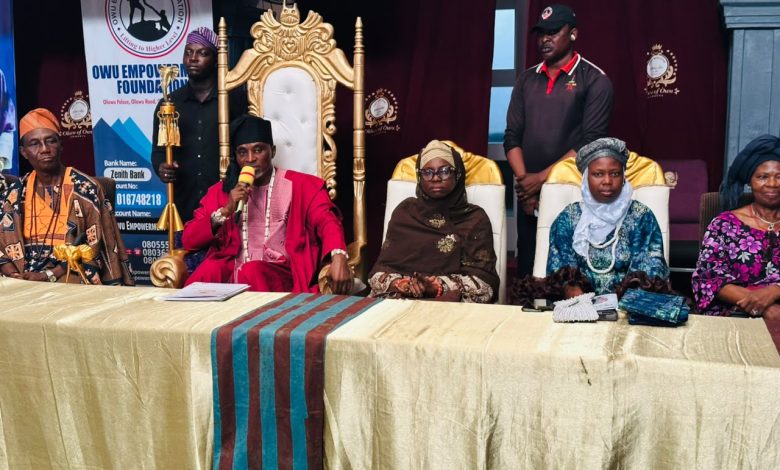
Matemilola made this known on Tuesday during the Olowu Education Pillar: Youth Leadership Summit and the official inauguration of the Olowu Youth Leadership Ambassador Club and Cultural Ambassador Club in Abeokuta, Ogun State.
The summit, themed, “Peace, Leadership, Education and Heritage,” brought together representatives of secondary schools across the state to encourage youth participation in community development, cultural preservation and peaceful coexistence.
Speaking at the event, the monarch said the initiative was designed to groom responsible young leaders who would become advocates of peace, cultural identity and positive social change in their schools and communities.
He stressed the need for young Nigerians to preserve their indigenous languages, traditions and values, warning that abandoning cultural identity could weaken their sense of belonging and connection with their roots.
According to him, young people must be confident in their cultural heritage wherever they find themselves and ensure that important aspects of their traditions are transmitted to future generations.
Matemilola noted that cultural diversity should not be a source of division but an opportunity for mutual understanding, tolerance and peaceful coexistence.
He said disagreements were inevitable in a multicultural society but maintained that dialogue, understanding and respect remained effective tools for managing differences.
On the traditional conflict-resolution initiative, the monarch explained that the palace was combining indigenous mediation practices with contemporary approaches to dispute settlement to promote peaceful solutions within the community.
He said some disagreements that could have resulted in lengthy police investigations and court proceedings had been successfully resolved through dialogue and mediation.
The monarch warned that persistent conflicts could undermine development, discourage investment and destroy the confidence of residents in their collective future.
He said peace and harmony were indispensable to sustainable development, urging young people to become ambassadors of reconciliation rather than agents of division.
Addressing the students drawn from participating secondary schools, Matemilola challenged them to begin developing leadership qualities early, stressing that their influence among peers could help shape the future of their communities.
“You must be proud of your heritage, committed to peace, and prepared to provide leadership wherever you find yourselves,” he said.
Also speaking, the Olori of Owu Kingdom, Olori Cecilia Naadensua Matemilola, urged young people to embrace education, hard work and continuous learning, insisting that leadership should be measured by service to humanity rather than the pursuit of titles and positions.
She said genuine leadership required a commitment to improving people’s lives and contributing meaningfully to society.
Sharing her personal experience, the Olori recounted how the death of her father when she was 15 years old drastically changed her circumstances, forcing her to leave a private school for a government school and, at some point, walk to school barefoot.
She, however, said the difficult experience did not prevent her from pursuing her ambitions, attributing her eventual accomplishments to determination, knowledge, hard work and the ability to take advantage of opportunities.