Firdaus Obiremi
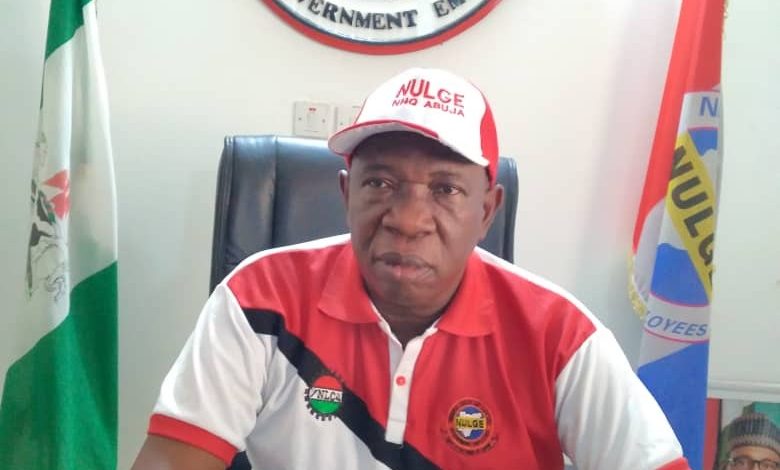
Former National President of the Nigeria Union of Local Government Employees, Comrade Akeem Ambali, has warned that the growing division between the Nigeria Labour Congress and the Trade Union Congress, coupled with the continued weakness of local governments, is threatening workers’ welfare and grassroots development in Nigeria.
Ambali, a former treasurer of the NLC and former Ogun State chairman of the Congress, said the disagreement between the two labour centres over the Federal Government’s proposed N70,000 transport allowance could undermine organised labour’s collective bargaining power at a time workers were battling rising inflation, transportation costs and declining purchasing power.
He also lamented that local governments remained largely ineffective despite the Supreme Court judgment affirming their financial autonomy, insisting that the failure to translate the ruling into functional grassroots administration had denied Nigerians the benefits of government policies and programmes.
The former labour leader spoke on Tuesday during an interview on Frontline, a current affairs programme on Eagle 102.5 FM, Ilese-Ijebu, Ogun State, where he examined the NLC-TUC disagreement, workers’ economic challenges and the state of local government administration.
On the labour dispute, Ambali described the disagreement between NLC President, Comrade Joe Ajaero, and his TUC counterpart, Comrade Festus Osifo, as an unnecessary distraction, arguing that the two organisations should concentrate on improving workers’ welfare rather than allowing differences over representation and negotiations to escalate into public confrontation.
The disagreement followed a Memorandum of Understanding signed between the NLC and the Federal Government on the N70,000 transport allowance without the TUC’s participation. Osifo subsequently rejected the arrangement, insisting that his organisation had not been carried along and retained the right to pursue its own negotiations.
Ambali, however, said the NLC should have properly briefed the TUC leadership on the circumstances surrounding the negotiations and allowed the other labour centre to understand the agreement before making it public.
Recalling his participation in the negotiations that produced the N70,000 national minimum wage in 2024, he said the established practice was for the NLC, TUC and Joint Negotiating Council to participate in discussions affecting workers generally.
He explained that although the two congresses had independent structures and the right to negotiate on behalf of their respective members, cooperation was essential when agreements were intended to cover the wider workforce.
He said the presence of both Ajaero and Osifo during the 2024 minimum wage negotiations demonstrated the importance of collective participation in labour negotiations.
Ambali maintained that the NLC should not treat the TUC as a junior partner because of differences in membership strength, stressing that both organisations were registered labour centres with recognised responsibilities.
He said, “What are we hiding? Are we not defending the interests of workers? You need to key the president of TUC in. You need to tell him the intricacies of that agreement, what happened. You must tell him.”
The former NULGE president also acknowledged the TUC’s apprehension over the Federal Government’s history of failing to implement some labour agreements, particularly the previous N30,000 wage award.
According to him, the TUC had legitimate reasons to demand assurances before accepting another government commitment, especially given the distinction between minimum wage, living wage and wage award.
He, however, cautioned against directing workers to reject the N70,000 transport allowance, arguing that the additional payment, despite its inadequacy, could provide some relief amid rising living costs.
“It will be suicidal for TUC to direct that its members will not take it. They will take it. No worker sees money and forgets about money,” he said.
Ambali described the allowance as insufficient, noting that its equivalent of slightly more than N2,000 daily could hardly address the increasing cost of transportation and other household expenses.
He said the removal of fuel subsidy, inflation and the floating of the naira had significantly eroded workers’ earnings, leaving many unable to meet their basic needs despite the implementation of the N70,000 minimum wage.
He added that transportation and electricity costs had become major drains on household incomes, while businesses were equally struggling with rising production expenses, making goods and services increasingly unaffordable.