‘I Have Never Seen Such Injuries’: Doctor Recalls Dele Giwa’s Last Moments After Parcel Bomb Blast

Daud Olatunji
A medical doctor, Dokun Adedeji, has recounted the agonising final moments of renowned investigative journalist and founding editor-in-chief of Newswatch magazine, Dele Giwa, revealing how the journalist desperately sought reassurance that he would survive after a parcel bomb tore through his body.
Adedeji, who treated Giwa following the explosion, said the journalist remained conscious despite suffering devastating injuries and repeatedly asked whether he would die.
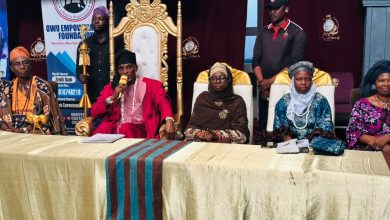
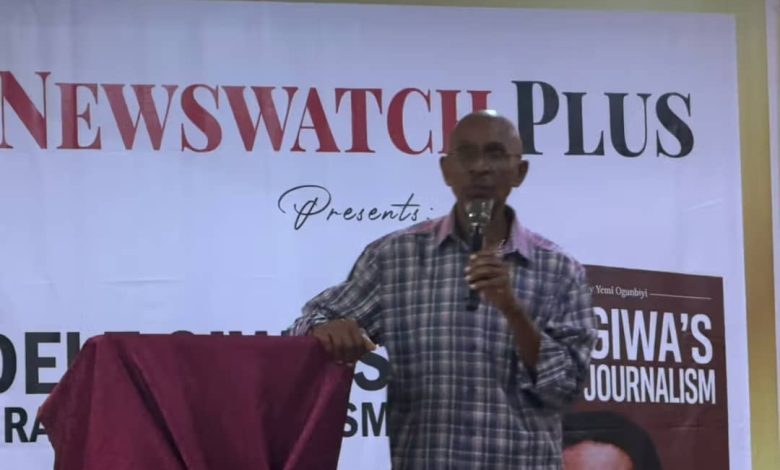
The doctor recounted the incident on Monday during the launch of Dele Giwa’s Granite Journalism, a book documenting the late journalist’s writings for Daily Times, Sunday Concord and Newswatch magazine, held at the Nigerian Institute of Journalism (NIJ), Lagos State.
Giwa was assassinated on October 19, 1986, when a parcel bomb delivered to his residence in Ikeja, Lagos, exploded, killing him at the age of 39.
The incident occurred during the military administration of former Head of State, General Ibrahim Babangida.
Recounting the horrifying scene at the hospital, Adedeji said Giwa was rushed to First Foundation Medical Centre, Opebi, Ikeja, shortly after the explosion.
The doctor, who was on duty at the time, said the journalist was critically injured but remained conscious enough to speak to him.
“It was about 12:30 in the afternoon when a company bus was driven into First Foundation Medical Centre, Opebi, Ikeja. I was the doctor on duty for the weekend. I saw people running, saying, ‘They brought Dele Giwa’,” he recalled.
He added, “So, we took Uncle Dele to the emergency room. What I saw, I have never seen again since in my practice. He was shattered. His two limbs were open, and he was bleeding.
“But he was still talking. He said, ‘Dokun, se mi o ni ku sha? (I hope I will not die?).’ I said, ‘I don’t know’.”
Adedeji said Giwa died at about 1pm, barely 30 minutes after arriving at the hospital, despite the efforts to save him.
Reflecting on the severity of the injuries, the doctor said the journalist would have faced an extremely difficult survival even if he had lived through the immediate aftermath of the bombing.
“One thing was sure. I think it was better that he died. There was no way Uncle Dele would have lived with that injury even if he lived,” he said.
The doctor disclosed that Giwa’s blood stained his clothes and shoes, which he kept for five years as a painful reminder of the tragedy.
“His blood was on my clothes and my shoes. I hung them for five years in the corner of my room, so that every time I saw them, I would remember,” Adedeji said.
Describing his relationship with the late journalist, he added, “Uncle Dele was not just my patient. He was like a brother. He treated me like a brother.”
GIWA’S LAST CONCERNS WERE HIS FAMILY
Beyond the physical pain he suffered, Adedeji said Giwa remained concerned about the safety and whereabouts of his family members as he battled for his life.
According to the doctor, the journalist repeatedly asked about his wife, Funmi, and their last daughter, Aisha, who had reportedly crawled into the dining area after the parcel bomb exploded.