Healthcare supply chain challenges: Gaps, sustainability issues and opportunities for improvement.

Consider a country with over 240 million people, a vibrant economy, a youthful population, a growing technology ecosystem and some of the most talented and sought-after professionals in the world. Its people are resilient, innovative, and entrepreneurial with a strong capacity to adapt and thrive. The adult population remains active and productive, contributing significantly to the nation’s growth rather than relying heavily on older generations for basic needs.
This is Nigeria!
Nigeria is a nation blessed with immense human and economic potential. Yet, despite these strengths, it continues to face significant challenges across critical sectors, including healthcare, infrastructure, education and supply chain management. The contrast between what Nigeria is capable of achieving and the realities many citizens experience presents both a challenge and an opportunity for transformation. I have no other reason for writing this except to enumerate the challenges and opportunities embedded in our nation’s Healthcare Supply chain.
Keeping the Lifeline Alive: Strengthening Nigeria’s Healthcare Supply Chain
The saying “Health is Wealth” extends beyond hospitals and healthcare workers. It encompasses the entire healthcare supply chain, including infrastructure, distribution systems and sustainability. This process helps identify the strengths, opportunities, advantages and challenges inherent within the healthcare ecosystem.
A supply chain is a continuous cycle that must remain unbroken. Like a well-maintained machine, it requires constant attention and concise investment to prevent damage, cracks, delays or leakages that can disrupt the delivery of essential healthcare services and products.
A healthy nation is indeed a wealthy nation. For Nigeria to unlock its full potential, healthcare must be prioritized as a national development agenda not a residual allocation after competing priorities have been satisfied. The Federal Government has a critical role to play in creating an enabling environment, strengthening healthcare infrastructure, improving distribution networks and fostering sustainable systems that ensure quality healthcare reaches every citizen. By doing so, Nigeria will successfully transform its healthcare sector into a catalyst for economic growth, human development and national prosperity.
The Domino Effect
As a responsive nation, we should consider the impact of healthcare supply chain challenges on the country. Medicines may expire, become damaged or fail to reach patients on time. As a result, patients may experience medicine shortages, delayed treatment and higher healthcare costs. These challenges can also lead to increased environmental damage and reduce the nation’s resilience during crises such as pandemics and natural disasters.
The Way Forward
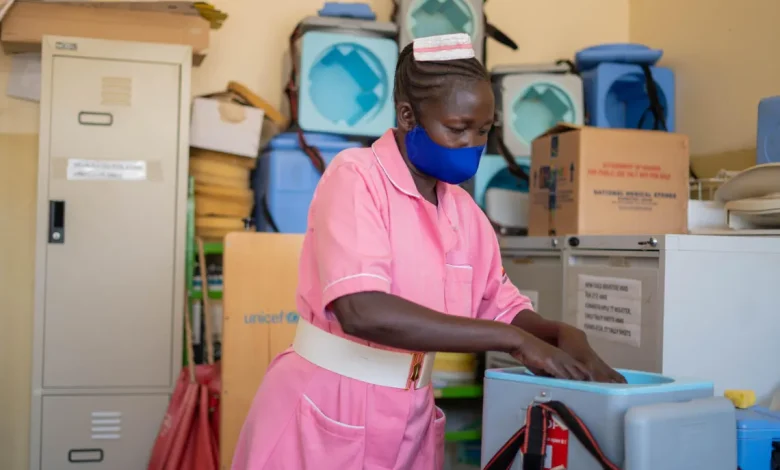
Imagine a vaccination campaign in a remote village. Vaccines arrive late because of poor tracking, and some are spoiled due to inadequate refrigeration. By introducing digital inventory systems, real-time tracking and solar-powered cold storage, healthcare workers can ensure vaccines arrive safely and on time. This simple improvement can reduce waste, help reach more patients, and build a stronger, more reliable healthcare supply chain. We can achieve the best in the supply chain if priorities are placed rightly.
2027 Health sector budget should cater for better tracking systems, reliable cold storage and data-driven planning; hence vaccines and other health care delivery could reach patients faster and in good condition promoting healthier and responsive process. By investing in technology, local production and sustainable practices, healthcare systems can reduce waste, improve patient care, and become more resilient during future crises.
Akin-Tella Olajumoke Adetoun is the Head, Enterprise Resource Management at Private Sector Health Alliance of Nigeria (PSHAN)