The National Economic Council (NEC) has approved an additional N130 billion for the rehabilitation of police training institutions across the country, bringing the total allocation for the project to N230 billion.
The approval comes amid preparations for the proposed recruitment of 50,000 police personnel and renewed efforts to strengthen Nigeria’s security infrastructure ahead of the anticipated establishment of state police.
The Council also endorsed two development projects backed by proposed World Bank financing of $850 million to strengthen disaster preparedness and expand early childhood development services across the country.
The decisions were reached at the 162nd NEC meeting held on Monday, November 23, 2026, where members also reviewed the state of the economy, pension reforms and the national identity registration programme.
Presenting an update on the rehabilitation of police training institutions, the NEC Ad-Hoc Committee, chaired by Enugu State Governor Peter Mbah, disclosed that work was ongoing at 13 locations nationwide, with about 30 per cent of the projects completed.
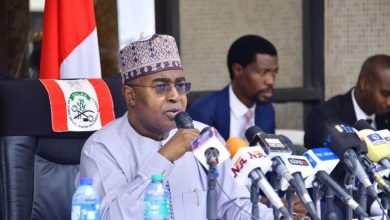
In a statement on Monday, by Senior Special Assistant to the President on Media and Communications, Stanley Nkwocha, the committee said the additional funding would accelerate rehabilitation, upgrade training facilities and improve the capacity of the institutions to accommodate increased recruitment and training requirements.
NEC had earlier approved N100 billion for the programme following the establishment of the committee in October 2025 on the recommendation of President Bola Tinubu.
On the economy, the Minister of Finance and Coordinating Minister of the Economy, Taiwo Oyedele, told the Council that Nigeria recorded 4.43 per cent Gross Domestic Product growth in the second quarter of 2026, up from 4.23 per cent in the corresponding period of 2025.
He also disclosed that headline inflation declined for the fifth consecutive month to 14.06 per cent in October, its lowest level since September 2020.
According to him, the country’s external reserves stood at $54.87 billion as of November 12, 2026.
Oyedele further reported that Nigeria’s trade surplus increased from N10.2 trillion in the first half of 2025 to N20.1 trillion in the corresponding period of 2026.
He said net revenue distributed through the Federation Account Allocation Committee also rose by 44 per cent, from N15.2 trillion in 2024 to N21.9 trillion in 2025.
However, the minister cautioned that the improving economic indicators had yet to translate into sufficient relief for households and businesses.
He identified food prices, electricity costs, high lending rates, access to affordable credit and unemployment as major challenges, noting that food inflation remained elevated at 19.13 per cent in October.
On the proposed development projects, NEC endorsed the $350 million Accelerating Resilience through Investment Systems and Engagement (ARISE-Nigeria) Project, a six-year World Bank-supported initiative aimed at improving the country’s preparedness and response to natural disasters.
The programme is expected to strengthen emergency operations centres, early warning systems, weather monitoring and disaster response financing at federal and state levels.
Between five and 10 states will participate in the initial phase, with selection based on their exposure to disaster risks, institutional readiness and commitment to emergency preparedness.
The Council also endorsed Nigeria’s State-Led Early Childhood Development Programme, which is expected to receive $500 million in proposed World Bank financing, alongside potential additional grant support of $30 million from the Global Financing Facility.
The programme is designed to improve children’s access to healthcare, nutrition, early learning and protection services across the 36 states and the Federal Capital Territory.
Under the initiative, early childhood development hubs will connect primary healthcare facilities with childcare, preschool education and other essential social services, particularly in underserved communities.
On national identity management, the Council called for stronger collaboration between the National Identity Management Commission (NIMC) and state governments to accelerate the registration of Nigerians and integration of the National Identification Number into public services.
It said expanding national identity coverage would improve public service delivery, strengthen tax administration and help eliminate duplicate records and fraud in government payrolls, pension systems and social intervention programmes.
The Council also approved a proposal by the National Pension Commission (PenCom) for the full implementation of the Contributory Pension Scheme across the federation.
The Director-General of PenCom, Omolola Oloworaran, presented the proposal titled, “Securing the Retirement of Nigerian Workers While Strengthening State Finances”.
Following the presentation, NEC urged state governors to adopt formal implementation timelines and directed their administrative and finance teams to work with PenCom on the necessary arrangements.
Earlier, Vice President Kashim Shettima, who chaired the meeting, said the long-term success of President Tinubu’s economic reforms depended on building strong institutions capable of sustaining their gains.
Shettima urged federal ministries and state governments to strengthen cooperation and ensure that policy decisions considered the interests of Nigerians affected by their implementation.
“While His Excellency, President Bola Ahmed Tinubu, GCFR, makes the difficult reforms to stabilise the economy, we must all participate in establishing institutions capable of sustaining the benefits of those reforms,” he said.
The Vice President said effective collaboration among governments was necessary to ensure that successful practices in one jurisdiction informed decisions elsewhere, while recognising differences in capacity and circumstances.
On the disaster resilience project, Shettima said investments must reduce the impact of disruptions on household incomes, businesses and public services.
He stressed that resilience required decisions and investments made before disasters occurred, adding that affected communities must also have a voice in shaping interventions meant to improve their conditions.
“The capacity to recover should never depend entirely on the resources a person already possesses,” he said.
Shettima urged NEC members to consider the long-term consequences of their decisions, saying the quality of cooperation among governments would determine the institutions and opportunities inherited by future generations.