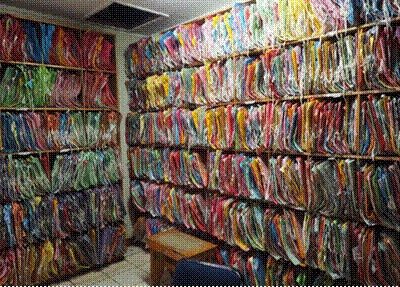
Over-reliance on paper records is limiting the ability of healthcare facilities to manage information, support patients and contribute to national health reforms. Basic digital record-keeping must become a minimum standard of practice in every facility, not a privilege reserved for a few.
Nigeria’s healthcare system cannot be effectively managed without reliable information about the services being delivered, the patients receiving care and the resources being utilised. Yet across much of the country’s health sector, critical information remains locked in paper files and fragmented systems, limiting the ability of providers to make informed clinical decisions, manage their facilities and contribute to national health planning.
The consequences extend beyond administrative inconvenience. When patient records cannot be retrieved, treatment decisions become harder to make. When facilities cannot produce reliable operational data, their ability to attract financing, process insurance claims and demonstrate performance is weakened. When information generated across healthcare facilities does not reach national reporting systems, government is left making important policy and resource allocation decisions with an incomplete picture of the sector.
This is one of the less visible but consequential constraints facing Nigeria’s healthcare system. The country has made investments in health insurance, primary healthcare, digital health innovation and universal health coverage. However, the success of these initiatives depends, in part, on the quality and accessibility of information generated at the point of care. Digitising healthcare records must therefore move beyond the adoption of technology by a handful of well-resourced hospitals to become a basic operational standard across the sector.
The cost of relying on paper alone
Patients pay first. Around three in every four naira spent on health in Nigeria comes directly from patients’ pockets. While paper records remain an important part of healthcare delivery, relying on them exclusively creates challenges when folders are misplaced, incomplete or difficult to retrieve. Tests may have to be repeated and paid for again, while patients referred to other facilities often have to recount their medical histories to doctors who cannot access previous records. For people managing chronic conditions, the absence of accessible and reliable treatment histories can also compromise continuity of care.
Facilities pay next. For private providers, paper-based record management is increasingly a business risk. Lenders want evidence of patient volumes and business performance. Insurers require clinical documentation to process claims, while regulators expect facilities to maintain records and submit statutory returns. In Anambra State, failure to submit required health data can attract a ₦100,000 penalty. A hospital that cannot readily produce its own operational information is disadvantaged when seeking credit, processing claims and demonstrating compliance.
The health system pays the highest price. Health insurance expansion, the Basic Health Care Provision Fund and Nigeria’s Universal Health Coverage commitments all depend on reliable information generated at the facility level. Without it, policy and resource allocation are based on incomplete evidence. Research also suffers. Africa bears approximately a quarter of the global disease burden, yet the World Health Organization recorded only 845 of the 76,331 clinical trials initiated worldwide in 2023 on the continent, about 1.1 per cent. Fragmented health records make it harder to identify potential research participants and generate evidence relevant to African populations.
Disease surveillance presents an equally compelling case. The Nigeria Centre for Disease Control and Prevention (NCDC) needs timely information from healthcare facilities to detect outbreaks and coordinate responses. Private facilities are often among the first points of contact for patients, yet when cases are recorded only on paper, warning signals may reach the NCDC late or not at all. A health system that cannot access information as it is generated will struggle to respond effectively to emerging public health threats.
What the Joint Annual Review revealed
The recent Joint Annual Review (JAR) of the health sector brought this challenge into sharper focus. Collating data and contributions from private healthcare providers took several weeks, with members of the Healthcare Federation of Nigeria (HFN) committing time and resources to submit information outside the routine processes of the national health information system, particularly the District Health Information Software 2 (DHIS2).
The experience exposed a persistent gap in the integration of private-sector information into national health planning. Although DHIS2 provides an established platform for routine health data reporting, participation and reporting quality remain uneven across facilities. HFN members’ contributions were important because a national review that excludes or inadequately reflects private healthcare providers misses a significant part of the care Nigerians receive. However, it should not require weeks of manual coordination every year to assemble information that ought to be generated routinely.
Data collected by hand and consolidated long after services have been delivered is difficult to verify, analyse and use for timely decisions. Yet government plans and budgets against this information, development partners use it to determine priorities, and providers are assessed by it. If the JAR and other planning processes are to be grounded in credible evidence, health data must be generated at the point of care and flow routinely into national reporting systems. Digitising facility records is an important step towards achieving this.
Why digitisation has stalled
The problem is not a lack of innovation. Nigeria has a growing ecosystem of local technology companies developing solutions across electronic medical records, telemedicine, e-pharmacy, laboratory management and health insurance. The challenge is that digital health adoption has not expanded at the same pace as innovation. Sophisticated electronic record systems have reached some major hospitals, while thousands of smaller facilities continue to rely primarily on paper. For many of these providers, paper remains the most accessible and dependable means of maintaining patient information, particularly where electricity, connectivity and financial resources are limited. The challenge is that as healthcare delivery becomes more complex, paper-only systems are increasingly unable to meet the demands of efficient information retrieval, reporting and data exchange.
The result is a fragmented digital health environment. Facilities adopt different platforms that do not necessarily communicate with one another, while many providers have no digital record-management system at all. Patient information remains difficult to retrieve across facilities, and technology-enabled consultations can begin without access to a patient’s medical history. Nigeria has gone deep before going wide.
The solution: go wide before going deep
Basic digital record-keeping should become the minimum standard for healthcare facilities in Nigeria. This does not mean abandoning paper overnight or dismissing its importance in a health system where it remains the most accessible means of record-keeping for many providers. Paper records have sustained healthcare delivery across the country, often in environments where electricity and connectivity cannot be guaranteed. However, the limitations of relying on paper alone are becoming increasingly evident as the demands on healthcare facilities grow. The immediate priority should be to provide a realistic pathway towards accessible, secure digital records, beginning with electronic copies of existing patient folders.
Nigerian health technology companies are demonstrating how this can be achieved. Uburu Health is one example. Its platform enables facilities to scan and upload existing paper records using smartphones, supported by a transcription engine designed to interpret Nigerian handwritten medical records. More than 660 facilities have joined its network, with over 20,000 patient records digitised since July. The Federal Ministry of Health and Social Welfare has also recognised the company as a technical support partner for the national health data digitisation programme.
This approach demonstrates that facilities do not necessarily need expensive, comprehensive systems to begin the transition. Lower-cost solutions that build on existing records and workflows can provide an accessible entry point, particularly for smaller providers. However, scanning paper records is only the first step. These records must also be properly indexed, secured and progressively integrated into structured systems that can exchange information with other authorised platforms.
Public hospitals have demonstrated what institutional commitment to digitisation can achieve. The Federal Medical Centre, Ebute Metta, in Lagos previously managed more than 200,000 paper patient records, with the familiar challenges of slow retrieval, misplaced folders, limited access controls and costly storage.
Its leadership embarked on a broader digitisation process covering patient records, payments, inventory and quality management. The transition improved staff productivity, strengthened information security and helped the hospital maintain contact with patients during the early stages of COVID-19. Combined with a cashless policy, the transformation contributed to a reported increase in hospital revenue of more than 400 per cent, alongside improvements in inventory management and operational efficiency. Better access to information also strengthened the hospital’s ability to assess service delivery and engage partners and funders.
Paper patient records: still the reality in many Nigerian health facilities.
The experience demonstrates that digitisation is not merely an administrative upgrade. When supported by leadership and integrated into facility operations, it can improve institutional performance, accountability and financial sustainability.
Crucially, digital records must work for facilities and patients, not simply generate information for external institutions. Their benefits include:
● Compliance: Routine digital records make statutory reporting easier and help facilities meet regulatory requirements.
● Financing: Reliable operational information can strengthen facilities’ applications for credit. This is relevant to access-to-finance programmes HFN is advocating for its members, including FCMB’s ₦20 billion Healthcare Fund, the Medical Credit Fund, the First Movers Health Fund and the Bank of Industry’s GLOW Fund.
● Procurement: Better information on patient volumes and service patterns helps facilities forecast demand, reduce waste and manage inventory.
● Insurance claims: Accessible clinical documentation improves claims accuracy and can reduce queries, rejections and payment delays.
● Management: Facility leaders can monitor service delivery, identify patients missing follow-up appointments and make better-informed decisions about quality of care.
Scale must also come with trust. Health information is sensitive, and digitisation must protect patients against unauthorised access and inappropriate use of their records. The National Health Act 2014 establishes confidentiality obligations and safeguards concerning health records, while the Nigeria Data Protection Act 2023 provides rights relating to personal data, including data portability under specified conditions. Digital systems must therefore incorporate appropriate security, lawful processing, access controls and audit trails. Patients should be able to access their health information and have meaningful control over how it is shared, subject to applicable legal requirements.
What needs to change
Expanding digital record-keeping will require coordinated action from government, regulators, technology providers, financiers and healthcare facility owners.
1. Regulators: Make basic digital record management a progressively adopted standard of practice, incorporated into facility registration and inspection. Establish minimum requirements for storage, retrieval, security and reporting, supported by phased implementation timelines and technical assistance so smaller facilities are enabled rather than penalised.
2. Government and technology providers: Make interoperability a condition of digital health systems procured or developed for public and private facilities. Platforms should use recognised standards that allow patient information to be exchanged securely and meaningfully across authorised systems.
3. Lenders and insurers: Recognise reliable digital operational information as part of the evidence available for assessing facility performance, financing applications and insurance claims. This will create additional incentives for providers to invest in better record management.
4. Facility owners: Treat information management as essential infrastructure, not simply an administrative function confined to the records room. It is central to institutional memory, operational efficiency and patient safety.
HFN will continue to mobilise private healthcare providers, engage relevant government institutions and work with technology companies, financiers and development partners to advance the adoption of appropriate digital health systems. A key priority is ensuring that data generated across private healthcare facilities flows routinely into the national health information system, so future Joint Annual Reviews and planning processes can draw on timely, credible information rather than months of manual collation.
Building a health system that can see itself
Nigeria’s healthcare reforms must be supported by reliable information about what is happening across the system, where resources are going and which populations are being reached. Basic digital record-keeping is an essential part of building that capacity. The objective is not simply to replace paper folders with electronic files, but to connect information generated at healthcare facilities to better clinical decisions, stronger institutions and more accountable national planning.
The tools exist, local solutions are emerging, and the legal framework provides important foundations for protecting and managing health information. What remains is a coordinated commitment to moving beyond exclusive reliance on paper and making digital record-keeping an achievable and consistent standard across the health sector. Nigeria cannot effectively manage what it cannot see.
This article is a partnership between the Healthcare Federation of Nigeria (HFN) and BusinessDay to highlight policies and programmes to promote the rebuilding of Nigeria’s health sector.
Njide Ndili is the Country Director of PharmAccess Nigeria and President of the Healthcare Federation of Nigeria (HFN), a coalition of over 250 private-sector organisations and 15 health and allied health associations, with a wider network of more than 4,000 stakeholders across the healthcare sector.
Dr Joel Aniegbe is the Founder and Chief Executive Officer of Uburu Health (Uburu Technology Platforms Limited), a Nigerian health technology company developing digital solutions to help healthcare facilities manage and access patient records.