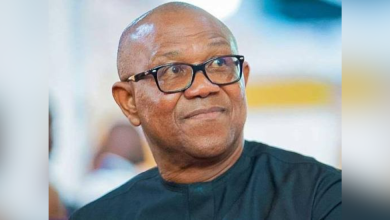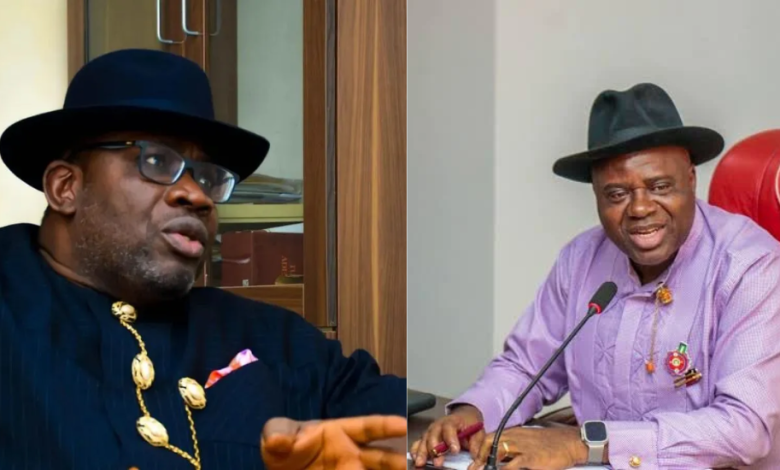
Henry Seriake Dickson was a struggling lawyer , unknown in the political circles of Bayelsa State until shortly after the return to civil rule in 1999. He was a lawyer struggling to make ends meet. His foray into active politics was relatively known. He however rose and came to limelight through a combination of personal effort, political alliances and circumstances that shaped the state’s political landscape.
His early association with the Alliance for Democracy (AD) is instructive. The party’s electoral breakthrough in Bayelsa West in 1999 was notable given the dominance of the Peoples Democratic Party (PDP). In my assessment, the unpopularity of the PDP candidate, prevailing public sentiment and local political alignments contributed to that outcome. It would be misleading to attribute the victory solely to the ingenuity of any one individual.
Dickson later joined the PDP, a move linked to his relationship with Goodluck Jonathan, who subsequently recalled encouraging him to join the party. When Jonathan became Governor of Bayelsa State, Dickson was appointed Attorney-General and Commissioner for Justice in 2006. Douye Diri also served in that administration as Commissioner for Youth and Sports, although his public-service career had begun earlier, including service as Director of the Centre for Youth Development. Their political paths therefore predated the later question of gubernatorial succession.
The history of Dickson’s political relationships also includes King A. J. Turner, publicly described as a former political godfather before their relationship deteriorated. Without presuming the causes of that disagreement, the broader point remains that political careers develop through relationships and opportunities as well as individual ability.
Dickson went on to represent the Sagbama/Ekeremor Federal Constituency in the House of Representatives and served two terms as Governor of Bayelsa State from 2012 to 2020. These are substantial achievements. Yet his progression also benefited from Jonathan’s political support, including during the circumstances surrounding the PDP governorship nomination in 2012.
Equally, Dickson played an important role in Diri’s subsequent advancement. As governor, he appointed Diri Deputy Chief of Staff and later Principal Executive Secretary. Diri subsequently served in the House of Representatives from 2015 and in the Senate from 2019 before becoming Governor in 2020. Dickson’s support should be acknowledged, but it should not be taken to mean that Diri’s political identity or career began with him.
This history raises a question about the relationship between political mentorship and public office: does helping a successor emerge confer an enduring right to personal loyalty or influence over the exercise of executive authority? In a constitutional democracy, a governor’s authority derives from the Constitution and the electoral process, and his primary obligation is to the people he serves.
In my assessment, Governor Diri has shown considerable respect and restraint in his dealings with his predecessor, apparently in the interest of political harmony. Some supporters have consequently wondered what political understanding, if any, existed between the two. Whatever the answer, gratitude for political support should not diminish the independence or constitutional responsibilities of an elected governor.
The biblical account of King Nebuchadnezzar offers a fitting reflection on pride and the limits of personal power. Surveying Babylon, he declared: “Is not this great Babylon, that I have built for the house of the kingdom by the might of my power, and for the honour of my majesty?” (Daniel 4:30, KJV). The account describes his humiliation and eventual recognition of God’s sovereignty. He later acknowledged: “And those that walk in pride he is able to abase.” (Daniel 4:37, KJV).
I invoke this account not to equate Dickson’s circumstances with Nebuchadnezzar’s, but to underscore a lesson relevant to all leaders: achievement is rarely solitary, and power is never a licence to demand perpetual deference. Political mentorship is best honoured when those who benefit from it are free to exercise sound judgment, strengthen institutions and serve the public. Humility and gratitude should run in both directions.
Mr Preye Ebiowei, a public affairs analyst, wrote from Yenagoa.