Deadly Clashes Erupt as Boko Haram and ISWAP Intensify Fighting in Sambisa Forest

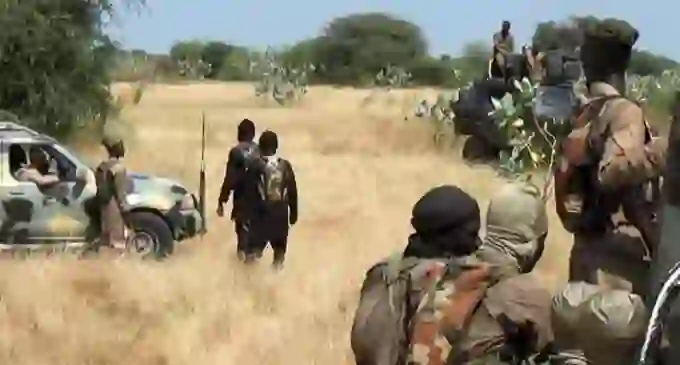
Intense fighting has reportedly broken out between Boko Haram and the Islamic State West Africa Province (ISWAP), as both terrorist groups struggle for territorial dominance in the Sambisa Forest and nearby communities in Borno State.
Fresh intelligence suggests that the rivalry between the two factions has escalated in recent days, with violent confrontations becoming more frequent across their strongholds.
On April 30 at about 8:43 p.m., a reported exchange between suspected members of the groups shed light on the ongoing hostilities. A Boko Haram fighter identified as Ba Musa, believed to be operating within the Sambisa axis in Bama Local Government Area, was said to have communicated with an associate known as Ya Kazalla.
According to security analyst Zagazola Makama, the conversation reflected conflicting claims over the outcome of recent clashes between the rival groups.
Kazalla was reportedly concerned about circulating reports that ISWAP had gained the upper hand in recent engagements. However, Musa dismissed the claims, insisting instead that Boko Haram had inflicted heavier losses on their rivals.
He allegedly claimed that about 100 ISWAP fighters were killed during a confrontation on April 29 in Sambisa Forest. He also stated that seven additional ISWAP members were killed in another clash around Molai in Konduga Local Government Area.
Musa further claimed that Boko Haram suffered minimal casualties, with only one fighter reportedly killed.
Security experts caution that such figures cannot be independently verified, noting that both groups frequently issue exaggerated or misleading accounts to boost morale and influence perception.
Despite the uncertainty, the renewed violence highlights the deepening rivalry between the two insurgent factions and the scale of instability within their ranks.
Sambisa Forest and surrounding areas, including parts of the Lake Chad Basin, remain key operational zones for insurgent activity, even as security forces continue counterterrorism operations in the region.
Analysts say the internal conflict could weaken both groups’ coordination, though it also adds a new layer of unpredictability to the security situation in the Northeast.
READ ALSO: