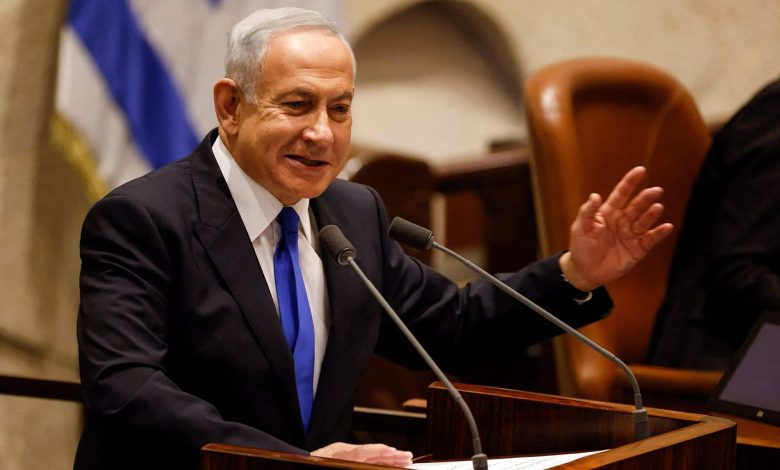
Israeli Prime Minister (PM) Benjamin Netanyahu has said the war against Iran cannot be considered over until Tehran’s stockpile of enriched uranium is removed and its enrichment sites dismantled.
Papers News reports that Netanyahu stated this in an interview aired on Sunday on the CBS News programme, 60 Minutes, amid continuing debate over the future of Iran’s nuclear programme and the direction of the United States-backed Israeli campaign.
He said Iran’s nuclear material remained a major concern despite claims by United States President Donald Trump that Tehran had been militarily defeated and that its nuclear programme had been contained.
Iran’s Uranium Must Be Removed – Netanyahu
Netanyahu insisted that the presence of enriched uranium in Iran meant the conflict had not achieved all its objectives.
He said, “It’s not over, because there’s still nuclear material, enriched uranium, that has to be taken out of Iran. There are still enrichment sites that have to be dismantled.”
When asked how the uranium could be removed, the Israeli leader replied, “You go in and you take it out.”
Netanyahu said Trump shared a similar concern about the uranium stockpile, although he declined to discuss possible military steps.
He added, “I’m not going to talk about military means, but the president, what President Trump has said to me, ‘I want to go in there.’”
Papers News reports that Netanyahu’s comments came as Washington faces pressure to bring the war to an end, with Trump publicly maintaining that Iran’s nuclear threat had been contained. CBS reported Netanyahu’s position from the interview aired on May 10, 2026.
Trump Says Iran Militarily Defeated
Trump, in a separate interview aired on Sunday but reportedly recorded earlier, said Iran had been “militarily defeated.”
He also insisted that the uranium could be removed whenever the United States decided to act.
Trump said, “We’ll get that at some point, whenever we want. We’ll have it surveilled.”
He added, “If anybody got near the place we will know about it and we’ll blow them up.”
The comments highlighted a difference in public tone between Netanyahu, who argued that the conflict remained unresolved, and Trump, who suggested that Iran’s military position had already been weakened enough to prevent an immediate nuclear threat.
Asked by CBS how the uranium stockpiles could be removed from Iran, Netanyahu said he would prefer the process to happen through an agreement.
He said, “I think it can be done physically. That’s not the problem. If you have an agreement and you go in and you take it out, why not? That’s the best way.”
Pressed further on whether Israel or the United States had military options to seize the uranium, Netanyahu declined to discuss specific plans or give a timetable.
He, however, maintained that Iran’s enrichment sites and remaining nuclear material must be addressed before the war could be considered fully over.
Netanyahu also said Israel wanted to reduce its dependence on United States military support over time.
Israel is one of Washington’s closest allies and currently receives about $3.8bn annually in American military support.
The Israeli Prime Minister said he had told Trump that he wanted the financial component of US support for Israel to fall to “zero.”
He said, “I think that it’s time that we wean ourselves from the remaining military support.”
Netanyahu added, “Let’s start now, and do it over the next decade.”
His comments suggested a long-term push by Israel to fund more of its defence needs independently, even while maintaining strong strategic ties with Washington.
Israel Lists Other War Aims
Beyond the uranium stockpile, Netanyahu said there were still other objectives that had not been fully achieved.
He pointed to Iran’s support for regional proxy groups and its ballistic missile programme as areas that still required attention.
He said, “There’s still proxies that Iran supports, their ballistic missiles that they still want to produce. Now, we’ve degraded a lot of it, but all that is still there and there’s work to be done.”
Netanyahu also said Israel was aware of support from China to Iran, particularly in relation to missile production.
He said, “China gives a certain amount of support to Iran, and particular components of missile manufacturing. But I can’t say more than that.”
The Israeli leader also expressed optimism that a collapse of Iran’s current leadership could weaken groups backed by Tehran across the region.
He said the fall of the Iranian regime could mean “the end of Hezbollah,” as well as Hamas and the Houthis, because the support structure built by Iran would collapse if the government in Tehran collapsed.
He, however, stopped short of predicting that such a development would happen.
Netanyahu said, “Is it possible? Yes. Is it guaranteed? No.”