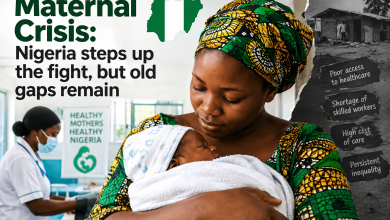
Nigeria’s 1,047 maternal deaths per 100,000 births expose rural healthcare gaps


Nigeria records an annual estimated 75,000 maternal deaths, with its maternal mortality ratio reaching 1,047 deaths per 100,000 live births — one of the highest rates globally.
The figures have renewed calls for a fundamental shift in healthcare delivery, particularly in rural communities where access to skilled care remains severely limited.
Against this backdrop, Professor of Obstetrics and Gynaecology Vedran Stefanovic, a maternal-fetal medicine specialist from Finland, has called for a stronger rural healthcare system built around early antenatal registration, trained frontline workers, timely diagnosis, and effective referral networks.
Stefanovic spoke on Wednesday in Kano at the Second International Congress of Ultrasound and Perinatal Medicine. The African Perinatal Society organised the event in collaboration with the International Academy of Perinatal Medicine, Aminu Kano Teaching Hospital (AKTH), and Bayero University, Kano.
Rural communities must form the front line
The three-day congress, running from August 26 to 28, centers on the theme “Synergy in Practice: Transforming Perinatal Outcomes through Obstetric and Neonatal Partnership.”
The Finnish expert stressed that Nigeria’s maternal health crisis cannot be solved by concentrating specialist services in major cities. Instead, rural communities must become the frontline strategy to reduce deaths associated with pregnancy and childbirth.
Many life-threatening complications can be identified and managed earlier if pregnant women enter the healthcare system early. Early antenatal booking allows health workers to establish medical histories, monitor blood pressure, conduct tests, and identify high-risk pregnancies before complications become severe.
Basic interventions can prevent major threats
Basic and affordable interventions, when delivered early and consistently, save lives without requiring expensive technology. Stefanovic identified pre-eclampsia and eclampsia as major threats to pregnant women in Africa, noting that early detection, preventive treatment, and prompt referral significantly improve outcomes.
Conditions such as diabetes and HIV also benefit from early intervention. Consequently, Stefanovic urged health authorities to strengthen primary healthcare facilities in rural areas and equip midwives and frontline workers to recognise danger signs.
His stance places rural healthcare at the centre of the challenge, rather than relying solely on specialist urban hospitals. World Health Organisation (WHO) data shows that skilled health professionals providing care before, during, and after childbirth save lives. Globally, an estimated 260,000 women died during or following pregnancy and childbirth in 2023—equivalent to more than 700 deaths daily.
Addressing the newborn mortality burden
Nigeria’s challenge is further compounded by newborn deaths. WHO data cited in its Nigeria maternal and perinatal death case study put the country’s newborn mortality rate at 34 deaths per 1,000 live births in 2023, representing an estimated 274,000 newborn deaths.
The congress is examining how obstetricians, neonatologists, midwives, sonographers, and other professionals can collaborate along the continuum of care. Key discussion areas include screening and treating pre-eclampsia, using ultrasound for prenatal diagnosis, managing preterm pregnancies, and deploying telemedicine to rural areas.
UNICEF Kano Field Office Health Manager Sarekeberehan Seyoum said the event provides an opportunity to move beyond discussions toward practical interventions for underserved populations. Seyoum commended the African Perinatal Society for promoting research and training, noting that capacity building and technology can strengthen delivery where specialists are scarce.
Institutional reforms and capacity building
The African Centre of Excellence for Population Health and Policy at Bayero University, Kano, also stressed the need for closer collaboration between obstetricians and neonatologists, treating maternal and newborn care as a single continuum.
AKTH is using the congress to highlight institutional expansion. Representing Chief Medical Director Abdurrahman Abba Sheshe, a hospital representative announced the establishment of a Neonatology Nursing Programme under its College of Nursing Sciences.
The programme will train specialised nurses for special-care baby units and neonatal intensive care units. AKTH is also establishing a School of Biomedical Engineering to maintain equipment such as ultrasound machines locally, reducing reliance on external technical support.
Ultimately, participants agreed that the central challenge is ensuring medical knowledge reaches women living far from urban centres. Experts argue Nigeria can achieve progress if pregnant women register early, frontline staff receive proper training, diagnostic services remain accessible, and referral pathways function seamlessly.