In this final part of a four-part BusinessDay series on Nigeria’s maternal health crisis, GODSGIFT ONYEDINEFU examines the government’s latest efforts to reduce maternal deaths and the longstanding health-system gaps that have limited their impact.
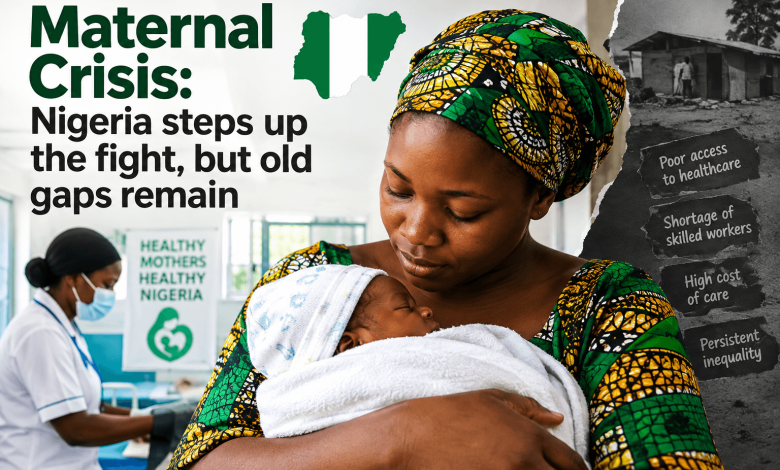
Nigeria is rolling out new interventions to reduce maternal deaths, but longstanding weaknesses in its health system, from shortages of skilled workers and blood to weak referrals and high healthcare costs, could limit their impact.
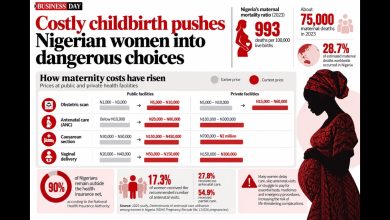
The country recorded an estimated 993 maternal deaths per 100,000 live births in 2023, translating to about 75,000 deaths, according to estimates by the World Health Organisation (WHO) and other United Nations agencies.
That is equivalent to about 205 maternal deaths a day and leaves Nigeria far from the Sustainable Development Goal target of fewer than 70 deaths per 100,000 live births by 2030.
Findings by BusinessDay showed that many of the deaths are associated with complications that can be prevented or treated when women receive timely and appropriate care, including severe bleeding and hypertensive disorders such as pre-eclampsia and eclampsia, infections, obstructed labour and complications from unsafe abortion.
A WHO case study on Nigeria found that hypertensive disorders accounted for 29 percent of maternal deaths and postpartum haemorrhage 24.4 percent, alongside indirect causes.
It was observed that blood shortages are particularly dangerous for women experiencing severe bleeding.
According to WHO, Nigeria collected 371,827 units of blood in 2024, while its estimated annual requirement is between 1.8 million and 2 million units.
Government targets high-burden areas
To address the crisis, the Federal Government introduced several interventions, including the Maternal and Newborn Mortality Reduction Innovation Initiative, known as MAMII.
The programme targets 172 local government areas across 33 states and the Federal Capital Territory, which, according to the government, accounts for about 55 percent of maternal deaths.
In November 2024, the government also announced a free Caesarean section initiative through Comprehensive Emergency Obstetric and Newborn Care facilities to reduce the financial burden of emergency childbirth.
Read also: Costly maternity care worsens Nigeria’s maternal health crisis
The National Primary Health Care Development Agency, working with partners, has also been supplying maternal, newborn and family-planning commodities and equipment while seeking to strengthen services from the community level through referral facilities.
Muyi Aina, executive director of NPHCDA, told BusinessDay that the interventions were intended to strengthen the continuum of maternal and newborn care, from identifying pregnant women in communities and providing antenatal care to skilled delivery, emergency referral and postnatal follow-up.
Aina said government monitoring data showed increases in antenatal attendance and deliveries assisted by skilled birth attendants.
He also said maternal deaths had declined by 17 percent and newborn deaths by 12 percent in programme areas, while maternal deaths in CEmONC-empanelled facilities had fallen by 22 percent.
He added, “These results indicate that the reforms are improving access to antenatal care, skilled delivery, emergency obstetric services, referral care and postnatal services.
“The overall objective remains clear: to ensure that every woman has access to respectful, evidence-based and life-saving care, and that no woman or newborn dies from preventable causes.”
Old weaknesses remain
However, BusinessDay’s analysis of the programmes showed they are still struggling to operate within a health system marked by worker and infrastructure shortages, inadequate financing, and weak emergency and referral capacity.
A 2025 study published through the National Library of Medicine identified severe resource constraints in Nigeria’s health system, particularly at the primary healthcare level, including shortages of health workers and infrastructure and inadequate funding.
The study warned that interventions introduced without addressing underlying weaknesses could place additional pressure on overstretched facilities and affect access and quality of care.
Further findings by BusinessDay showed that poor public awareness of some of the programmes, especially those meant to directly benefit the people such as free caesarean sections, is contributing to the challenges of fixing the health system.
At Kary Primary Health Centre, none of the five women seeking care during a BusinessDay visit said they knew about the government’s free Caesarean section programme.
This paper also discovered that insecurity presents an additional challenge in areas affected by insurgency and banditry, where displacement can disrupt access to health facilities and leave pregnant women in particularly vulnerable conditions.
Nigeria’s latest interventions therefore face a test that extends beyond the programmes themselves.
The old financial problems still persist as Nigeria struggles to adequately fund its budget.
Nigeria has consistently allocated less than 6% of its federal budget to health over the past six years, remaining far below the 15% target set under the Abuja Declaration.
In 2021, health received 4.68% of the federal budget, when N635.53 billion was allocated to the sector. The share rose marginally to 4.76% in 2022, with N819.29 billion allocated to health.
In 2023, health’s share reached 5.33%, following an allocation of N1.16 trillion. The proportion subsequently declined slightly to 5.15% in 2024, when the sector received N1.48 trillion.
Read also: Nigeria’s maternal mortality crisis: What Ghana, Rwanda, others did differently
In 2025, the sector’s share stood at 5.14%, with N2.83 trillion allocated to health.
For 2026, the federal government allocated N2.96 trillion to health, representing about 4.3% of the N68.3 trillion federal budget.
The figures show that despite the substantial nominal increase in health allocations over the period, the sector’s share of federal spending has remained less than half of the 15% Abuja Declaration benchmark.
The World Health Organisation’s African Health Observatory said that, due to low public health spending, out-of-pocket payments account for more than 75% of total health expenditure in the country.
The gap is the entire system
Health stakeholders and experts argued that reducing maternal deaths will depend not only on announcing free services and expanding emergency care, but on whether a pregnant woman can reach a functional facility, find skilled personnel and essential supplies, and receive timely, affordable treatment.
Adaobi Onyechi, a health expert, said the medical causes of maternal deaths could not be separated from weaknesses in the system providing care.
“Women can die not only because of the severity of a complication but because they arrive late at a facility, are referred late to a higher-level hospital, no ambulance is available, or they encounter delays after reaching a hospital because the required personnel, equipment, blood or medicines are unavailable,” she said.
Onyechi said weak referral systems and financial barriers remained major concerns.
She stressed that the challenge was to close the gap between government policies and what pregnant women encounter when seeking care.
Corroborating her, Adetolu Adumijimi, a public health expert at APIN, said Nigeria’s maternal mortality burden reflected weaknesses across the health system rather than a problem that maternal-health programmes alone could solve.
Adumijimi identified weaknesses in financing, staffing, governance, health information, medical supplies and service delivery.
He stressed that poor coordination among federal, state and local governments affected implementation of health policies.
“Financing remains another challenge. Despite legislation making health insurance mandatory, many Nigerians continue to pay directly for healthcare, leaving households exposed to costs when emergencies occur,” he stressed.
Adumijimi also pointed to the migration of doctors, nurses, pharmacists and other health professionals as a constraint on the system.
He queried, “For a pregnant woman who suddenly starts bleeding, do you even have a system that she can call an ambulance?.
“When she gets to a primary health centre, are there medical personnel? Is there a referral system to a secondary facility if she needs an emergency Caesarean section?”
Beyond short-term programmes
Olayinka Oladimeji, former director of Primary Healthcare Systems Development, said reducing maternal mortality would require a sustained strategy lasting beyond individual administrations.
“If you look at the past, we have had small gains here and there by different administrations, but each time government changes, it’s back to the drawing board,” he said.
He maintained that a single nationwide approach would also be inadequate because the social, economic and cultural factors affecting maternal health differ across regions.
He added that poverty and low levels of education can make it more difficult for women to seek care promptly, while the loss of experienced health workers further weakens services.