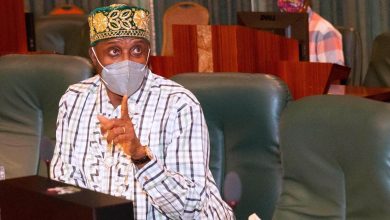
The Minister of Finance and Coordinating Minister of the Economy, Taiwo Oyedele, has urged state governments to reduce their dependence on federal allocations and develop sustainable sources of revenue to drive long-term economic growth.
Oyedele made the call at the 2026 National Council on Finance and Economic Development (NACOFED) conference in Owerri, Imo State, where he stressed that increased allocations alone cannot guarantee prosperity for the states.
He said states needed to strengthen their productive capacities, improve internally generated revenue and diversify their economies to withstand economic shocks.
According to the minister, Nigeria must move away from an allocation-driven system towards an economy based on production, investment and job creation.
Oyedele also disclosed that Nigeria recorded an estimated N15.8 trillion in savings from the removal of fuel subsidy and foreign exchange reforms between June 2023 and December 2025.
He, however, explained that the money did not constitute a huge pool of cash retained by the Federal Government, noting that the funds were distributed among the three tiers of government.
He said the Federal Government received N5.43 trillion from the N15.8 trillion, while state governments received N6.52 trillion and local governments got N3.88 trillion.
The minister explained that federation account allocations, which previously ranged between N300 billion and N600 billion monthly, had increased to more than N2 trillion following the economic reforms.
Oyedele said the Federal Government generated an additional N20.4 trillion during the period through subsidy savings, increased revenue and borrowing, but incurred about N30.64 trillion in additional expenditure.
He said the spending covered salaries, debt servicing, infrastructure, electricity subsidies and other government obligations.
According to him, the Federal Government spent N9.39 trillion on wages, N9.37 trillion on external debt servicing, N6.47 trillion on strategic infrastructure and N3.14 trillion on electricity subsidies during the period under review.
Oyedele maintained that subsidy removal reduced the amount of money the government would have needed to borrow rather than eliminating the need for borrowing altogether.
He added that resources generated from the reforms had supported salary adjustments, payment of salaries and pensions, settlement of pension arrears, expansion of the Nigerian Education Loan Fund (NELFUND), as well as consumer and small business credit programmes.
Among the infrastructure projects he listed were the Lagos-Calabar Coastal Highway, allocated N2.23 trillion; the Sokoto-Badagry Super Highway, N1.11 trillion; the Trans-Sahara Super Highway, N489.2 billion; and the Road Emergency Intervention Project, N366 billion.
On Nigeria’s financing arrangements, the Director-General of the Debt Management Office, Patience Oniha, said the loan facility involving First Abu Dhabi Bank was part of efforts to diversify the country’s funding sources and secure financing on better terms.
She said the transaction followed due process, received National Assembly approval and complied with the Fiscal Responsibility Act.
Meanwhile, Imo State Governor Hope Uzodimma said his administration was investing in agriculture, digital technology, electricity and infrastructure to diversify the state’s economy. He urged states to adopt deliberate strategies to develop alternative sources of economic growth.
Atiku Demands Explanation of Federation Revenues
Meanwhile, former Vice President and African Democratic Congress presidential candidate, Atiku Abubakar, has demanded greater transparency over about N30 trillion in Federation revenues, deductions, savings and transfers.
Atiku, through his Senior Special Assistant on Public Communication, Phrank Shaibu, said the Federal Government should provide a comprehensive account of revenues and fiscal gains generated from the removal of petroleum and energy subsidies.
He argued that Nigerians were told the reforms would free resources for development and therefore deserved to know how the funds had been utilised.
Atiku said his earlier analysis had identified about N28 trillion requiring explanation up to June 2026, adding that the July figures had raised the amount to nearly N30 trillion.
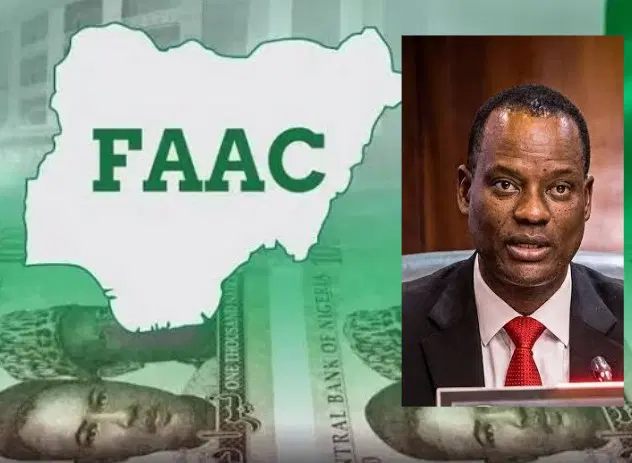
He said July’s gross statutory revenue stood at N4.359 trillion, while the Federation Account Allocation Committee approved N3.007 trillion for distribution to the Federal Government, states and local government councils.
The opposition politician called for a comprehensive reconciliation of revenues entering the Federation Account and deductions made before funds were distributed.
He maintained that resources generated from the reforms should be transparently accounted for and invested in projects capable of improving the living standards and productive capacity of Nigerians.
READ ALSO: