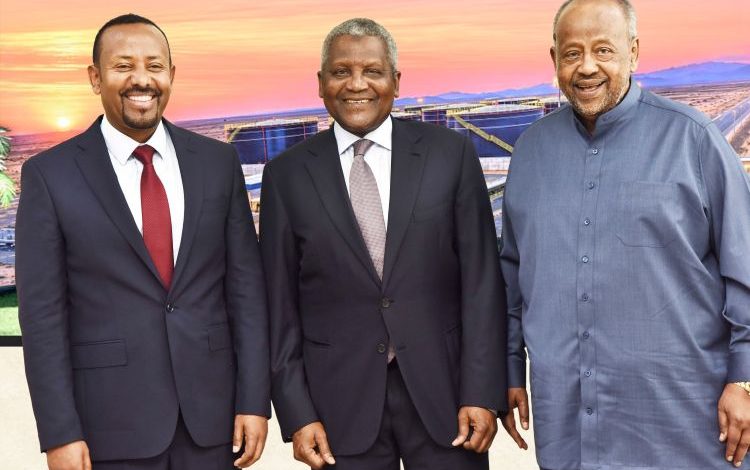
The Prime Minister of Ethiopia, Dr Abiy Ahmed, and the President of Djibouti, Ismaïl Omar Guelleh, have commended Dangote Group’s $660 million Damarjog-Dewele Oil Terminal and Pipeline Project, describing it as an investment that could strengthen regional trade and energy security.
The leaders spoke at the groundbreaking ceremony of the project held at the Damerjog Industrial Development Free Trade Zone in Djibouti.
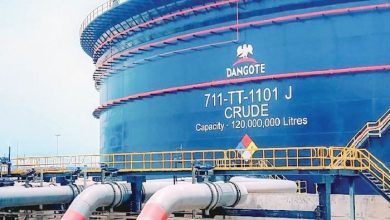
The project involves the construction of a 120-kilometre multiproduct pipeline connecting marine and coastal storage facilities at Damarjog in Djibouti with inland storage and distribution facilities at Dewele in Ethiopia.
Upon completion, the pipeline is expected to facilitate the transportation of refined petroleum products to Ethiopia and improve the reliability of fuel supply along the corridor.
Guelleh said the project aligns with Djibouti’s ambition to strengthen its position as a logistics, industrial and energy hub.
“Today marks an important chapter in Djibouti’s journey toward becoming a premier centre for logistics, energy, and industrial development. The Damarjog-Dewele Pipeline Project is not merely infrastructure; it is an investment in the future prosperity of our region,” President Guelleh said.
He said the investment would increase economic activity, support port operations, attract investments and create employment opportunities.
“This investment will generate significant value for Djibouti through increased trade volumes, stronger commercial activity, and enhanced investor confidence. It will create jobs, support local businesses, and further strengthen our position as a critical gateway connecting regional economies…We are proud to partner with the Dangote Group in delivering a project that demonstrates the strength of African-led investment and practical African solutions to African challenges,” he added.
Abiy described the project as a strategic development that would support Ethiopia’s energy security and industrialisation efforts.
“Ethiopia’s continued economic expansion depends on reliable and efficient access to energy resources. This pipeline will provide a modern, dependable, and cost-effective system for transporting refined petroleum products into the country, thereby enhancing our energy security and reducing supply-chain vulnerabilities,” Prime Minister Abiy stated.
He said the pipeline would help address transportation bottlenecks and improve the distribution of petroleum products across the country.
“The impact of this investment extends beyond the energy sector. Reliable access to petroleum products will support aviation, transportation, agriculture, manufacturing, construction, and broader industrial development. It will improve product quality control, reduce losses associated with long-distance transportation, and enhance the competitiveness of our economy.”
The Ethiopian prime minister also linked the project to the longstanding economic relationship between Ethiopia and Djibouti.
“The relationship between Ethiopia and Djibouti has always been anchored on shared prosperity and mutual development. This pipeline is another demonstration of our commitment to regional cooperation and the development of infrastructure that serves the interests of our people…It illustrates how African nations can work together to unlock opportunities, improve connectivity, and deliver sustainable development,” he said.
Speaking at the ceremony, Aliko Dangote, President and Chief Executive of Dangote Industries Limited, said the project was part of the group’s broader investments in infrastructure across Africa.
“This project is designed to enhance energy security, improve supply-chain efficiency, and create sustainable economic value for both Djibouti and Ethiopia. It underscores our commitment to investing in infrastructure that enables African countries to maximize their economic potential,” Dangote said.
He said the project would increase economic activity in Djibouti while improving the supply of refined petroleum products to Ethiopia.
“Djibouti will benefit from increased port activity, higher revenues, and new employment opportunities. Ethiopia will gain stronger energy security and fewer logistics bottlenecks. It is truly a win-win outcome for both countries, while local businesses across the value chain will benefit from expanded economic activity.”
Dangote said the Djibouti corridor is currently the main route for Ethiopia’s imports and exports, including petroleum products, making the corridor strategically important to the Ethiopian economy.
He added that the pipeline would reduce reliance on long-distance tanker transportation, potentially easing congestion and reducing operational and environmental risks associated with the movement of petroleum products by road.
The project is also expected to create jobs during construction and operation and support local contractors, suppliers, transport operators and communities along the corridor.
The Damarjog-Dewele project is part of Dangote Group’s Vision 2030 strategy, under which the conglomerate plans to invest $50 billion across Africa in industrial and energy infrastructure.
Dangote said the group’s investments were aimed at reducing dependence on imported products and expanding local production capacity.
“Our vision is to support African countries in becoming self-sufficient in products for which they possess the raw materials, market demand, and strategic necessity. This is Africa building the infrastructure it needs to accelerate development and deepen intra-African trade,” he said.
The project adds to Dangote Group’s investments in Africa’s energy and industrial sectors, including the Dangote Petroleum Refinery in Nigeria.