The President of the Nigeria Labour Congress (NLC), Comrade Joe Ajaero, has said that 66 years after independence, Nigeria still lacks a master plan, energy policy, food policy and white paper to guide the management of its economy.
Ajaero, who lamented that the country was being “run from people’s heads,” said increasing workers’ wages without addressing the structural causes of inflation would not resolve the economic hardship confronting Nigerians.
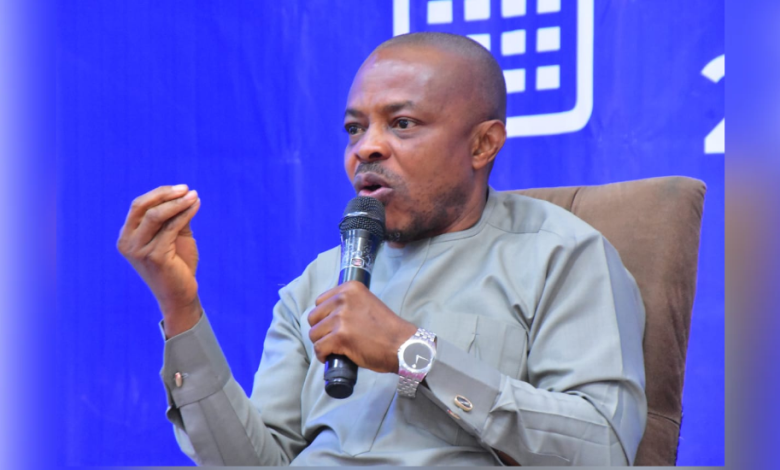
He spoke at a webinar organised by the Workers’ Rights Campaign (WRC) and the Elegant Nurses Forum to mark Nigeria’s 66th Independence Anniversary.
The webinar, anchored by Baba Aye, Secretary of WRC, was themed, “The Working Class in Nigeria: Sixty-Six Years After Independence.” The General Secretary of the Federation of Informal Workers’ Organisations of Nigeria (FIWON), Comrade Gbenga Komolafe, was the other lead speaker.
Ajaero said Nigeria had a 10-year development plan at independence that clearly outlined the number of power stations, roads, railway lines and universities to be built, but lamented that there was no comparable plan that Nigerians could point to today.
“Today, what is the development plan of Nigeria? Nigeria is being run from people’s heads. They don’t have their policy on energy, no policy on food supply, no policy, no white paper on it,” he said.
He also criticised what he described as the government’s reluctance to subject major economic issues to national debate.
Ajaero said even the military government of General Ibrahim Babangida allowed Nigerians to debate the system of government and make recommendations, whereas the present civilian government, in his view, had failed to provide a similar platform.
“We have a government that can’t send any of their ministers, other ministers of economy or even petroleum, to say, hey, let there be a national debate on this issue,” he said.
According to him, the labour movement wants the government to clearly state how it intends to run the economy so that wage negotiations can take place within that framework.
He said, “We want a situation where the Nigerian state tells workers how it wants to run the economy, and within that baked bread, wage can be discussed.”
Tracing the history of the Nigerian working class, Ajaero said its experience could not be separated from the broader class struggle, dating back to the pre-colonial period and including the 1945 general strike and the 1949 Iva Valley shooting.
He said the 1945 strike demonstrated the ability of organised workers to disrupt economic activities and compel authorities to respond to their demands.
Ajaero recalled that between 1960 and 1963, ministers and commissioners increased their own wages while the earnings of public servants remained unchanged.
He said the development contributed to the 1964 general strike, when about four labour centres mobilised more than 800 workers and shut down the country for almost 12 days.
He, however, said the unity achieved by the working class was short-lived, particularly with the outbreak of the civil war, adding that workers who opposed the war on what he described as anti-working-class and class-conscious grounds suffered various forms of victimisation.
According to Ajaero, the struggles of Nigerian workers over the years have largely centred on wages, petroleum pricing and the resulting inflation, as well as political space.
He also criticised Nigeria’s economic structure, arguing that the country continues to export raw materials and import finished products.
Ajaero said the situation had persisted despite independence, with crude oil produced in Nigeria being refined abroad and subsequently imported into the country.
“We remain a consumer economy where our political class will always conspire even to refine their products either in UK or US or in France and then bring back to us. And then they will create jobs in such countries and then here in Nigeria unemployment will continue to go high,” he said.
He argued that addressing the structural causes of inflation was more important than simply increasing wages.
“That is why, even if minimum wage is increased to N100m tomorrow, inflation will eat it up until the main issues that create inflation are addressed,” he said.
On his part, Komolafe said Nigeria’s informal economy was “embarrassingly big,” accounting for 93 per cent of the active working population between the ages of 16 and 65, according to data he attributed to the National Bureau of Statistics.
He said the figure was significantly higher than the African average of about 32 per cent.
Komolafe explained that the size of the informal economy was the result of several factors, including Nigeria’s traditional mode of production.
According to him, blacksmiths, carpenters, builders and other craftspeople operated largely outside formal structures before and during the colonial period, while the limited penetration of international capital allowed much of the traditional economy to remain intact.
He added that the loss of formal-sector jobs had also pushed millions of Nigerians into informal employment, with informality rising from about 70 per cent to more than 93 per cent.
“It’s a symptom of underdevelopment. It’s a symptom of retrogression. It’s nothing to celebrate. It’s a marker of the fact that there has been considerable decline in productive capacities,” he said.
Komolafe said the struggle for a living wage in the formal economy also affected informal workers because low wages reduced workers’ disposable income and, consequently, their ability to patronise businesses operated by carpenters, builders and other informal-sector workers.
He added that informal workers had continued to bear the consequences of the situation because of weak organisation and their inability to effectively articulate their challenges and propose pathways forward.