The Federal Government has announced plans to carry outstanding projects and expenditure obligations under the 2026 budget into the 2027 fiscal year as part of efforts to end the simultaneous implementation of multiple national budgets.
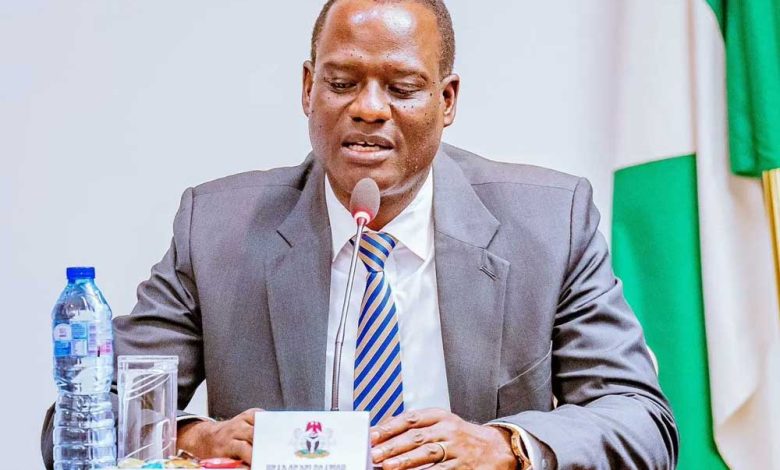
The Minister of Finance and Coordinating Minister of the Economy, Taiwo Oyedele, disclosed this on Thursday in Abuja at the launch of the October 2026 edition of the World Bank’s Nigeria Development Update.
Oyedele said the government was working with the Ministry of Budget and Economic Planning and the Budget Office of the Federation to overhaul the budgeting process and introduce a more realistic framework from 2027.
“Whatever is left of 2026, we’re transferring into 2027, not running two budgets,” he said.
The minister acknowledged that unrealistic revenue projections and repeated extensions of capital budget implementation had weakened the country’s budgetary process.
“We acknowledge that we can do budget better. We shouldn’t be running multiple budgets at the same time. We shouldn’t have projections for revenue where the outcome is 40 per cent or 60 per cent. We acknowledge that,” Oyedele said.
The Senate and House of Representatives had earlier approved an extension of the 2025 capital budget’s implementation period to December 31, 2026, marking the fourth extension and allowing ministries, departments and agencies to continue executing projects captured in the appropriation law.
Oyedele said the government intended to address outstanding obligations from previous budgets, including commitments under the 2024 and 2025 fiscal years, while resolving remaining expenditure commitments from 2026 before adopting a more streamlined system.
He added that future revenue and spending estimates would be grounded in actual fiscal performance rather than unrealistic assumptions.
“What I’m saying to the Nigerian people is that you will see the difference from next year,” he said, expressing confidence that the reforms would become evident in the preparation and implementation of the 2027 budget.
On the timing of the 2027 Appropriation Bill, Oyedele said the government hoped to present it to the National Assembly before the start of the new fiscal year, although he could not guarantee the legislative timetable.
Beyond budget reforms, the minister said the government’s fiscal priorities included human development, infrastructure investment and measures to attract private capital.
He explained that the ongoing tax reforms were intended to expand economic activity and increase the number of businesses and individuals contributing to government revenue, rather than simply raise taxes on existing taxpayers.
“We need more and bigger taxpayers, not more new or higher taxes,” he said.
Oyedele maintained that economic growth was essential for increasing public revenue, generating employment and improving household incomes. He acknowledged that improvements in macroeconomic stability had yet to translate fully into better living conditions for many Nigerians.
“Economic stability is not the destination for us. It’s the foundation,” he said.
The minister also expressed optimism that Nigeria’s economic growth in 2026 would surpass the World Bank’s revised forecast of 4.3 per cent, stressing the need to create better-paying jobs. He added that the government would strengthen coordination with state governments and monetary authorities to tackle inflation and improve public service delivery.
The World Bank Country Director for Nigeria, Mathew Verghis, called for improvements in budget credibility, public investment management and expenditure controls at federal and state levels.
Verghis said recent macroeconomic reforms had increased revenues available to governments, but stressed that additional resources must produce tangible improvements in public services and development outcomes.
“Priorities in this regard will include strengthening budget credibility, improving cash and commitment controls, strengthening public investment management,” he said.
He noted that states had benefited from higher federation allocations following the removal of petrol subsidies, foreign exchange reforms and improvements in tax administration.
However, he said spending on education, healthcare and social protection had grown more slowly than investment in transport infrastructure in many states, despite the increase in available revenue.
Verghis also observed that nearly all states now published annual budgets, quarterly budget implementation reports, audited financial statements and debt information, describing these as gains in fiscal transparency that should be reinforced by better expenditure management.
Presenting the report, the World Bank’s Lead Economist for Nigeria, Fiseha Haile, identified weak budget credibility, poor cash management and deficiencies in public investment planning as factors undermining fiscal performance.
Haile said Nigeria’s consolidated fiscal position improved in the first half of 2026, supported by higher revenues and increased federation transfers.
According to him, the Federal Government’s fiscal deficit declined from five per cent of gross domestic product in the first half of 2025 to four per cent in the corresponding period of 2026.
He added that the combined fiscal surplus of state governments rose from 0.7 per cent to 0.9 per cent of GDP, while gross federation revenues increased by 69 per cent between 2023 and 2025. Net distributed revenues also grew by approximately 60 per cent during the period.
Despite these improvements, Haile warned that spending pressures could intensify in the second half of 2026 as governments accelerate project execution and increase development related and election-related expenditure.
“Nigeria’s consolidated fiscal position, including both the federal government but also aggregate state fiscal position, has strengthened in the first half of 2026, but spending pressures, I expect, will pick up in the second half due to faster execution of projects, but also election and development related spending,” he said.
He recommended more credible budgets, stronger public financial management and improved coordination between federal and state authorities. He also urged states to expand internally generated revenue and reduce their reliance on federal allocations.
The Deputy Governor of the Central Bank of Nigeria in charge of Financial System Stability, Lamido Yuguda, said closer cooperation between fiscal and monetary authorities was necessary to sustain economic stability.
Yuguda said inflation remained a major concern despite improvements in monetary conditions and the foreign exchange market. He added that monetary policy decisions would continue to reflect economic data, liquidity conditions and developments in global financial markets.
“We are data dependent,” he said, reaffirming the CBN’s commitment to maintaining policy discipline as it works towards bringing inflation into single digits.
He also said improved foreign exchange reserves and market liquidity had strengthened confidence in the economy, while noting that challenges involving food production, security and infrastructure required interventions beyond monetary policy.
Katsina State Governor Dikko Radda said increased government revenues should be channelled into projects that lower living costs and improve access to essential services.
He argued that infrastructure development should go hand in hand with investments in social services, rather than compete with them for limited public funds.
Radda said his administration had prioritised education, healthcare, energy and infrastructure, including the construction of about 170 schools and the development of 268 functional primary healthcare facilities.
He also disclosed that the state had paid more than N50bn in outstanding gratuities over two years and introduced measures to improve revenue collection.
According to the governor, technology, the Treasury Single Account and digital land administration had helped strengthen Katsina’s internally generated revenue, with the aim of reducing dependence on federal allocations while sustaining essential spending.
The Chief Executive Officer of the Nigerian Economic Summit Group, Tayo Aduloju, said Nigeria needed to move beyond macroeconomic stabilisation and focus on converting improved public finances into jobs, higher productivity and better household incomes.
Aduloju called for stronger alignment between fiscal and monetary policies and private sector investment, arguing that public infrastructure spending should prioritise projects that connect production centres to markets, improve logistics and attract commercial investment.
He warned that government budgets alone could not meet the country’s extensive infrastructure needs.
“Nigeria needs at scale $2.3tn to upgrade its national and subnational infrastructure to world class,” he said.
Aduloju urged governments to develop commercially viable projects that could attract private capital instead of depending solely on budgetary allocations.
He also estimated that Nigeria would need to generate about four million jobs annually through 2030 to achieve substantial poverty reduction.
“Are we creating jobs? Yes. Are we creating the jobs required to lift more people out of poverty at scale? No, not yet,” he said.
The NESG chief identified high borrowing costs, insecurity, expensive energy and inadequate transport infrastructure as major barriers to private sector expansion.
He called for consistent policies and stronger collaboration among governments, financial institutions and businesses to ensure that increased public revenues translate into productive investment and improved living standards.