INEC Takes Inclusion Campaign To Ondo, Equips Disabled Voters With Special Voting Tools

Daud Olatunji
The Independent National Electoral Commission has reaffirmed its commitment to preventing the disenfranchisement of persons with disabilities in Ondo State, unveiling measures to improve their access to polling units and enable them to vote independently.
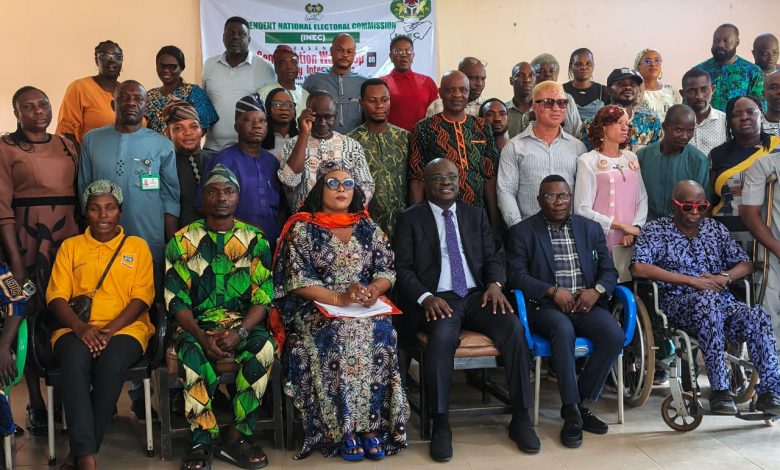
The commission gave the assurance during a one-day sensitisation workshop on its disability interventions, organised by the INEC state office in Ondo to familiarise persons with disabilities with measures designed to promote their participation in elections.
The workshop brought together leaders of various disability groups, including persons with visual and hearing impairments, persons with albinism and other members of the disability community.
Speaking at the event, the Resident Electoral Commissioner in Ondo State, Dr Mutiu Olaleke Agboke, said the commission was taking deliberate steps to remove barriers that could prevent persons with disabilities from participating fully in the electoral process.
Agboke said the interventions included efforts to improve accessibility at polling units and provide assistive devices to help eligible voters with disabilities cast their ballots independently while preserving the secrecy of their votes.
He urged participants to share the information obtained at the workshop with members of their respective groups across the state to ensure that more persons with disabilities understood the available facilities and how to use them during elections.
The REC also assured participants that adequate security arrangements would be made to protect voters against intimidation, encouraging them to exercise their voting rights without fear.
He further assured qualified members of the disability community who had applied to serve as ad hoc staff during forthcoming elections that their applications would be duly considered.
Agboke’s assurances come amid longstanding concerns over the physical, communication and other barriers that can limit the participation of persons with disabilities in Nigeria’s electoral process.
In his response, the Ondo State Chairman of the Joint National Association of Persons with Disabilities, Abiodun Oluwasegun, commended INEC for its interventions to make voting more accessible to members of the disability community.
Oluwasegun expressed optimism that the initiatives would encourage more persons with disabilities to participate actively in elections, stressing the importance of removing obstacles that could discourage eligible voters from exercising their civic rights.
During the technical sessions, a representative of the Director of INEC’s Gender and Inclusivity Department at the commission’s headquarters, Mrs Awelewa Mojisola, demonstrated how the assistive devices could be used to facilitate voting.
The devices showcased included magnifying glasses for voters with visual difficulties, Braille ballot guides for visually impaired voters and posters designed to aid communication with persons with hearing impairments.
Participants also engaged in practical demonstrations to familiarise themselves with the devices and understand their application during elections.
The exercise was aimed at equipping disability group leaders with the knowledge required to guide their members on the use of the facilities and encourage wider participation in the electoral process.
INEC reiterated its commitment to strengthening electoral inclusivity, maintaining that no eligible voter should be denied the opportunity to participate in an election because of disability.
The commission’s success, however, will depend not only on the availability of assistive devices but also on their effective deployment, accessible polling environments, adequate voter education and the ability of election officials to respond to the needs of voters with disabilities.
.....