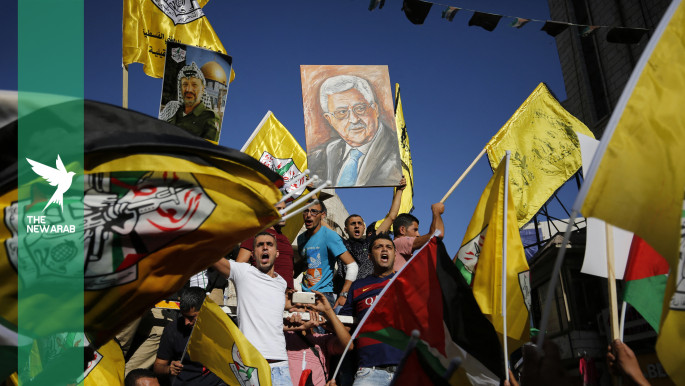
As Israel’s war on Gaza stretches into an open-ended phase of destruction, and the threat of annexation looms in the occupied West Bank, Fatah convened its eighth General Conference at a time of intense significance for Palestinian politics.
The gathering unfolded not only under the shadow of war, but also amid the accumulated pressures weighing on a political system that has steadily eroded over the past two decades, leaving it geographically fragmented, politically divided, and increasingly disconnected from its social base.
What was officially presented as a milestone of internal democratic renewal quickly evolved into a broader political indicator: a test of Fatah’s ability to reproduce its leadership under conditions of extreme crisis.
It was also a measure of whether the Palestinian Authority (PA) – long dominated by the movement – can still project institutional continuity in the absence of national elections, unified representative bodies, or a functioning political horizon.
A conference under fire
Held between 14 and 16 May 2026, the eighth Fatah conference brought together approximately 2,580 members from the West Bank, Gaza Strip, and the diaspora.
The conference itself reflected the fragmentation it sought to overcome. Voting took place simultaneously across Ramallah, Gaza, Cairo, and Beirut, in a dispersed format designed to bypass wartime realities and Israeli restrictions on movement.
Organisers portrayed the geographically fragmented structure as evidence of institutional resilience and organisational continuity despite extraordinary circumstances.
Politically, however, the format highlighted Palestinian fragmentation. Fatah’s failure to convene its top body symbolised a national split in governance, representation, and political agency along territorial and political lines.
Speaking from Ramallah after casting his vote, Palestinian President Mahmoud Abbas described the conference as part of a broader effort to “renew institutions” and prepare for future elections to the Palestinian Legislative Council and the Palestinian National Council.
He reiterated long-standing commitments to constitutional reform and the introduction of a political parties law. In his speech before conference delegates, Abbas framed the gathering as a reaffirmation of Fatah’s historical legitimacy and national role during one of the most dangerous moments facing the Palestinian cause in decades.
He stressed that Palestinian institutions must remain functional despite war and regional instability, while reiterating calls for international recognition of Palestinian statehood and an end to Israeli military operations in Gaza.
Yet for many observers, the speech remained within a familiar political framework in which reform is repeatedly invoked without concrete implementation.
No timetable, enforcement mechanism, or binding political guarantees accompanied Abbas’s proposals, reinforcing the perception that institutional renewal continues to operate more as rhetoric than as an active political process.
Managed competition or controlled continuity?
The electoral process, which selected 18 members of the Central Committee and 80 members of the Revolutionary Council, recorded official participation rates exceeding 94 per cent, according to conference organisers.
Sabri Saidam, head of the conference media committee, told The New Arab that the voting process was evidence of Fatah’s organisational discipline and ability to maintain institutional procedures despite war and logistical fragmentation.
He said the movement had succeeded in coordinating simultaneous voting across multiple locations under highly complex political and security conditions.
Beneath the procedural success, however, lay a deeper and unresolved debate about the nature of legitimacy being produced.
Within Fatah and among independent analysts, a central question persists: does participation in a tightly managed internal electoral system constitute democratic renewal, or does it merely reproduce an internal consensus structure in which the boundaries of competition are already predefined?
The issue extends beyond technical electoral procedures. It cuts to the core of Fatah’s dual identity as both a national liberation movement and the institutional backbone of the Palestinian Authority.
Critics argue that over time, internal elections have increasingly evolved into mechanisms for redistributing influence among established elites rather than opening space for substantive political competition or ideological renewal.
Abbas’s continued dual role as president of the Palestinian Authority and leader of Fatah further reinforces this concentration of authority.
For many within the movement, the overlap between organisational leadership and state-like governance structures has narrowed the space for internal dissent while consolidating decision-making power within a limited leadership circle.
Leadership reshuffle: renewal within limits
The results of the Central Committee elections reflected a partial generational and political shift, though not a rupture in the underlying architecture of power.
Nine new members entered the committee, resulting in what some observers described as roughly a 50 percent renewal in composition.
Yet the significance of the reshuffle lies less in numerical change than in the political profile of those who entered and those who exited.
Among the most symbolically significant names was Zakaria Zubeidi, the former commander of the Al-Aqsa Martyrs’ Brigades in Jenin, whose election carried strong associations with the legacy of the Second Intifada and armed resistance.
His inclusion appeared to signal Fatah’s attempt to reintegrate figures associated with militant legitimacy into formal political structures, balancing revolutionary symbolism with institutional control.
Majid Faraj, head of Palestinian General Intelligence, also secured a leading position, highlighting the continued centrality of the security establishment within Fatah’s internal power structure.
Meanwhile, the election of Yasser Abbas, the president’s son, drew widespread attention inside Palestinian political circles and sparked renewed debate over the growing visibility of familial proximity within the movement’s upper ranks.
At the same time, several veteran leaders failed to retain their positions, including Azzam al-Ahmad, Rouhi Fattouh, Abbas Zaki, and Ismail Jabr.
For many analysts, these departures reflected not an ideological transformation, but a recalibration of internal balances designed to preserve continuity while introducing carefully managed renewal.
The resulting leadership structure combines security figures, political veterans, symbolic resistance figures, and networks linked to institutional authority, a configuration that suggests adaptation rather than structural change.
The logic of reproduction
Ramallah-based political analyst Hani al-Masri situates these developments within a broader historical trajectory that began with the establishment of the Palestinian Authority in the mid-1990s.
“Fatah has undergone a gradual but profound transformation: from a national liberation movement into the institutional backbone of a governing authority operating under conditions of limited sovereignty,” he told The New Arab.
According to al-Masri, this transition fundamentally altered the criteria governing leadership selection. Whereas legitimacy was once tied primarily to struggle, organisational mobilisation, and political representation, it is now increasingly shaped by proximity to centres of power and the ability to navigate internal institutional balances.
“The logic of governance has overtaken the logic of liberation,” he said, describing a process in which administrative survival and institutional management increasingly dominate strategic political vision.
Al-Masri further argued that the absence of transparent and clearly defined criteria for candidacy within Fatah’s internal elections reinforces this dynamic. Without structural mechanisms regulating competition, he said, leadership renewal becomes cyclical rather than transformative.
“What we are witnessing is not necessarily democratic circulation of power,” he explained, “but the reproduction of the same political elite through new arrangements and alliances.”
He also linked this phenomenon to the widening disconnect between Palestinian political institutions and society itself, particularly under the pressure of war in Gaza and worsening economic conditions in the West Bank.
“In such conditions, political participation risks becoming symbolic rather than substantive,” he added. “People participate formally, but their influence over strategic decision-making remains extremely limited.”
Internal fractures and the geography of representation
The conference also exposed persistent geographical and political fractures within Fatah itself.
Representation from Gaza was viewed by some cadres as disproportionately limited relative to the Strip’s demographic and political significance, particularly at a moment when Gaza remains the central arena of war, displacement, and humanitarian collapse.
Husam Abu Nasr, a senior Fatah figure from Gaza, argued that the movement failed to adequately reflect Gaza’s weight in its internal institutional arrangements.
“The scale of destruction, displacement, and political burden carried by Gaza during the ongoing war should have been more clearly reflected in the movement’s internal representation,” he told The New Arab.
Abu Nasr stressed that Gaza is not merely a geographical component of the Palestinian arena, but “the space carrying the heaviest burden of the national struggle at this stage”.
He warned that any internal restructuring process that fails to account for this reality risks widening the gap between Fatah’s leadership institutions and the lived experience of Palestinians inside Gaza.
“Representation is not only a numerical issue,” he said. “It is also a question of political symbolism and national balance during a moment in which Gaza has become the centre of war, sacrifice, and resilience.”
Others within the movement attributed the imbalance primarily to logistical constraints rather than deliberate marginalisation, citing the practical difficulties of organising voting and communication under wartime conditions and severe movement restrictions between Gaza, the West Bank, and diaspora communities.
Ramallah-based political analyst Ismat Mansour argued that unresolved internal divisions linked to rival Fatah currents, particularly those associated with exiled leader Mohammed Dahlan, continue to pose a structural challenge to organisational cohesion.
“These are no longer temporary disagreements,” Mansour told The New Arab. “They have become embedded within the movement’s internal structure and increasingly shape alliances, voting dynamics, and perceptions of legitimacy.”
He warned that without a genuinely inclusive reconciliation framework, internal fissures could deepen further, especially in Gaza, where political fragmentation intersects with catastrophic humanitarian conditions.
“What appears today as managed internal competition,” he said, “could gradually evolve into a more entrenched organisational fragmentation that becomes increasingly difficult to contain.”
Between participation and disillusionment
At the grassroots level, reactions among Fatah members reflected the same divide between cautious engagement and deep scepticism.
Ahmed Abu al-Nour, a Fatah member from Deir al-Balah who participated in the voting process, described his involvement as “a political message aimed at preserving Fatah’s presence in Gaza despite everything happening around us”.
While he welcomed the principle of internal renewal, he acknowledged that the wartime environment inevitably shaped perceptions of representation and legitimacy.
“The conditions under which the conference was held cannot be separated from the war itself,” he told The New Arab. “That directly affects how people understand the results and the balance of representation.”
By contrast, Mahmoud Rabah, a Fatah cadre from Khan Younis who abstained from voting, described his boycott as a form of protest against what he considered a closed internal political structure.
“The problem is not necessarily with the individuals who were elected,” he said, “but with the system that reproduces the same outcomes every time”.
“Without changing the structure itself,” Rabah added, “we are simply rotating the same political system under different names.”
Together, these testimonies capture the central tension running through the conference: between those who still view internal participation as necessary for preserving institutional continuity under impossible conditions, and those who increasingly see the process as reproducing an entrenched political order without addressing the deeper crisis facing the Palestinian national movement.
Ultimately, the eighth Fatah conference produced a leadership reshuffle positioned somewhere between continuity and controlled renewal. New actors entered the Central Committee, veteran figures exited, and symbolic names reshaped parts of the movement’s internal landscape.
Yet the broader architecture of power – its logic, networks, and decision-making mechanisms – remains largely intact.
For critics, the conference represented a missed opportunity to confront long-standing structural crises within both Fatah and the wider Palestinian political system. For supporters, it reflected an attempt to preserve institutional cohesion amid war, fragmentation, and profound uncertainty.
What remains unresolved is whether Fatah can evolve beyond its current dual role as both movement and governing authority, and whether it can reconnect with a fragmented Palestinian public increasingly distant from formal political institutions.
As war, internal division, and the absence of national elections continue to define Palestinian politics, Fatah appears to remain trapped within a cycle of managed adaptation rather than structural transformation.
And as the Palestinian political landscape grows ever more fractured, the central question persists with increasing urgency: whether renewal within Fatah can still produce meaningful political change – or whether it has become a mechanism for sustaining continuity in a political system primarily waiting for a broader reset that has yet to arrive.
Sally Ibrahim is a Palestinian reporter based in the Gaza Strip
Edited by Charlie Hoyle